
Nail Salon Insurance by State
Nail Salon Insurance in Arkansas
The Department of Health licenses the establishment and the Cosmetology Technical Advisory Committee licenses the manicurist. Here is what each rule changes in a quote.
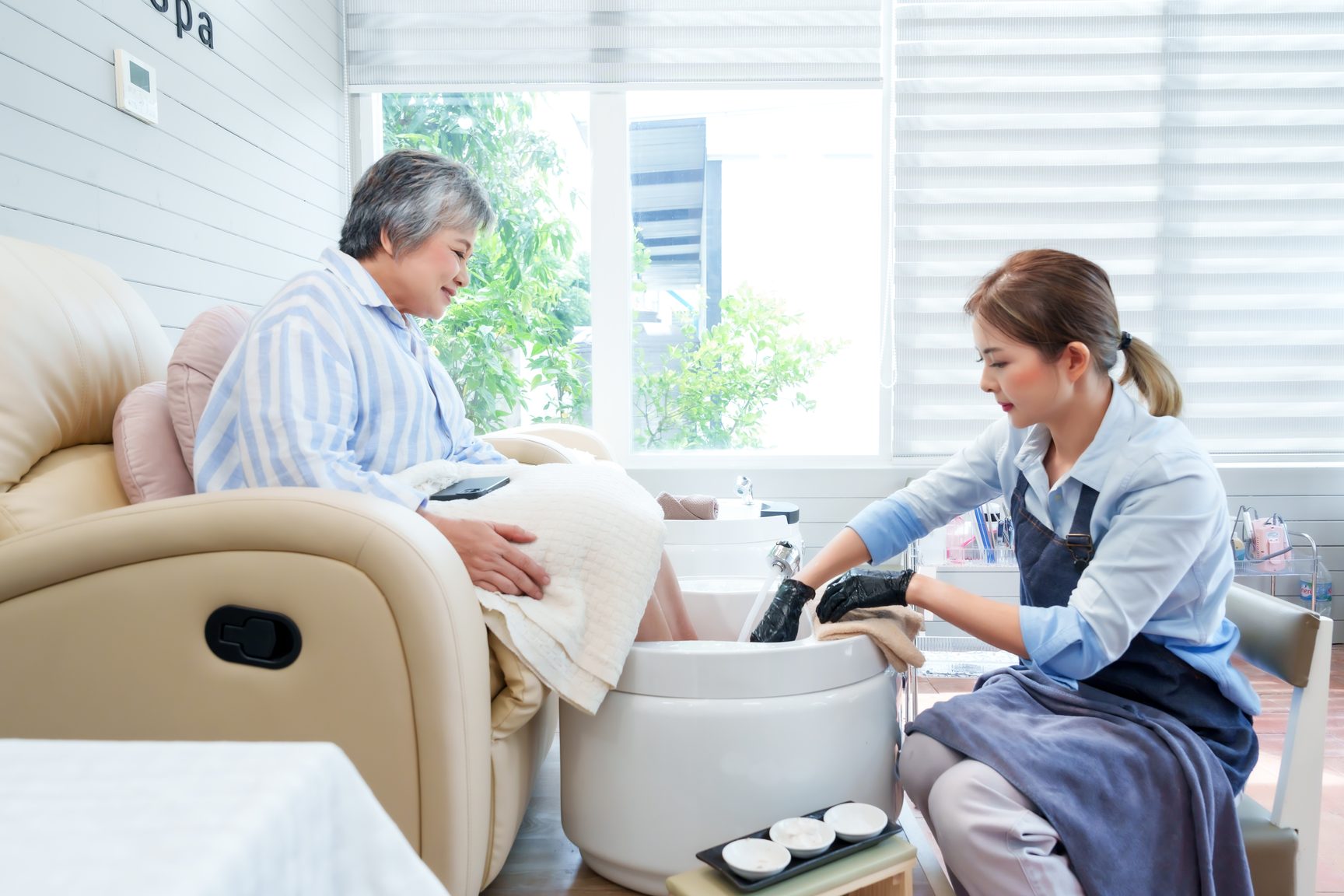
Arkansas puts the salon and the technician under different licenses. The Department of Health takes the application for the cosmetological establishment license, and the Cosmetology Technical Advisory Committee issues the manicurist license. For workers’ compensation, the Arkansas Workers’ Compensation Commission publishes that employers with three or more employees are required by law to have coverage, and it points smaller employers to the exceptions.
This page sets out those rules in the order a salon owner meets them: the establishment license, the technician license, inspection, then payroll coverage. After each, it says what the rule changes about the insurance you buy. The licensing statements come from the Cosmetology and Body Art Law as the Department of Health publishes it. The coverage threshold comes from the Commission’s own web page, and we say so each time rather than call it statute.
The cosmetological establishment license from the Department of Health
The license for the space is called a cosmetological establishment license. Section 17-26-402 says a person, firm, or corporation desiring to operate a cosmetological establishment applies to the Department of Health, and that the application is accompanied by the required licensing fee. The same chapter, in § 17-26-401, makes it unlawful to conduct or operate a cosmetological establishment, or any other place of business where cosmetology occupations are practiced, until licensed and complying with the chapter’s sanitation provisions.
Nail work falls inside that definition. The statute lists cutting, trimming, polishing, tinting, coloring, cleansing, or manicuring the nails of any person among the practices of cosmetology. A nail salon is therefore an establishment the license covers, and the person who applies may be an individual, a firm, or a corporation.
We read nothing in the law book that says whether the license attaches to one address, so this page does not say it does. What the application does tell you is who the Department of Health looks to: the person, firm, or corporation that operates the salon. That is also the named insured a carrier will want on the policy.
The manicurist license and the three routes to it
A manicurist is defined as a person who engages in the occupation of manicuring the nails of any person. Under § 17-26-401(b), it is unlawful to employ, or allow to be employed, a person in or about a cosmetological establishment as a manicurist unless that person is licensed by the Cosmetology Technical Advisory Committee. The duty sits on the employer. If you have a technician on the schedule without a license, the statute treats that as your act, not only theirs.
The law book describes the routes as printed. The first is the examination: § 17-26-303 says the examination includes both a practical demonstration and a written test, and § 17-26-312 says persons who pass any examination receive a license from the committee. To sit for it, § 17-26-304 asks for training of at least four hundred eighty hours for a manicurist. The second route is a license by application for a person licensed under the laws of another state: § 17-26-315 provides that, on application to the Department of Health with the required fee, such a person shall be granted a license on listed conditions, which include passing an Arkansas law examination. We found no registry route and no local credential in the documents we read.
Section 17-26-312 also says the license entitles its holder to practice in a licensed cosmetological establishment. The technician’s license and the salon’s license are meant to work together.
Why the licenses matter when a carrier quotes you
An underwriter pricing a nail salon is pricing the services your technicians perform on customers. When the state makes a license a legal condition of employing a technician, a carrier can reasonably ask whether every person doing nail work holds one. We ask for the establishment license and a roster of technician licenses for that reason.
Department of Health inspection and the sanitation language
Section 17-26-208(a) says the Department of Health shall conduct investigations and inspections as promulgated by rule. We did not read that rule text, so we cannot tell you the schedule on which inspectors visit or what they check. The statute does contain sanitation language in two places we did read. Section 17-26-401(a) conditions the establishment license on complying with the chapter’s provisions relating to sanitation, and the Department of Health implements the State Board of Health’s rules governing health and safety, including precautions to prevent the creating or spreading of infections or contagious diseases in cosmetological establishments.
For insurance, the point is documentation. Bring us the establishment license and any written result from the Department of Health, and we can tell you how a carrier is likely to read them.
Workers’ compensation: what the Commission publishes
The Arkansas Workers’ Compensation Commission’s Basic Facts page states that employers in Arkansas with three or more employees are required by law to have workers’ compensation insurance coverage for their employees. The same page adds that there are exceptions to the three-or-more requirement, so employers with fewer than three should check with authorities before assuming they do not fall under the workers’ compensation laws. We are reporting what the agency publishes. We did not read the current codified text, so we do not present the threshold as a quotation of statute.
The page also says how the coverage is provided: through a workers’ compensation insurance policy, or by the employer receiving state approval to be self-insured. A salon owner buys a policy from an insurer. On the question of a state-run insurer or fund, the documents we read do not settle it, and this page does not try to.
A salon with a front desk person and two technicians has three people on the payroll. An employer below that count should follow the Commission’s own instruction and check before treating itself as outside the law.
Sole proprietors and partners under the Act’s definition of employee
An act amended the definition of employee in Ark. Code Ann. § 11-9-102. As engrossed, it says the term employee also includes a sole proprietor or a partner who devotes full time to the proprietorship or partnership. A sole proprietor or partner who does not want to be included may file for and receive a Certification of Non-Coverage from the commission. In practice, the owner who works the floor full time starts out inside the definition and has to take a filing step to step out.
That statement rests on the session law as passed, not on the current codification, so we hold it at that level. The documents we read do not address corporate officers or limited liability company members. If you operate through either, ask the Commission or your agent before you sign an application that excludes or includes yourself.
Insurance or a bond as a condition of the license
We searched the law book and the rule excerpt we saved for terms such as insurance, liability, bond, surety, and financial responsibility. The licensing sections ask for an application and a fee; we found no insurance or bond requirement there. The two rule pages we tried to open for the board’s rules returned error pages, so the corpus is the law book and one rule section, and we are not claiming more than that.
What this means for you: no document we read puts a policy between you and the license. The insurance you carry will be driven by your lease, your customers’ exposure, your payroll, and what a carrier is willing to write.
The five coverages against Arkansas’s rules
General liability responds to the customer who is hurt in your chair or on your floor. The establishment license and the Department of Health’s inspection authority are the state’s hooks on that exposure, and a carrier will ask for the license and for any inspection paperwork.
Property insurance covers your equipment, furniture, and improvements. Nothing in the licensing documents we read changes how that coverage works, so the lease sets the terms. Keep a copy of the license with the policy documents.
Workers’ compensation is where Arkansas’s published threshold bites. With three or more employees on the payroll the Commission says coverage is required by law. How the Act treats a full-time owner is covered next.
Commercial auto matters if the business owns or uses a vehicle. One rule section we read is titled for cosmetology establishments and mobile salons, so a salon that takes services to a client’s location should read it and tell us what it does. The licensing documents say nothing further about vehicles.
Umbrella coverage sits above the liability policies. Because no document we read sets an insurance minimum for the license, the limit you aim for comes from your lease and your contracts, not from the state.
The nail salon insurance hub explains each policy in full and how they fit together.
What to send us, and why
Send the cosmetological establishment license from the Department of Health, because that is the document the statute puts on the operator. Send a list of your technicians with their manicurist licenses from the Cosmetology Technical Advisory Committee, since the employment prohibition in § 17-26-401(b) is the rule a carrier will test. Send your payroll headcount, so we can compare it with the Commission’s three-or-more statement, and tell us whether the owner works full time and whether you operate as a sole proprietorship, a partnership, or an entity. Add your lease and any inspection paperwork. With those, we can quote against Arkansas’s published rules instead of a generic form.
A license lets the salon open its doors; the insurance program is what answers a claim.
- A license is a condition of operating, not insurance, so no line is drawn from the license itself.
A panel for Arkansas in rows. Each row sets a requirement of the state beside the exposure that requirement leaves open and the coverage line that answers it. Salon license: The state licenses the salon itself. It leaves open a customer hurt in the salon, or a customer’s property damaged there, which General Liability answers. Technician license: The state licenses the person doing the nails. It leaves open a client hurt during a manicure or pedicure, which General Liability answers. Workers’ compensation: State law requires the employers it covers to provide it. It leaves open an employee hurt on the job, which Workers’ Compensation answers. Notes: A license is a condition of operating, not insurance, so no line is drawn from the license itself. The conclusion reads: A license lets the salon open its doors; the insurance program is what answers a claim. No figures are shown.
Nail salon insurance in nearby states
Arkansas borders the states below. A name is a link once its page is published.
Why Protect My Nail Salon in Arkansas
We are an independent agency that writes for one kind of business, the nail salon, and each state page starts from the state’s own licensing and workers’ compensation documents. When we quote a salon in Arkansas we read the policies against those rules and against your lease, and we tell you plainly where something does not line up.
We place coverage in 48 states, and every coverage on one page sets out the five policies a salon program is built from. Our guides for salon owners take single questions further; for an owner in Arkansas, a good next read is our guide to nail salon insurance requirements, because the state, the lease and your own payroll each add something you must carry.
Arkansas coverage pages
Coverage for your salon
Arkansas nail salon insurance questions
Does each technician need a license apart from the salon’s own license?
Yes, on the text we read. The Department of Health takes the application for the cosmetological establishment license, and the Cosmetology Technical Advisory Committee issues the manicurist license to a person who passes an examination. The statute also makes it unlawful to employ anyone in or about an establishment as a manicurist without that committee’s license.
Can a technician who is licensed in another state work in my salon?
The law book has a reciprocity section for a person licensed as a manicurist under the laws of another state. That person applies to the Department of Health with the required fee and is granted a license on the conditions the section lists, including an Arkansas law examination. Until the Arkansas license issues, the employment prohibition in the licensing section is the rule to keep in mind.
Does the state make me carry liability insurance before it licenses my salon?
We read the licensing sections and the other saved documents and found no insurance or bond condition. The establishment license application is described as accompanied by the required licensing fee. That is what the documents we read say, and they do not settle every rule that may apply, so check any lease or contract for its own insurance terms.
What happens if I have only two employees?
The Workers’ Compensation Commission page states the requirement for employers with three or more employees. It also says there are exceptions to the three-or-more requirement and that employers with fewer than three should check with authorities before assuming the laws do not apply to them.
Can I leave myself off my workers’ compensation policy as the owner?
A full-time sole proprietor or partner falls within the Act’s definition of employee. One who does not want to be included may file for a Certification of Non-Coverage from the Commission. We did not read how officers or LLC members are treated, so that question needs the Commission or your agent.
Who inspects my salon?
The Department of Health conducts investigations and inspections as promulgated by rule. We did not read that rule text, so we cannot tell you the visit schedule or what a visit covers.
This page describes insurance for nail salons operating in this state. It is general information, not legal advice and not a statement of coverage. Licensing, registration and sanitation requirements change; verify current requirements with the agency named before relying on them.
Get a quote for your Arkansas nail salon
Send us your establishment license, your technicians’ licenses and your payroll summary, and we will quote against the rules on this page.