
Coverage line
Nail Salon General Liability Insurance, From the Front Door to the Footbath
The policy that answers when a customer, a delivery driver or anyone else who does not work for you is hurt in your salon or by your services, or when their property is damaged, and that pays to defend the claim.
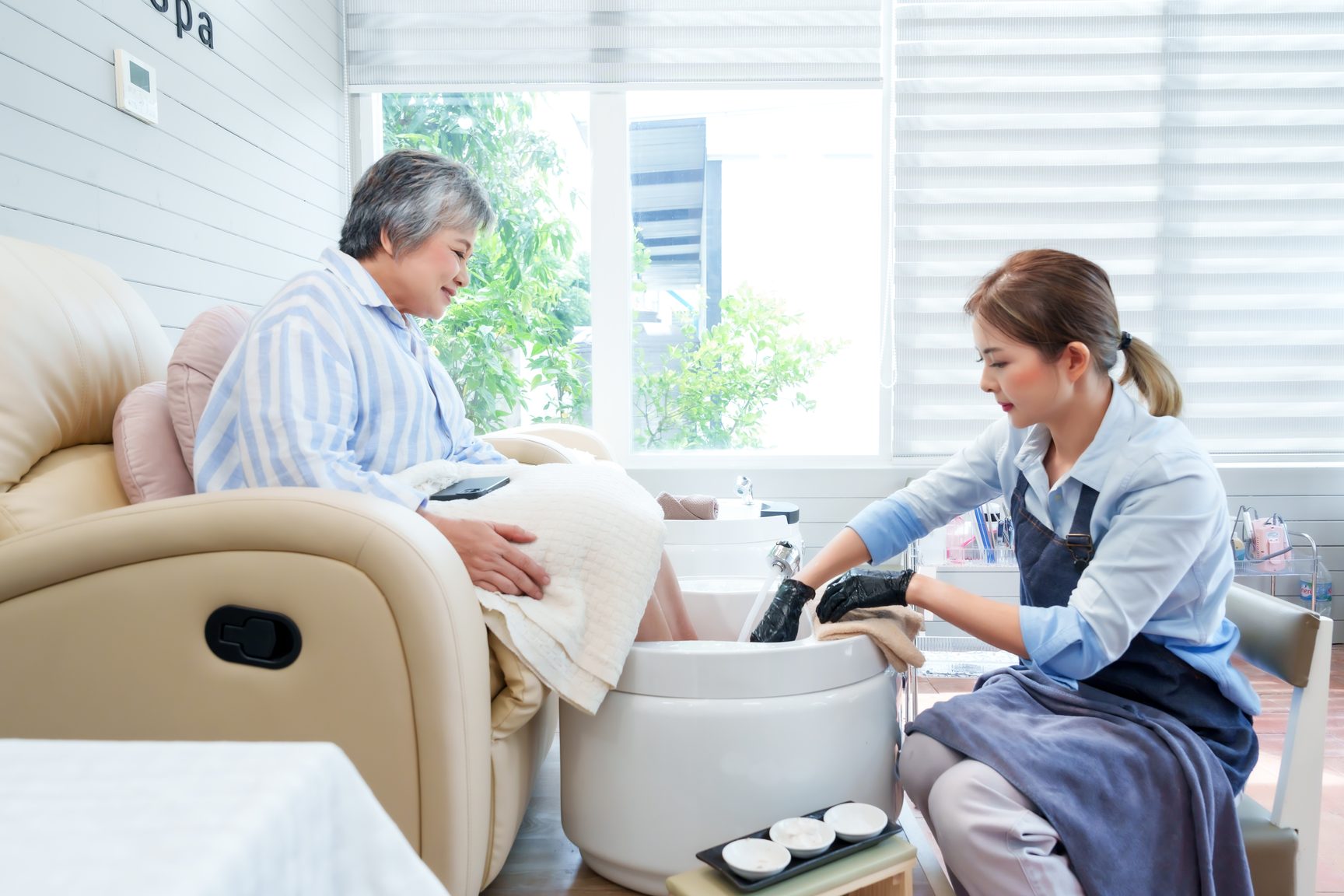
General liability insurance for a nail salon pays for injury to customers and other visitors, and for damage to their property, when your premises or your work cause it, and it pays the cost of defending you against the claim. A client who slips stepping out of a pedicure chair, a customer cut during a cuticle trim, a reaction a customer blames on a product you applied: those are the claims it is bought for.
It is not a policy for the salon’s own things, for the people on your payroll or for the car in the lot. Each of those has its own coverage, and the sections below show where general liability hands them off.
What nail salon liability insurance covers, and what it leaves out
As the standard commercial general liability form is commonly written, the policy has three working parts. The first pays the amounts you become legally obligated to pay because of bodily injury or property damage caused by an accident, and gives the insurer the right and the duty to defend you. The second answers for a narrower list of offenses, such as statements that damage another business’s reputation. The third pays reasonable medical expenses for a person hurt on your premises without anyone having to prove you were at fault, which can settle a small injury before it becomes a lawsuit. Insurers file their own versions and add their own endorsements, so your policy’s wording, not this page, decides any real claim.
For a salon, that generally reaches:
- a customer, a child waiting with a parent, a vendor or a passer-by hurt inside the salon or at its door;
- injury a customer says came from a service, where the policy treats services as covered;
- damage to a customer’s belongings, or to a neighboring unit, caused by your operations;
- defense costs, including for a claim that turns out to have nothing behind it.
It generally leaves these to another policy:
- your chairs, tables, lamps, stock and build-out, which belong on property coverage;
- injury to your own employees, which belongs to workers’ compensation;
- vehicles, which belong on commercial auto;
- claims larger than the policy’s limits, which an umbrella policy can sit above.
A hub-and-spoke diagram with general liability at the center. General liability answers for injury to customers and visitors and for damage to their property. From the hub, the salon’s own chairs, lamps and stock are handed to property coverage; an employee hurt at the station is handed to workers’ compensation; a car or van used for the business is handed to commercial auto; and a claim larger than the policy limit is handed to an umbrella that sits above. Your own policy wording decides any real claim. No figures are shown.
Wet floors, footrests and the walk to the chair
Premises claims in a nail salon can come back to water and clutter. Footbaths are filled and emptied at every pedicure, towels are carried dripping across the room, and customers walk in paper slippers or with polish still drying on their toes, which changes how carefully they step. The raised platform of a pedicure throne, the step down from it, a rolling stool left in an aisle, a power cord running to a lamp, an entry mat curled at the edge after a rainy day: each is a place where someone who does not work for you can fall.
These are the claims general liability is most plainly built for. What helps when one arrives is evidence that the salon was looking after its floor: a mop schedule that is actually followed, a wet-floor sign that comes out whenever the station is drained, an incident note written the same day with the names of anyone who saw it. The medical payments part of the policy, where it is included, can pay a guest’s first doctor visit without an argument over fault, which can keep a minor fall minor.
Cuts, burns and reactions during a service
The service itself is the second source of claims. A nipper that takes too much cuticle, a drill bit that catches the nail bed, a callus blade on a heel, a towel warmer or a paraffin bath that is hotter than the customer expected, a lamp that leaves skin tender: these produce injuries the customer can see, and sometimes a demand letter weeks later.
Reactions are less visible and harder to trace. The FDA’s guide to nail care products says plainly that infections and allergic reactions can occur with some nail products, and it names methacrylate monomers among the ingredients of artificial nails. A customer who develops a rash, swelling or a lifting nail and connects it to a set of acrylics or a gel service is making a bodily injury claim. Your intake notes help here: asking about known allergies and earlier reactions, and writing down what was used, turns a guess into a record.
Fumes, vapors and the products on the shelf
A salon handles solvents and monomers all day. The CDC’s workplace page for nail technicians lists acetone, formaldehyde, methacrylate compounds and toluene among the chemicals common in nail products, and notes that their vapors and dusts can irritate the eyes, nose and throat. A customer who says the air in the salon made them ill, or a business next door that complains about the smell coming through a shared wall, is raising a question that touches your liability policy in a particular way.
The standard general liability form carries a pollution exclusion, and its definition of a pollutant reaches fumes, vapors and chemicals. How that exclusion is applied to the ordinary products of a nail salon depends on the wording of your policy and on the facts of the claim, and it is one of the first things we read on a salon policy rather than something to assume. Good ventilation, products kept capped when not in use and waste that is stored and thrown out properly are the practical defenses, and they are also what an underwriter asks about.
Footbaths and infection claims
A pedicure footbath holds warm water, skin and whatever the last customer brought in, and an infection that appears after a pedicure is a claim every salon owner should plan for. The FDA notes that state and local authorities regulate how nail salons operate and license the technicians who work in them, so the cleaning and disinfection routine between customers is set where you are licensed. Follow it exactly, and write down each time it is done.
When a customer alleges an infection, the claim is bodily injury, and how it is answered depends on whether your policy covers injuries arising from the service or sets them aside for a professional liability endorsement. The cleaning log matters either way. It may be the only evidence that the basin was disinfected before that customer sat down.
After the customer leaves: completed work and retail products
Some injuries surface after the appointment. A reaction can appear the next day, an infection can take longer, and a set of nails that comes away can injure the finger it was applied to. The standard form treats injury that arises from your finished work, away from your premises, under a part of the policy called products and completed operations, with its own aggregate limit. That is the part of the policy that answers a claim arriving after the receipt is filed.
The same part of the policy usually applies to products you sell. Cuticle oil, polish, lotion and the other retail items on your counter are your products in the policy’s sense once a customer takes them home. If you sell a line under your own salon name, say so when we quote, because that changes how an underwriter looks at it.
Words, photos and advertising
The second part of a general liability policy covers a list of offenses rather than accidents. As commonly written it includes publishing material that defames a person or business, publishing material that violates a person’s right of privacy, and using another’s advertising idea in your own advertising. For a salon this is where an argument posted online, a before-and-after photo of a customer used without permission, or a promotion that borrows too closely from a competitor would be read. Ask customers before you post their hands or faces, and keep the permission.
A two-column comparison. The first column holds injuries that come from the premises: a slip on a wet floor by the footbaths, a trip over a cord or a stool, a fall on a curled entry mat. Those are the plainest general liability claims. The second column holds injuries that come from performing the service: a cut from a nipper or a drill, a burn from a warmer or a lamp, a reaction to a product, an infection after a pedicure. Some salon liability policies cover those directly; others set them aside unless a professional liability endorsement is added. Your own policy wording decides any real claim. No figures are shown.
Where professional liability fits for nail services
A salon sells a service performed on a person, which puts it closer to a professional than a shop that only sells goods. Insurers handle that in different ways. Some general liability policies written for salons cover injury from the service itself. Others carry a professional services exclusion and restore the cover through a professional liability endorsement for cosmetology or nail services, which is how much of the market commonly offers it. Some write it as a separate policy. Which approach your carrier takes is printed in the exclusions and endorsements of your policy.
The difference matters most for the claims a nail salon actually sees: a cut, a burn, a reaction or an infection that comes from the work rather than from the floor. A policy that excludes those without the endorsement leaves the salon’s main exposure uncovered while appearing complete on the declarations page. We read for it on every salon account and tell you which side of that line your current policy falls on.
When the service travels
A technician who does nails in a client’s home, at a bridal party or at a corporate event carries the same exposure out of the building: a client cut during the service, a reaction to a product, a spilled bottle of remover on someone else’s table or carpet. General liability generally follows your operations rather than your address, but some salon policies are written around a scheduled location, so mobile work should be on the application. Getting there in a car or van is a separate question for commercial auto.
Limits, landlords and additional insureds
A general liability policy carries a limit for each occurrence, an aggregate limit for the policy period, and a separate aggregate for products and completed operations. Medical payments, where included, carries its own smaller limit per person. Which limits make sense depends less on a rule of thumb than on what your lease and any franchise or shopping-center agreement require, and on how many stations and services could be involved in one bad day.
A landlord may ask for a certificate of insurance and to be named as an additional insured, so that your policy responds first to a claim that arises from your space. Read the lease’s insurance section with us before you sign it, and when the requirement is higher than the primary policy carries, the difference can come from an umbrella above general liability, auto and employer’s liability.
How we quote general liability for a salon
We are an independent agency with appointments at 23 insurance markets, and appetite for nail salons differs from one to the next. We ask what services you offer, how many stations you run, whether you sell retail products, whether any work happens away from the salon and what your lease requires, then send the account to the markets that want it. Before you see a quote, we read the parts of each policy that decide salon claims: how service injuries are handled, the professional services exclusion and its endorsement, the pollution exclusion, the additional insured wording your landlord needs, and whether medical payments is included.
Why Protect My Nail Salon
We are an independent agency that writes for one kind of business, so a nail salon’s quote for this policy is read against other salon quotes rather than against a general small-business form. Before we recommend a policy we read its exclusions and endorsements against the services you offer and against the insurance section of your lease, and we tell you where the two do not match.
General liability is one part of the program our nail salon insurance page sets out, and every coverage on one page puts it beside the other four. The question to take next is in our guide to professional liability for nail salons, because a claim from the service itself can sit outside a plain general liability form; the rest of our guides for salon owners are on the blog. We place coverage in 48 states, and a licensed agent reads every request.
For a closer look, read our guide to gel and acrylic nail studio insurance, which explains how fumes, chemicals and client reactions shape the liability policy. We also have a guide to kids’ nail salon and party studio insurance, which covers young clients, parents in the room and parties on the calendar.
Related coverage and further reading
General liability questions from nail salon owners
Does general liability cover a customer who gets an infection after a pedicure?
An infection claim is bodily injury to a customer, which is the kind of claim general liability is written for. Whether a particular policy pays it depends on its wording, and in particular on whether injuries that come from performing the service are covered or set aside for a professional liability endorsement. Your cleaning records for each footbath are what show the claim is wrong, so keep them every day.
Is a customer’s allergic reaction to acrylic covered by nail salon liability insurance?
A reaction that follows a service is a bodily injury claim, and it is one of the reasons a salon carries liability insurance at all. On some policies it is answered by the general liability form itself; on others it needs the professional services piece added. We check which one your policy is before you rely on it.
Do I need professional liability as well as general liability for my nail salon?
You may, though it is not always a separate policy. Some salon programs add professional liability for nail services to the general liability policy as an endorsement, because the service itself is where much of a salon’s injury exposure sits. Some general liability policies exclude professional services unless that endorsement is added. Read the exclusions page of your policy, or send it to us.
My landlord wants to be named on my liability policy. Can you do that?
Yes, if the lease says so. A landlord may ask to be added as an additional insured on the tenant’s general liability, so that your policy answers first for claims that arise from your space. The lease says exactly what the landlord wants, so send us that section and we will match the endorsement to it.
Does nail salon general liability cover services I do at a client’s home or at an event?
General liability generally follows your business operations, not only your address, so injury to a client during a service away from the salon is usually the same kind of claim. Tell us about any mobile work when we quote, because some salon policies are written around a fixed location. The vehicle you drive there is a separate question for commercial auto.
How much general liability does a nail salon need?
There is no single answer, and we do not publish one. The lease can set the floor, a shopping center or franchise agreement can set it higher, and the number of stations and the services you offer change how much could be at stake in one claim. We start from what your lease and contracts require and talk through whether more is worth carrying.
Have a licensed agent read your salon’s liability policy
Send your current policy and the insurance section of your lease. We read them against the services you offer and come back with what the markets will do.