
Coverage line
Workers’ compensation for a nail salon: when the person hurt is on your payroll
It pays for the care and lost wages of a technician, receptionist or manager hurt or made ill by the job, and it answers certain suits from employees.
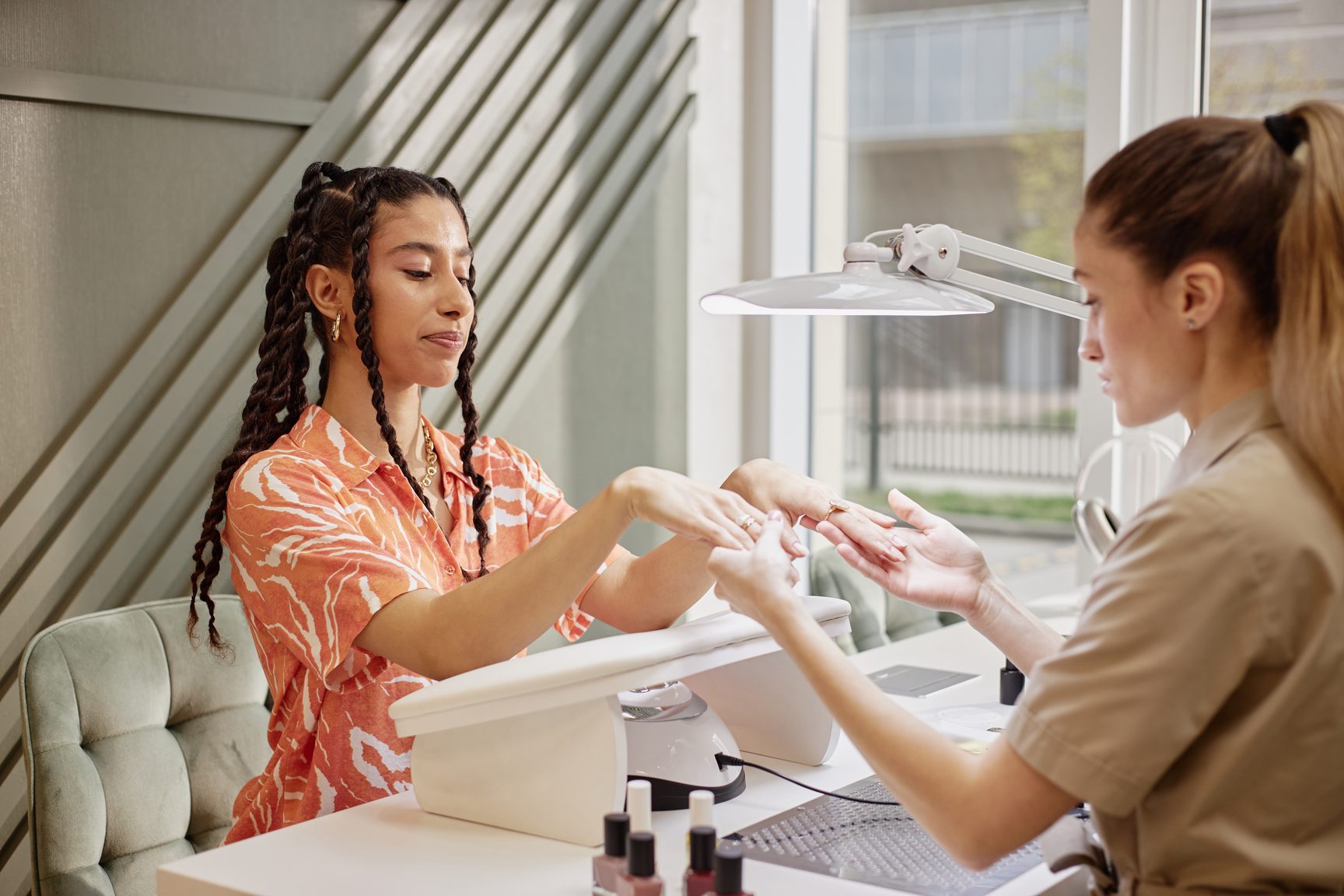
Nail salon workers’ compensation insurance pays for medical care and lost wages when an employee is hurt or made ill by their work, under benefits that state law sets. It also carries a second part, employer’s liability, that as the standard policy is commonly written answers certain lawsuits an employee or their family brings against you.
The people it protects are the ones on your payroll: technicians, receptionists, a floor manager. It does not protect a customer, and it is a different policy from the one that does. Requirements differ from state to state, so this page explains how the coverage works for a salon and leaves each state’s particulars to the state pages and to a licensed agent.
What workers’ compensation reaches and what it leaves to other policies
The coverage is written around the employment relationship. If the injury or illness arose from the job and the injured person is an employee, this is generally the policy that answers. Everything else on the salon’s risk list tends to sit with a neighbor.
On the standard form, it generally reaches:
- Medical treatment for a work injury or work-related illness, in the manner your state’s system provides.
- Lost-wage benefits while an employee cannot work, as state law defines them.
- Employer’s liability, which as commonly written responds to certain suits brought by employees that fall outside the benefit system.
It generally leaves to other coverage:
- A customer hurt in the salon, which belongs to general liability.
- Your equipment, inventory and build-out, which belong to commercial property.
- The vehicle and other people hurt in a crash, which belong to commercial auto.
- Judgments that exceed the underlying liability limits, which an umbrella may sit above.
A two-column comparison. On the employee side, a technician or receptionist hurt at work is a workers’ compensation matter, with medical care, lost wages and the employer’s liability part. On the customer side, a client hurt in the salon is a general liability matter. No figures are shown.
What a nail salon’s employees face at work
A technician’s day is built around products and posture, and public health agencies describe both. The CDC’s National Institute for Occupational Safety and Health notes that nail technicians can be exposed to chemical and physical hazards, and lists common product chemicals including acetone, formaldehyde, methacrylate compounds and toluene. Workers can breathe in dusts or vapors or absorb chemicals through the skin.
The health effects it names are the ones an owner should recognize as potential claims: skin rash or contact dermatitis, irritation of the eyes, nose and throat, and asthma. NIOSH also explains that work-related asthma is triggered or develops from exposures at work, and that workplace irritants and allergens are among the triggers. An illness that builds from repeated exposure rather than one bad moment is still part of what a workers’ compensation program is designed to address, though whether a specific condition is accepted turns on the state’s process and the facts.
Strain, cuts, wet floors and deliveries
The same source describes the physical side: technicians lean over a table during manicures, hunch down for pedicures, and repeat motions such as filing. Strain from that posture builds slowly, which makes it easy to dismiss until an employee cannot do the work. It is a plain employment injury, and it is the kind of claim that can run a long time.
Other hazards are ordinary ones. Implements can cut the person holding them. Floors near footbaths get wet, and an employee crossing them can slip just as a customer can. Product deliveries arrive in boxes that someone on staff has to lift and shelve. None of these is exotic, and none requires a defective product or a careless owner for a claim to exist; workers’ compensation is generally a no-fault system, so the question is whether the injury arose from the work.
Booth renters, contractors and employees
A salon may mix employees with technicians who rent a chair or booth. Whether a given technician is an independent contractor or an employee is a classification question decided by state law and the facts of the working relationship, not by the label in a rental agreement. Who sets the schedule, who supplies tools and clients, who handles the money and how much control the owner exercises are the sorts of facts that tend to matter, and the tests vary, so no single answer fits every salon.
The risk is a gap. If a renter is later treated as an employee, an injury can produce a claim with no workers’ compensation coverage prepared for it, and the owner may face the cost directly. The policy-end audit, described next, is one place where the question can surface. The point here is only that the arrangement deserves a deliberate answer before an injury forces one.
Payroll, classification and the audit
Workers’ compensation is generally priced from payroll, not from a flat figure. At the start of the term the insurer works from your estimate of what you will pay employees. At the end it conducts an audit, which can include reviewing payroll records, and compares the estimate with what you actually paid. If payroll grew, the final cost can rise; if it shrank, it can fall.
The audit also looks at classification, meaning what each person actually does. An insurer may ask about front-desk, managerial and technician work separately, and its filed rules decide how they are grouped. The audit also looks at who was paid. Payments to workers you treated as contractors can be examined, and a worker who should have been counted as an employee may be added. Accurate, organized payroll records are the most useful thing an owner brings to that conversation. This page quotes no rates or class codes, because they are the insurer’s and the state’s to set.
After an injury: reporting and getting people back
Speed matters more than polish. Writing down what happened the same day, while the details are fresh, and passing it to your agent or the insurer promptly keeps a small problem from being argued later. Your policy and your state set the formal notice steps, so ask your agent now what yours are, not on the worst day.
Return to work is the other half. Return-to-work programs generally aim to bring an injured employee back when they can safely do something, and an owner who has thought through lighter tasks, such as the front desk, is better prepared than one improvising. On the prevention side, the FDA advises good ventilation when using nail products, and gloves and attention to ventilation are practical steps; they reduce exposure and do not replace coverage.
The flow starts with an injury at the salon, moves to a question about the person hurt, then to the policy that answers, then to the audit that reconciles payroll at the end of the term. No figures are shown.
Who fell decides which policy answers
Take a wet floor by the footbaths. If a customer slips, the claim is against the salon and belongs to general liability. If a technician slips on the same floor, it is a workers’ compensation matter. The hazard is identical, but the person who fell changes the policy. This is why a salon with employees generally wants both, and why neither stands in for the other.
An umbrella commonly sits above employer’s liability along with general liability and auto, and generally not above the statutory workers’ compensation benefits, which carry no limit to extend. Whether an umbrella attaches to employer’s liability depends on how it is written. One more handoff: an employee hurt while driving for the business is a workers’ compensation claim for that employee, while others hurt and the vehicle itself fall to commercial auto.
Limits and structure
The policy has two parts, and they behave differently. The workers’ compensation part provides the benefits state law requires, so the owner does not choose a limit for it; the benefit follows the statute. The employer’s liability part is different. As commonly written it carries limits that apply per accident, per employee for disease, and across the policy for disease overall, and the owner may be able to select among available levels.
Those limits are described here in words only because the right choice depends on the salon, the lease, and what an umbrella may sit above. Your actual policy form controls, since insurers file their own wording, and the exclusions and conditions in it decide any real claim.
How we quote it
We are an independent agency, and we place workers’ compensation through 23 insurance markets. Before we price anything we ask which technicians are employees and which rent, what the front-desk and management roles look like, and how payroll is run, because those answers drive both the cost and the audit.
We then compare quotes against your salon, not against a generic template, and we explain in plain language where employer’s liability sits and what the policy leaves to the neighbors. If a booth-rental arrangement looks like it could be questioned, we say so before you buy, not after a claim.
Why Protect My Nail Salon
We are an independent agency that writes for one kind of business, so a nail salon’s quote for this policy is read against other salon quotes rather than against a general small-business form. Before we recommend a policy we read its exclusions and endorsements against the services you offer and against the insurance section of your lease, and we tell you where the two do not match.
Workers’ compensation is one part of the program our nail salon insurance page sets out, and every coverage on one page puts it beside the other four. The question to take next is in our guide to hiring employees or renting booths, because the line between an employee and a renter decides who carries workers’ compensation; the rest of our guides for salon owners are on the blog. We place coverage in 48 states, and a licensed agent reads every request.
For a closer look, read our guide to salon suite nail studio insurance, which sorts out what the suite operator covers and what you must. We also have a guide to nail salon franchise insurance, which reads the insurance section of a franchise agreement.
Keep reading
Other coverage for a nail salon
Workers’ compensation questions from salon owners
Do I need workers’ compensation if my technicians are the only people on payroll?
Technicians on payroll are employees, and employee injuries are what this coverage answers. Whether a particular salon must carry it, and from what point, is set by each state, so the state page for your location and a licensed agent are the places to confirm.
Does workers’ compensation cover the technicians who rent a booth from me?
It depends on whether they are truly independent or are treated as employees under your state’s tests and the facts of how they work. Calling someone a renter does not settle it. If a worker is later found to have been an employee, a claim can surface without the coverage you expected behind it.
What happens if an employee gets a rash or breathing trouble from salon products?
Work-related illnesses can be part of a workers’ compensation claim, not only sudden injuries. Whether a specific condition is accepted is decided under your state’s process and the facts, so report the symptoms promptly instead of waiting.
Why does the insurer audit my payroll after the policy ends?
The policy is generally priced on estimated payroll at the start, and the insurer compares that estimate with what you actually paid. The audit also looks at who was paid and what they did, so keeping clean payroll records makes it smoother.
If a customer and an employee slip on the same wet floor, is it one claim?
Usually not. The customer’s injury is a general liability matter and the employee’s is a workers’ compensation matter, so two different policies respond to two different people. Your actual policies decide the details of any real claim.
Will workers’ compensation pay if I am hurt, as the owner?
That depends on how the business is organized and on your state’s rules about owners and officers, and on how the policy is written. Ask a licensed agent to walk through your structure before you assume either way.
Talk through your payroll and your chairs
Tell us who works at the salon and how they are paid, and we will show you how workers’ compensation fits around it.