
Nail Salon Insurance by State
Nail Salon Insurance in California
The establishment license, the manicurist license, board inspection and the workers’ compensation duty, each tied to the policy it affects.
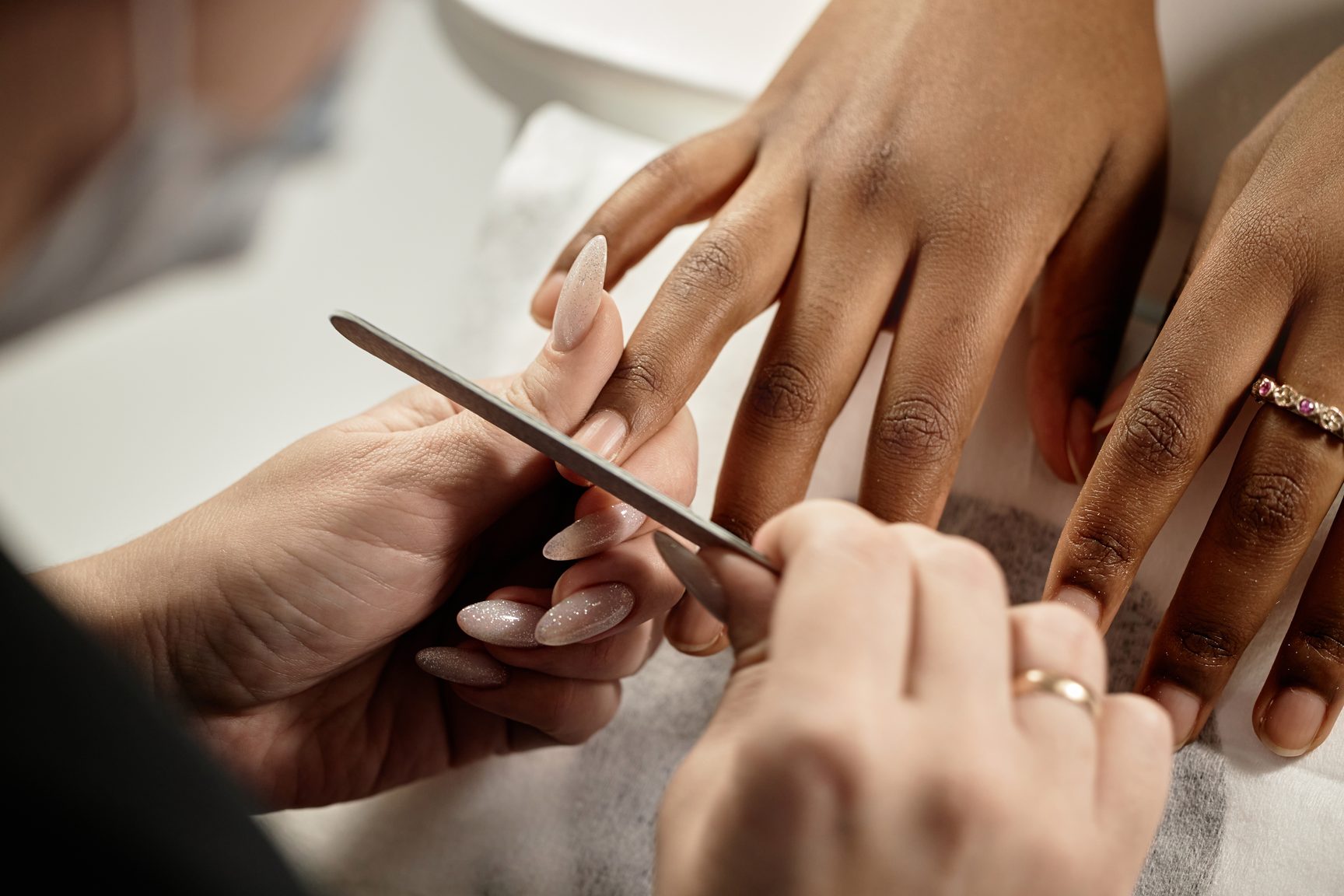
Nail salon business insurance in California starts from two state rules. California licenses the premises and the person separately, and it puts the workers’ compensation duty on every employer except the state. The Board of Barbering and Cosmetology issues both the establishment license and the manicurist license, and Cal. Lab. Code § 3700 requires each employer to secure compensation by insurance with an authorized insurer or by a certificate of consent to self-insure.
The sections below follow the order an owner meets these rules: the license for the premises, the license for each technician, inspection, the compensation duty, and what the licensing documents say about insurance. Each policy we place is then set against what the California rules change about it. The sources are the Act and regulations as the Board publishes them and the Department of Industrial Relations reprint of the statute.
The license to operate an establishment
The Board’s statute is headed “Application for License to Operate Establishment” in the Act, and that is the license a salon holds. The Act defines an establishment as any premises, building or part of a building where any activity licensed under the chapter is practiced, and the Act’s definition of the practice of nail care puts it, including manicuring and pedicuring, inside the chapter. A person, firm or corporation may apply.
The application is required whether the applicant is opening a new establishment or taking ownership of an existing one. The application also carries a signed acknowledgment that establishments are responsible for compliance with the applicable labor laws of the state.
The Act makes it unlawful to conduct or operate an establishment where licensed activity is practiced unless it is licensed, and a violation is subject to an administrative fine and may be subject to a misdemeanor charge.
One license, one location
The establishment license authorizes operation only at the location for which it is issued. Operating at any other location is unlawful unless a license for the new location has been obtained under the same section that applies to a first issuance. A move is therefore a new licensing event.
The Act adds that an establishment must at all times be in the charge of a person licensed under the chapter, other than an apprentice.
The manicurist license and its routes
The license a technician holds is printed as “manicurist.” The Act has the board admit to examination for a license as a manicurist to practice nail care a qualified applicant who has applied in proper form and paid the fee. One qualifying route is a course in nail care from a school approved by the board. Another is nail care practiced outside the state for a period equivalent to that training, and a third is completion of the apprenticeship program in nail care that the Act’s apprenticeship article sets out.
The Act also provides a separate route for an applicant with proof of a current license from another state that is not revoked, suspended or otherwise restricted and is in good standing. It defines an apprentice as a person licensed by the board to learn nail care in a licensed establishment under supervision, and it says an apprentice must be supervised at all times and may never be the only individual working in the establishment.
This matters at quoting because the Act makes it unlawful to hire, employ or permit to work in an establishment anyone practicing a regulated occupation without a license, with an exception for a student extern. We ask for the license status of every person who does nails so the roster we describe to an underwriter matches the law the owner is under.
Board inspection
Inspection is a standing program. The board’s executive officer and authorized representatives have access to, and shall inspect, any establishment or mobile unit during business hours or at any time services are being performed, and the board maintains a program of random and targeted inspections to ensure compliance with the laws on public health and safety and the conduct and operation of establishments.
Cal. Lab. Code § 3700: every employer except the state
California’s workers’ compensation system is compulsory. Cal. Lab. Code § 3700 states that every employer except the state shall secure the payment of compensation in one of the ways it lists. For a private salon those ways are being insured with an insurer duly authorized to write compensation insurance in the state, or securing from the Director of Industrial Relations a certificate of consent to self-insure. The text we read is the Department of Industrial Relations reprint, and it sets no employee-count floor.
The owner who rents the space and keeps technicians on the payroll is an employer in that sentence.
What the licensing documents say about insurance
We searched the Board’s license requirements page and the Act and regulations for insurance, liability, bond, surety and financial responsibility. Neither the establishment license nor the manicurist license is conditioned on insurance or a bond in those two documents.
Insurance appears in two narrower places. An establishment that hosts a school extern is liable for the extern’s general liability insurance and for malpractice liability insurance, and must furnish proof to the school that the establishment and the extern are covered. The regulations also require an applicant for a personal service permit, which authorizes certain services outside a licensed establishment, to provide proof of current liability insurance.
Nail salon business insurance against these rules
General liability is where the externship rule lands: a salon that takes a school extern has to show proof of general liability coverage to the school, so tell us before that arrangement starts.
Property follows the licensed premises. Because the license is tied to a location, the address on the license is the address we schedule, and a relocation means a new license and a new schedule together.
Workers’ compensation is the policy the state requires of an employer under Cal. Lab. Code § 3700, and the choice the statute lists is an authorized insurer or a certificate of consent to self-insure. Licensed manicurists and apprentices on the payroll are the headcount we ask about.
Commercial auto is not changed by anything in the licensing or compensation text we read. The Act does bring a mobile unit within board inspection, so a salon that sends a technician out in a vehicle should say so when it asks for a quote.
Umbrella sits over the policies above and is not changed by the California rules we read, only by what they change in the policies beneath it. The nail salon insurance hub lays out how the five fit together.
What to send us, and why
Send the establishment license for the address you operate from, because the license and the property schedule have to name the same place. Send the name and license status of each manicurist and each apprentice, because the Act puts the licensing duty on the owner. Send your payroll headcount, so we can set it against Cal. Lab. Code § 3700, and tell us if you host a school extern or if any technician works outside the salon under a personal service permit.
A license lets the salon open its doors; the insurance program is what answers a claim.
- A license is a condition of operating, not insurance, so no line is drawn from the license itself.
A panel for California in rows. Each row sets a requirement of the state beside the exposure that requirement leaves open and the coverage line that answers it. Salon license: The state licenses the salon itself. It leaves open a customer hurt in the salon, or a customer’s property damaged there, which General Liability answers. Technician license: The state licenses the person doing the nails. It leaves open a client hurt during a manicure or pedicure, which General Liability answers. Workers’ compensation: State law requires the employers it covers to provide it. It leaves open an employee hurt on the job, which Workers’ Compensation answers. Notes: A license is a condition of operating, not insurance, so no line is drawn from the license itself. The conclusion reads: A license lets the salon open its doors; the insurance program is what answers a claim. No figures are shown.
Nail salon insurance in nearby states
California borders the states below. A name is a link once its page is published.
Why Protect My Nail Salon in California
We are an independent agency that writes for one kind of business, the nail salon, and each state page starts from the state’s own licensing and workers’ compensation documents. When we quote a salon in California we read the policies against those rules and against your lease, and we tell you plainly where something does not line up.
We place coverage in 48 states, and every coverage on one page sets out the five policies a salon program is built from. Our guides for salon owners take single questions further; for an owner in California, a good next read is our guide to employment practices liability for nail salons, because a salon with staff can face a claim from its own employees that general liability does not answer.
For a closer look, read our guide to California workers’ comp for salons with staff, which works through the employer duty from the first person on payroll.
California coverage pages
Coverage for your salon
California nail salon insurance questions
Do I need a license for the salon itself, or only for the people who work in it?
Both. The Board of Barbering and Cosmetology issues a license to operate an establishment, and it separately licenses each manicurist. The Act makes it unlawful to conduct or operate an establishment where licensed activity is practiced unless it is licensed under the chapter.
Can I move the salon to a new address on the same license?
No. An establishment license authorizes the operation of the establishment only at the location for which it is issued, and operating at any other location is unlawful until a license for the new location has been obtained. Tell us before a move so the property policy follows the new address.
Can I put a new technician on the floor before they have their manicurist license?
The Act makes it unlawful to hire, employ or permit to work in an establishment anyone who practices a regulated occupation without being duly licensed, with an exception for a student extern. An apprentice is a person licensed by the board to learn nail care in a licensed establishment, supervised at all times by an approved licensee.
Does California’s workers’ compensation duty reach a salon with a single employee?
Cal. Lab. Code § 3700 says every employer except the state shall secure the payment of compensation, either by insurance with an authorized insurer or by a certificate of consent to self-insure from the Director of Industrial Relations. The text we read sets no employee-count floor.
Do I need liability insurance to get the salon license?
We read the Board’s license requirements page and the Barbering and Cosmetology Act and regulations, and neither makes insurance or a bond a condition of the establishment license or the manicurist license. Insurance does appear elsewhere in those regulations, for a school externship and for the personal service permit.
Will the Board inspect my salon, and do I get a warning first?
The Act directs the Board to maintain a program of random and targeted inspections of establishments, and its representatives may inspect during business hours or whenever licensed services are being performed. The same section covers mobile units as well as establishments.
This page describes insurance for nail salons operating in this state. It is general information, not legal advice and not a statement of coverage. Licensing, registration and sanitation requirements change; verify current requirements with the agency named before relying on them.
Get a quote for your California nail salon
Send us the establishment license, the roster of licensed manicurists and apprentices, and your payroll headcount, and we will match them to the policies.