
Nail Salon Insurance by State
Nail Salon Insurance in Oklahoma
The Oklahoma State Board of Cosmetology and Barbering licenses the salon and the technician, and every employer must secure workers’ compensation. Here is what each rule changes about your insurance.
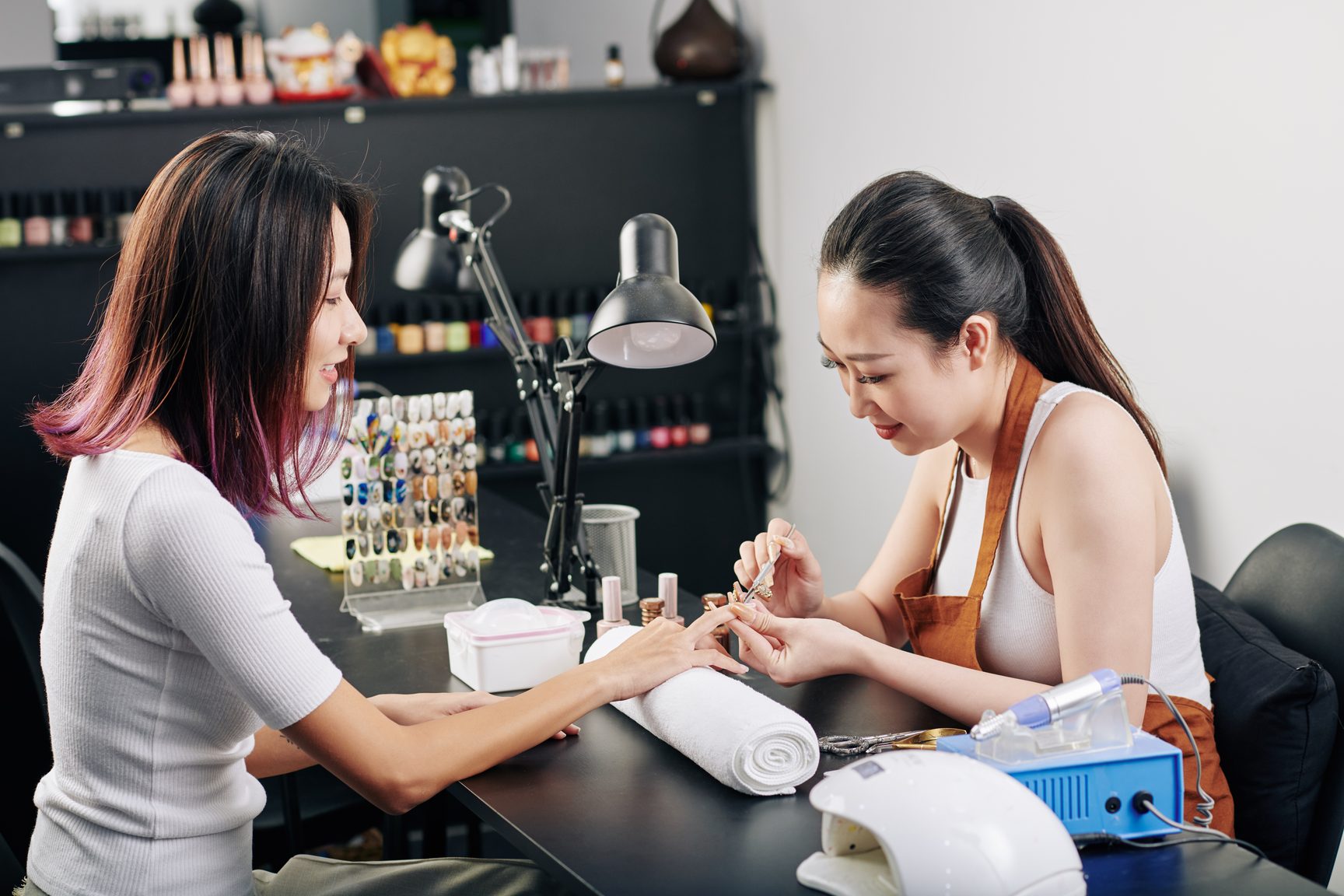
A nail salon in Oklahoma answers to two separate sets of rules. The Oklahoma State Board of Cosmetology and Barbering licenses the premises and the technicians, and the Administrative Workers’ Compensation Act requires every employer to secure compensation for its employees. A salon that rents its space and has staff on payroll sits under both.
This page walks through the salon license, the technician license and its routes, inspection, workers’ compensation and the licensing-insurance question, then ties each to the policy it affects. Each coverage has its own page; this one covers only what Oklahoma’s rules change.
The nail salon license from the Board
The Board’s rule book carries a fee line for a "Nail salon license", and its definitions treat an establishment as a place or premises, a cosmetology salon or another specialty shop or salon, where cosmetology practices are performed on the public. The license is therefore tied to the place, not only to the person who runs it.
The statute on facilities makes the point from the other direction: it is unlawful to practice cosmetology in any place other than a licensed establishment or school licensed by the Board, with a narrow emergency exception for a licensed operator. Cosmetology is defined to include manicuring, so a nail-only shop is inside the rule. The cite is 59 O.S. § 199.9. The documents we read do not settle who may own a salon, so we say nothing on that here.
The Manicurist/Nail Technician license and its routes
The Board’s own page says anyone who provides nail care must be licensed by the Board. The rules define a Manicurist/Nail Technician as a person licensed by the Board to perform nail care services to the public in a place licensed by the Board. A technician needs the license and a licensed place to work in.
The routes in the record are three. One is the Manicurist/Nail Technician license itself. Another is the Board-issued examination; the rules say a person is not eligible to take it until the eligibility requirements are met. The third is reciprocity under 59 O.S. § 199.13: the Board may issue a reciprocity license to an applicant who holds a current license from another state, verified by certification, and who passes Oklahoma’s rules, regulations and law test.
What the technician license means when a carrier quotes the salon
An underwriter asks who performs the services and whether each person is licensed. A roster in which every technician holds the Board license, or a reciprocity license in progress, is an answer a carrier can price. A technician working on a pending application gives the carrier a question mark, and a licensing gap can become a coverage argument after a claim. Tell us at the start where each person stands, and send the license or the pending application so the carrier sees the same facts the Board holds.
Board inspection of the establishment
The Board inspects. Under 59 O.S. § 199.9 it may not issue an establishment license until an inspection has been made of the salon and equipment, including the sanitary facilities, and temporary approval pending inspection may be made on the applicant’s sworn affidavit that the requirements have been met. Separately, the Board’s powers under 59 O.S. § 199.3 include regular inspections of the establishments it licenses, with the reports kept in the Board’s office.
The same section bars a license for an establishment in a private home unless the salon is in a room or rooms not used or occupied for residential purposes. For a salon that means a clean, separate commercial space, and that is also the description a property insurer wants to read. The documents we saved say no more about hygiene standards than this, so we do not describe them.
Workers’ compensation under the Administrative Workers’ Compensation Act
Oklahoma’s regime is compulsory. The statute says every employer shall secure compensation to its employees for compensable injuries without regard to fault. The section prints no employee count, so a salon with one technician on payroll is an employer for the purpose of reading it. The Workers’ Compensation Commission administers the Act.
The Act lists the permitted ways to secure compensation in the Act’s section on securing compensation. One is insuring and keeping insured with a stock corporation, a mutual association or another concern authorized to write workers’ compensation in the state. When an insurer issues the policy it files a notice with the Commission, so the policy you buy is tied to a record the Commission keeps. An employer who fails to secure compensation is guilty of a misdemeanor on conviction, and the penalty does not displace the employer’s other liability under the Act.
Owner and officer election
Coverage is the default for owners. Under the Act’s section on employers who own their business, an officer of a corporation, a sole proprietor, a partner, a limited liability company member or a self-employed employer who is not a subcontractor and who owns and operates their own business may, by agreement or contract, exclude themselves from coverage. Because the statute frames this as an exclusion the owner chooses, the exclusion should be in writing before the policy is bound.
A salon owner who also works the chair should decide that question deliberately. Staying in means the owner is covered for an injury at work; excluding means the owner takes that risk personally. We ask which choice you made so the application matches the paperwork.
Does the Board require insurance or a bond?
We read the Board’s two saved documents, the agency page and the rule book with the statutes, for insurance, liability, bond, surety and financial responsibility. For an establishment or a nail technician we found no insurance or bond condition. The bond that does appear is a surety bond for school licenses. Insurance appears as a curriculum topic and as a requirement tied to a different trade. The Board’s facilities statute sets the inspection and the private-residence condition for an establishment and mentions no policy.
The finding is limited to those documents. A landlord, a lender or a client contract can still ask for liability insurance, and a salon should not read this as permission to go without.
The five coverages against Oklahoma’s rules
General liability carries the client-injury and premises exposure. Oklahoma’s licensing rules do not set a policy requirement, so the limit is driven by your lease and your own judgment. Showing the carrier a current establishment license and a licensed roster answers the first underwriting question.
Property covers the build-out, equipment and stock. The inspection that precedes licensing looks at the salon and its equipment, so the inventory you give a property carrier should match what the Board saw.
Workers’ compensation is the coverage Oklahoma compels. With no employee count in the statute, a first hire creates the duty, and the owner’s election should be settled on the application.
Commercial auto matters only if the salon owns vehicles. Nothing in the Board’s documents we read addresses a mobile service, and we make no claim about one.
Umbrella sits above general liability and, where the carrier requires it, employer’s liability. Because the state attaches no licensing insurance condition, the reason to buy it is the exposure above your primary limits. The hub lays out how the five fit together.
What we ask you to send
Send the establishment license as the Board issued it, the license of each technician, and any reciprocity application still open. Send the current workers’ compensation declarations with a note on whether you or any partner or member excluded yourselves from coverage. Add the lease and a list of equipment, since the Board looks at the salon and its equipment before it licenses the establishment and the property carrier reads the same list. Those documents mirror what the Board and the Commission hold, which is what a carrier compares against your application.
A license lets the salon open its doors; the insurance program is what answers a claim.
- A license is a condition of operating, not insurance, so no line is drawn from the license itself.
A panel for Oklahoma in rows. Each row sets a requirement of the state beside the exposure that requirement leaves open and the coverage line that answers it. Salon license: The state licenses the salon itself. It leaves open a customer hurt in the salon, or a customer’s property damaged there, which General Liability answers. Technician license: The state licenses the person doing the nails. It leaves open a client hurt during a manicure or pedicure, which General Liability answers. Workers’ compensation: State law requires the employers it covers to provide it. It leaves open an employee hurt on the job, which Workers’ Compensation answers. Notes: A license is a condition of operating, not insurance, so no line is drawn from the license itself. The conclusion reads: A license lets the salon open its doors; the insurance program is what answers a claim. No figures are shown.
Nail salon insurance in nearby states
Oklahoma borders the states below. A name is a link once its page is published.
Why Protect My Nail Salon in Oklahoma
We are an independent agency that writes for one kind of business, the nail salon, and each state page starts from the state’s own licensing and workers’ compensation documents. When we quote a salon in Oklahoma we read the policies against those rules and against your lease, and we tell you plainly where something does not line up.
We place coverage in 48 states, and every coverage on one page sets out the five policies a salon program is built from. Our guides for salon owners take single questions further; for an owner in Oklahoma, a good next read is our guide to what it costs to buy a nail salon, because a buyer needs a program of their own in force on the day the salon changes hands.
Oklahoma coverage pages
Coverage for your salon
Oklahoma nail salon insurance questions
What is the Oklahoma nail salon license called, and where does the Board print it?
The Board’s fee schedule lists a "Nail salon license", and the rules treat the premises as an establishment. The Oklahoma State Board of Cosmetology and Barbering issues it. Practicing manicuring outside a licensed establishment is unlawful under 59 O.S. § 199.9, apart from the emergency case the statute describes.
What does a reciprocity applicant have to pass before they can join my staff?
The Board may issue a reciprocity license to an applicant who holds a current license from another state, verified by certification, and who passes Oklahoma’s rules, regulations and law test. That is a Board decision, so the technician should have the license in hand before they work your floor.
Is one technician on payroll enough to make me secure workers’ compensation?
The statute says every employer shall secure compensation for its employees, and the section prints no employee count. We read that as reaching a salon with a technician on payroll. Failing to secure it is a misdemeanor under the Administrative Workers’ Compensation Act.
As an owner who works the chair, may I choose to stay off the compensation policy?
An officer of a corporation, a sole proprietor, a partner or a member of a limited liability company who owns and operates the business may, by agreement or contract, exclude themselves from coverage. Coverage is the default and the exclusion is a choice you make in writing. A subcontractor does not qualify for that waiver.
Does the Board make a salon show insurance before it licenses the shop?
In the two Board documents we saved and searched, we found no insurance or bond condition on the salon or technician license. The documents mention a surety bond for school licenses and insurance as a curriculum topic, which is a different matter from the salon you run.
Does anyone besides my insurer need to know about my workers’ compensation policy?
When an insurer issues a workers’ compensation policy under the Act, it files a notice with the Workers’ Compensation Commission containing the employer’s name, address and principal occupation and the policy details. The insurer files it, not you, within the time the statute sets.
This page describes insurance for nail salons operating in this state. It is general information, not legal advice and not a statement of coverage. Licensing, registration and sanitation requirements change; verify current requirements with the agency named before relying on them.
Get a quote for your Oklahoma nail salon
Send us your Board license, your technician list and your current workers’ compensation declarations, and we will place the salon’s coverage against them.