
Nail Salon Insurance by State
Nail Salon Insurance in Missouri
The establishment license, the manicurist license, the board’s inspections and the five-employee threshold, each tied to the policy it touches.
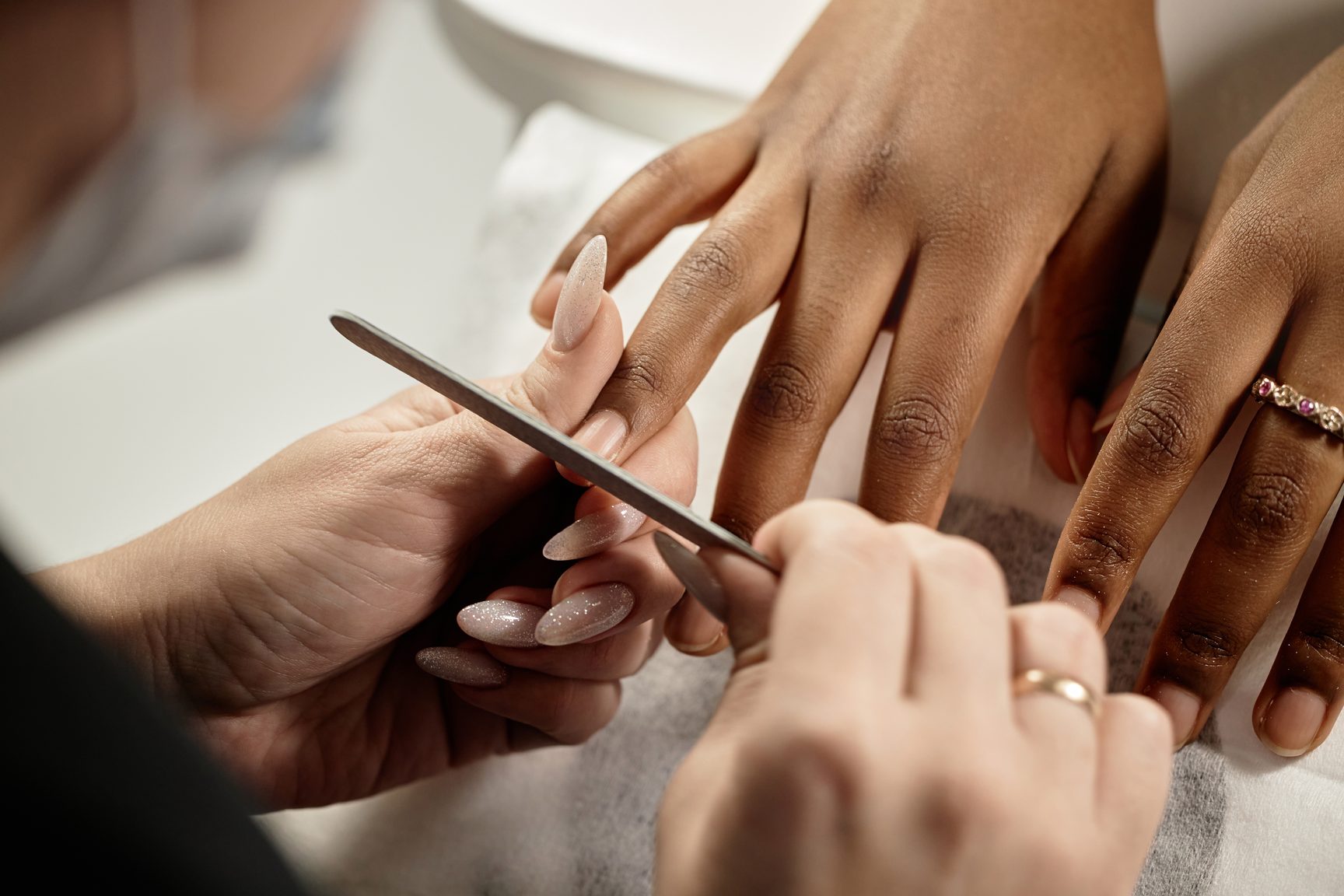
Missouri licenses the salon and the technician separately, and its workers’ compensation chapter binds an employer only once the payroll reaches five or more employees. For a nail salon that rents its space and pays its staff, that gives two questions to settle before a quote: whether the establishment and every manicurist hold current licenses, and whether the headcount puts the salon under the compulsory duty to insure.
The sections below take the board’s licensing rules first, then the compensation chapter, then the five policies we place, with what each rule changes about each. The documents are linked as we go, and the board’s own text controls over anything summarized here.
The cosmetology establishment license
The cosmetology board, inside the Department of Commerce and Insurance, issues the cosmetology establishment license. The statute is plain about who needs it: RSMo § 329.045.1 says every establishment in which the occupation of cosmetology is practiced must obtain a license from the board. A nail salon is reached because the chapter’s definitions list a manicurist class among the classified occupations, and an establishment is any building where those occupations are practiced.
The license is tied to the place. When an establishment changes ownership or location, the same section requires a new license within forty-five days, and the state inspector checks the sanitary conditions required for licensure without making the owner close or change regular hours. The license must also hang in plain view inside the establishment. An owner who moves suites or buys out a partner is therefore starting a new license clock, and the carrier will want the new document rather than the old one.
The establishment fee is set for the first three licensed practitioners with an additional fee for each one after that. We do not use the board’s fee amounts anywhere on this page. The record we read does not address who may own an establishment, so we say nothing on that point.
The Class MO manicurist license and how a technician gets one
The practitioner rule is in RSMo § 329.030: it is unlawful to engage in the occupation of cosmetology, or to operate an establishment or school, without first obtaining a license under the chapter. The definitions section names the nail-work class as Class MO manicurist and describes it as cutting, trimming, polishing, coloring, tinting, cleaning or otherwise beautifying fingernails, and applying artificial fingernails. A technician who does that work for pay needs that license, and the salon that employs them carries the exposure if they do not hold it.
The routes to the license are written into the chapter. An applicant can qualify through the board’s examination. An applicant can instead serve as an apprentice under a licensed cosmetologist, and the apprentice time the statute sets is no less than eight hundred hours for manicurists. A third route is reciprocity: RSMo § 329.130 directs the board to grant a license without examination to an applicant who holds a current license from another state whose requirements are similar, or who has practiced elsewhere for the period the section names. That section speaks of a cosmetology license, and the board’s separate reciprocity rules were not read in detail, so a manicurist moving in from another state should check with the board before starting work.
The chapter has a home exemption. It does not apply to manicuring given in the home to family or friends for which no charge is made. Nothing in that sentence reaches a paid service in a salon.
Why this matters to a carrier: an underwriter reading a nail-salon submission is asking whether the people doing the work are licensed. A roster of current Class MO manicurist licenses answers that question before it is asked, and an unlicensed worker is a gap that a general liability underwriter will price or decline. The license sits at the center of every professional-services question on the application.
What the board’s inspection rule says
The board’s inspections rule is short. Every establishment and school licensed by the board is open to inspection by members, representatives or inspectors of the board during normal working hours or at reasonable times the board requests. The license holder must keep the board informed of the business hours and make the establishment available, and must respond promptly when the board asks for the times the establishment is open. The board’s power to prescribe inspection by rule comes from RSMo § 329.025.1.
The rule speaks of access and hours; the rule text we saved does not set out a hygiene checklist for cosmetology establishments. The one place the cosmetology section mentions sanitary conditions is the ownership-or-location change described above. For the owner, the practical point is that a salon cannot treat its posted hours as private: the board expects to be told them and to be able to walk in.
The workers’ compensation chapter and its five-employee line
The compensation law is compulsory. RSMo § 287.280.1 says every employer subject to the chapter shall insure its entire liability under the workers’ compensation law, on an individual or group basis, with an authorized insurance carrier, except that an employer or group may carry the liability itself on satisfying the division of its ability to do so. A salon that is an employer under the chapter therefore buys a policy; going bare is not an option the statute offers a small shop.
The threshold is the five-employee line. RSMo § 287.030.1(3) says an employer must have five or more employees to be deemed an employer for the purposes of the chapter, unless election is made to become subject to it. Construction employers who erect, demolish, alter or repair improvements are deemed employers at one or more employees, which is an exception for that industry and not for a salon. Family members within the third degree are counted toward the total, so a salon staffed by relatives reaches the line sooner than the payroll alone suggests.
On owners and officers, the record is narrow. The exempt-employer section, RSMo § 287.090, carves out one family-farm-corporation situation and says exempt employers may elect coverage by purchasing a policy. We found no general rule on sole proprietors, limited liability company members or other officers in the sections we read. Whether an owner counts as an employee is therefore not settled by what we read, and we will ask for the entity documents instead of assuming.
The statute also defines an independent public corporation created to insure Missouri employers against workers’ compensation, occupational disease and employers’ liability, and lets it convert to a private mutual insurance corporation under the insurance chapter, at RSMo § 287.921. The same section says the state is not liable for the expenses, liabilities or debts of the converted corporation or of the company. We describe that entity by what the statute says it does and do not rest anything on it here; the saved text does not prove whether the conversion occurred, and we did not read a section that creates the company.
Licensing without an insurance or bond condition
We searched the board’s statutes and regulations, the single document we saved, for insurance, liability, bond, surety, financial responsibility and malpractice. The only hits were the agency’s own name, the Department of Commerce and Insurance. Within that document, then, the establishment license under RSMo § 329.045.1 carries no condition that the salon hold an insurance policy or post a bond. That finding covers that one document. Other Missouri sources were not searched, and a landlord or a lender can still require coverage by contract.
The five policies against Missouri’s rules
General liability answers a client’s claim of bodily injury or damage at the salon. The board does not require it as a condition of the establishment license, so the push to buy it comes from the lease and from the owner’s own risk. What the licensing rules do change is the underwriting file: a current establishment license and licensed manicurists are the facts the carrier checks first.
Commercial property covers the contents and improvements the owner is responsible for. The licensing tie matters in one way: the establishment license follows the location, so a move means a new license and a fresh inspection of sanitary conditions, and the property policy should be rewritten for the new address at the same time.
Workers’ compensation is where the state’s rules carry the greatest weight. The compulsory duty under the chapter attaches at five or more employees, family members within the third degree count, and election to be covered is available below the line. Because we found no general owner or officer rule, the owner’s own status on the policy is a point we settle with documents.
Commercial auto applies when the salon owns or uses vehicles for the business. Nothing in the licensing text we read touches vehicles, and the compensation chapter’s threshold applies to the whole payroll, drivers included.
Umbrella sits above the liability and auto policies. The state sets no insurance condition on the establishment license, so an umbrella is a choice the owner makes against the lease and the exposure rather than anything Missouri requires. The nail salon insurance hub explains how the pieces fit together.
What we ask you to send, and why
Send the cosmetology establishment license, because it shows the licensed address and the date the board last issued it, and a move or a sale means it must be replaced. Send each technician’s Class MO manicurist license, so the carrier sees licensed hands doing the work. Send the payroll headcount, including any family members on it, because the five-employee line and the third-degree rule decide whether the compensation duty is compulsory for you. If the salon is an entity, send the formation papers, since the sections we read do not settle the owner’s status. We then match the policies to what the documents show.
A license lets the salon open its doors; the insurance program is what answers a claim.
- A license is a condition of operating, not insurance, so no line is drawn from the license itself.
A panel for Missouri in rows. Each row sets a requirement of the state beside the exposure that requirement leaves open and the coverage line that answers it. Salon license: The state licenses the salon itself. It leaves open a customer hurt in the salon, or a customer’s property damaged there, which General Liability answers. Technician license: The state licenses the person doing the nails. It leaves open a client hurt during a manicure or pedicure, which General Liability answers. Workers’ compensation: State law requires the employers it covers to provide it. It leaves open an employee hurt on the job, which Workers’ Compensation answers. Notes: A license is a condition of operating, not insurance, so no line is drawn from the license itself. The conclusion reads: A license lets the salon open its doors; the insurance program is what answers a claim. No figures are shown.
Nail salon insurance in nearby states
Missouri borders the states below. A name is a link once its page is published.
Why Protect My Nail Salon in Missouri
We are an independent agency that writes for one kind of business, the nail salon, and each state page starts from the state’s own licensing and workers’ compensation documents. When we quote a salon in Missouri we read the policies against those rules and against your lease, and we tell you plainly where something does not line up.
We place coverage in 48 states, and every coverage on one page sets out the five policies a salon program is built from. Our guides for salon owners take single questions further; for an owner in Missouri, a good next read is our guide to insurance for small nail salons on a budget, because a small salon can fall below the employee count the state sets.
Missouri coverage pages
Coverage for your salon
Missouri nail salon insurance questions
Does the establishment fee depend on the size of my team?
The statute sets a fee for the first three licensed practitioners and an additional fee for each one beyond that. The renewal date is when the fee falls due, and a late fee follows if it is unpaid. The fee amounts are on the board’s own schedule, so we do not quote them here.
Is a nail service given free at home covered by the licensing law?
The chapter says it does not apply to manicuring given in the home to family members or friends for which no charge is made. That exemption turns on the home and on no charge being made. A paid service in a salon falls outside it.
Where is the line between a salon that must carry a compensation policy and one that need not?
The statute says an employer must have five or more employees to be deemed an employer under the chapter, unless it elects to become subject to it. Construction employers are treated differently, but that exception is for those who erect, demolish, alter or repair improvements, which a salon does not do. A salon below the headcount is outside the mandatory duty, not outside the chapter’s reach if it chooses coverage.
Can I buy a policy even if my headcount is under the threshold?
The threshold sentence itself allows an election to become subject to the chapter. The exempt-employer section also says an exempt employer may elect coverage by purchasing a policy. Whether that suits a salon is a question to put to us with your payroll in hand.
How long must an apprenticeship run for a manicurist?
The qualifications section sets the apprentice time at no less than eight hundred hours for manicurists, served under the supervision of a licensed cosmetologist. The same sentence sets no less than three thousand hours for cosmetologists. The board may require studies as well as hours.
What must I do when a board inspector comes to the salon?
The board’s rule makes the establishment open to inspection during normal working hours or at reasonable times the board requests. The license holder must keep the board informed of the business hours and make the salon available. The licensee must also respond promptly when the board asks for a list of the times the salon is open.
This page describes insurance for nail salons operating in this state. It is general information, not legal advice and not a statement of coverage. Licensing, registration and sanitation requirements change; verify current requirements with the agency named before relying on them.
Sources
- Missouri state cosmetology board: statutes and regulations
- Missouri Revisor of Statutes: workers’ compensation employer definition
- Missouri Revisor of Statutes: exempt employers and election
- Missouri Revisor of Statutes: duty to insure
- Missouri Revisor of Statutes: the statute on the workers’ compensation insurer the state created
Get a quote for your Missouri nail salon
Send us your establishment license, your technicians’ manicurist licenses and your payroll headcount, and we will place the right policies.