
Nail Salon Insurance by State
Nail Salon Insurance in New Mexico
The Board of Barbers and Cosmetologists licenses the salon and the technician; the Workers’ Compensation Act reaches an employer at three workers. Here is what each does to your policies.
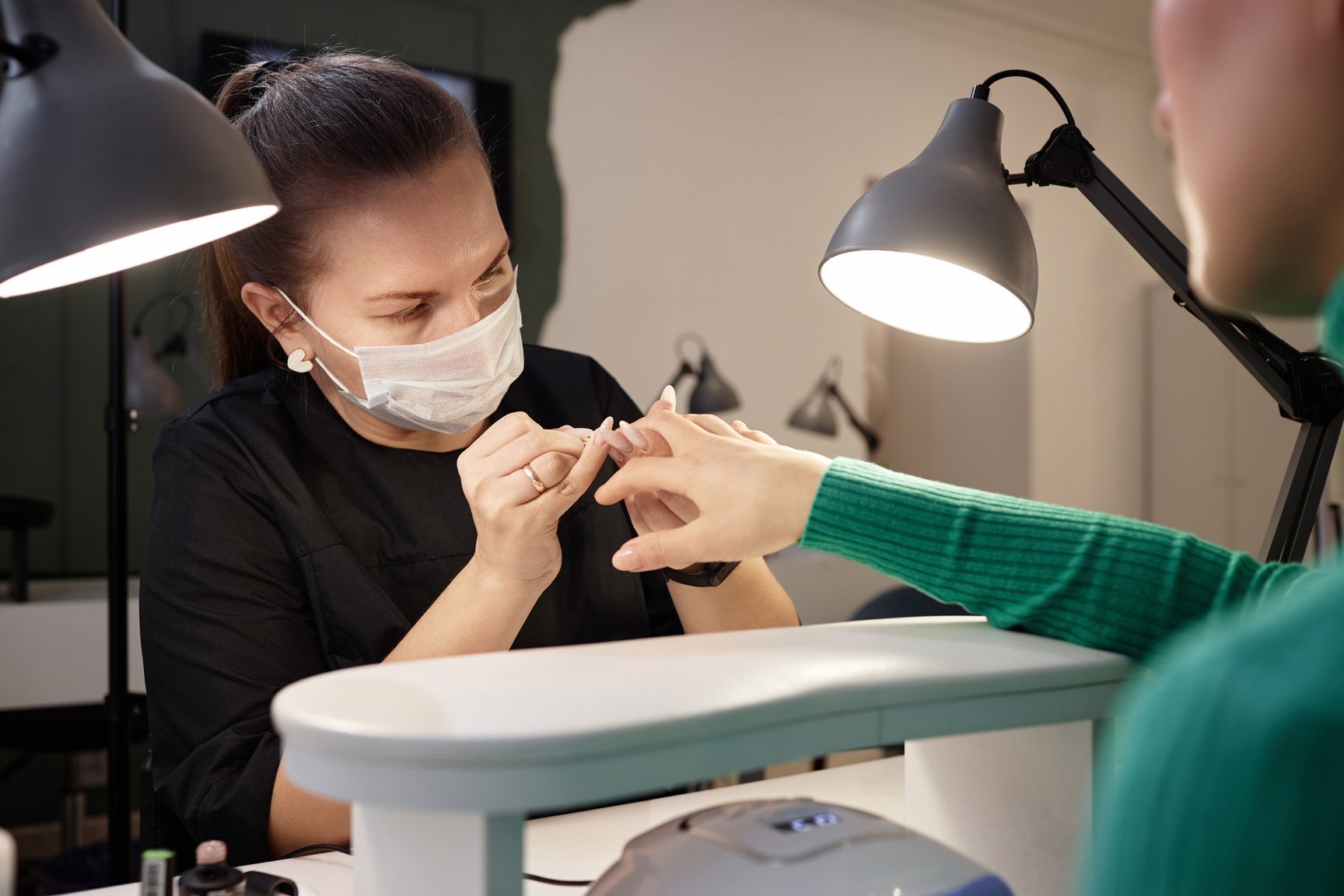
New Mexico licenses the salon and the technician separately, and both licenses come from the Board of Barbers and Cosmetologists inside the Regulation and Licensing Department. A salon needs an enterprise or establishment license, a technician needs a manicurist/pedicurist or cosmetologist license, and the Board inspects the shop after the license is issued. Workers’ compensation is compulsory for an employer of three or more workers.
This page walks through those rules in the order you meet them, then ties each one to the policy it touches. We read the rules; we do not give legal advice, and the Board and the director of the Workers’ Compensation Administration answer questions about their own text.
The enterprise or establishment license
The license is printed in the rule as an “enterprise or establishment license,” and the rule is N.M. Admin. Code § 16.34.7.8. The Board issues it. Under the Board’s scope list, the rules cover manicurist/pedicurists alongside the other trades it licenses, which is how a nail salon reaches this license.
An application must be filed with the Board at least fifteen days before the expected opening. It must carry the required fee and a copy of the owner’s business license, and where booth renters work in the space it must list every one of them. Fees are non-refundable, and incomplete applications are returned.
The license is tied to the establishment, not to you personally. It is nontransferable under N.M. Admin. Code § 16.34.7.10. If the salon is sold, or the lease of or right to do business as the establishment passes to someone else, the new owner, lessee or other legally responsible party submits a new application and secures a new license. If the salon relocates within the state, the owner completes a new application and obtains approval, including an inspection, for the new location.
Two smaller rules matter to anyone with a divided floor plan. A portion of the establishment that is completely segregated from the primary area needs a duplicate license, posted in that area. And every enterprise and establishment license is renewed each year on the last day of the month of original issue.
The record does not prove a rule about who may own the establishment, so we say nothing about it here. What it does prove is that the owner’s business license travels with the application.
Manicurist/pedicurist and cosmetologist licenses
A technician in a New Mexico salon holds either a manicurist/pedicurist license or a cosmetologist license, which also covers nails. The rule for the manicurist/pedicurist license says it permits the practitioner to trim nails, use chemical substances on the nails with tips, wraps or acrylic products, work on the hands, arms and feet, and apply polish. The cosmetologist license permits manicure, pedicure and nail extensions. A license for the barbering trade does not: the rule says a practitioner of that trade may not perform any type of nail services without obtaining appropriate licensure.
The routes into those licenses come from the Board’s rules on regular licenses. An applicant must show proof of a completed course of study in a licensed school within the preceding twelve months, must have paid the fees, and must have passed the practical and written examination conducted by the board. The applicant must also be at least seventeen years of age. The saved rule text for the manicurist/pedicurist license names four hundred hours of study or equivalent credit; an amendment draft that we also saved shows that figure bracketed and replaced by six hundred. We state both and treat neither as the last word, because a draft is not a rule in force. The requirement to hold a license is the same in both.
Why this matters when a carrier quotes the salon: the underwriter wants to know who is licensed to put hands on a client. A salon whose technicians all hold current licenses is a cleaner submission than one where the answer takes a week to assemble. The rule on supervision also helps you here. A licensed establishment must be under the immediate supervision of a Board licensee while licensed activity is practiced, and that supervisor must be licensed in all aspects of the activity being practiced. The holder of a temporary license may not act as a supervisor of any establishment, so a salon that staffs a floor with only temporary licensees has a gap the rule names.
The same rules put weight on the establishment license itself. Before a licensee begins work in an establishment, the licensee must ask to see its license, and may not provide or offer licensed activity until a valid, current license has been seen. A technician is told to refuse to work in your salon until the license is shown, so keep it displayed where it is visible to the public upon entry.
Inspection after the license is issued
The order here is unusual. The application, if complete, may be administratively approved, and a formal inspection of the establishment takes place after the license is issued, not before. You may be licensed and open before anyone from the Board has walked the floor.
The rule then says what happens with the result. The latest inspection report is printed and posted where visible to the public, within seventy-two hours of the inspection, and the rule makes the licensee who signed the report and the owner responsible for seeing that it is done. The rule also lists what is kept on file on the premises and available to the Board: the full names of all employees and their exact duties, the name and address of the owner, and a complete description of all services performed.
That last list is the same set of facts a carrier asks for. A salon that already keeps its employee roster and service list current has the core of an application written.
Workers’ compensation under the New Mexico Act
The state’s Workers’ Compensation Act applies to employers of three or more workers, as N.M. Stat. Ann. § 52-1-6 puts it, and N.M. Stat. Ann. § 52-1-2 describes the employers who come within the Act in the same terms. The Act also applies to all employers engaged in activities required to be licensed under the Construction Industries Licensing Act regardless of the number of employees, and it does not apply to employers of private domestic servants and farm and ranch laborers. A salon is none of those, so for you the threshold is the three-worker line.
Where it applies, coverage is compulsory. N.M. Stat. Ann. § 52-1-4 directs every employer subject to the Act to have the insurance carrier file evidence of coverage in the form of a certificate with the director, and the certificate must be provided by an authorized insurer. The statute leaves one alternative: an employer who shows the director that it is financially solvent and that insurance is unnecessary may be issued a certificate to that effect, filed in place of the certificate of insurance. We would not plan around that alternative for a salon, but you should know the statute names it.
Ownership is a separate question from headcount. N.M. Stat. Ann. § 52-1-6 allows a partner or self-employed person to elect to be subject to the Act, by filing with the director a sworn statement that the employer accepts the provisions of the Act or an insurance or security undertaking. Officers of a corporation and members of a limited liability company are not addressed in that section, and we do not read an answer into the silence. Ask us how your own entity is treated on the policy.
New Mexico also has a public option, described here by function. A separate act creates a nonprofit, independent, public corporation, organized as a domestic mutual insurance company, whose purpose is insuring employers against the risk of liability for payment of workers’ benefits claims. The legislature’s stated purpose includes competitively priced coverage and help for small and medium-sized employers who face obstacles in the private voluntary market. The record types it as a carrier and finds the state not monopolistic, since authorized insurers file certificates with the director, so a salon may still buy from a private insurer.
No insurance or bond condition in the documents we read
An owner may assume the Board requires proof of liability coverage before it licenses a shop. In the New Mexico documents we saved, it does not. We searched the technician-license rules in two versions and the establishment rule in two formats, four text files in all, for insurance, liability, bond, surety and financial responsibility, and none of the four contains any of those terms.
The application contents in the establishment rule bear that out: a copy of the owner’s business license, a list of booth renters where it applies, and fees. This is a statement about the four documents we read, not about every statute behind them. The statute that gives the Board its authority was not among the saved documents, so we make no claim about it.
What that means for you: the Board will not ask for your certificate, but your landlord, your lender and your carrier may. The license gets you open; the policies below are what you answer to once you are.
The five coverages against these rules
General liability. The Board’s inspection comes after the license, and its report is posted for clients to see, so an inspection result is public in your own front room. Your general liability policy answers claims from clients; no licensing rule we read orders you to carry it, which makes it a business decision and a lease and lender question rather than a Board condition.
Property. The establishment license is tied to the premises, and a relocation means a new application and an inspection of the new location. Your property coverage should be reviewed with that same move in mind, because a new address changes what is insured and where.
Workers’ compensation. The threshold is three or more workers, and the certificate is filed with the director by the carrier. Your workers’ compensation policy is where the state’s rule becomes a premium line, and where the partner and self-employed election has to be settled in writing.
Commercial auto. Nothing in the licensing or compensation text we read creates a vehicle rule for a fixed salon. If your business owns or uses vehicles, commercial auto is governed by its own page and by your own facts.
Umbrella. No New Mexico rule we read sets a limit for any policy, which leaves the question of extra limits above your liability to the lease, the lender and your appetite for risk. Our umbrella page explains how it sits above those policies. The full set is laid out on the nail salon insurance hub.
What we ask you to send
Start with the establishment license as issued, since it fixes the premises and the owner the Board has on file. Send the latest inspection report if one exists; the rule makes you post it, so you already have it.
Then send your roster: each technician’s license and its type, the names of anyone working on a temporary license, and the booth-renter list you gave the Board. That list tells us who works under your roof and who is an employee, which is the line the three-worker threshold turns on.
Finally, tell us how the business is organized, whether a sole proprietorship, partnership, corporation or limited liability company. The compensation statute speaks to partners and self-employed persons and is silent on the rest, so the form of the business decides which conversation we have about the owner’s own coverage. We will tell you what the documents settle and what they leave open.
A license lets the salon open its doors; the insurance program is what answers a claim.
- A license is a condition of operating, not insurance, so no line is drawn from the license itself.
A panel for New Mexico in rows. Each row sets a requirement of the state beside the exposure that requirement leaves open and the coverage line that answers it. Salon license: The state licenses the salon itself. It leaves open a customer hurt in the salon, or a customer’s property damaged there, which General Liability answers. Technician license: The state licenses the person doing the nails. It leaves open a client hurt during a manicure or pedicure, which General Liability answers. Workers’ compensation: State law requires the employers it covers to provide it. It leaves open an employee hurt on the job, which Workers’ Compensation answers. Notes: A license is a condition of operating, not insurance, so no line is drawn from the license itself. The conclusion reads: A license lets the salon open its doors; the insurance program is what answers a claim. No figures are shown.
Nail salon insurance in nearby states
New Mexico borders the states below. A name is a link once its page is published.
Why Protect My Nail Salon in New Mexico
We are an independent agency that writes for one kind of business, the nail salon, and each state page starts from the state’s own licensing and workers’ compensation documents. When we quote a salon in New Mexico we read the policies against those rules and against your lease, and we tell you plainly where something does not line up.
We place coverage in 48 states, and every coverage on one page sets out the five policies a salon program is built from. Our guides for salon owners take single questions further; for an owner in New Mexico, a good next read is our guide to hiring employees or renting booths, because the line between an employee and a renter decides who carries workers’ compensation.
New Mexico coverage pages
Coverage for your salon
New Mexico nail salon insurance questions
Does the Board close the door on me if I open before my establishment license arrives?
The rule on practice in unlicensed establishments prohibits rendering or offering licensed activities for compensation in an unlicensed establishment. It also tells each licensee to ask to see the establishment license before working there. The application is due at least fifteen days before the expected opening.
My landlord wants a certificate of liability insurance. Does the Board need one too?
We read the two technician-license documents and the establishment rule, four saved text files in all, and none of them mentions insurance, liability, a bond, surety or financial responsibility. The establishment application lists the owner’s business license copy, a booth-renter list where it applies, and fees. Your landlord’s lease terms are a separate matter.
Do booth renters have to be listed when I apply?
Yes, where it applies. The establishment application must include a list of all booth renters working in the establishment. That list is also a record of who works under your roof, which is useful when we review your coverage.
If I buy an existing salon, does its establishment license come with it?
No. The rule calls an establishment license nontransferable. When ownership or legal control changes, the new owner or other legally responsible party submits a new application and secures a new license from the Board.
At what headcount does a New Mexico employer fall under the Workers’ Compensation Act?
The statute applies the Act to employers of three or more workers. The same section lets a partner or self-employed person elect in, by filing a sworn statement or an insurance undertaking with the director.
Is there a public workers’ compensation insurer I could buy from?
The statutes create a nonprofit, independent, public corporation, organized as a domestic mutual insurance company, to insure employers against workers’ compensation liability. The record calls it a carrier. It competes alongside authorized private insurers rather than replacing them.
This page describes insurance for nail salons operating in this state. It is general information, not legal advice and not a statement of coverage. Licensing, registration and sanitation requirements change; verify current requirements with the agency named before relying on them.
Get a quote for your New Mexico nail salon
Send us your establishment license, your technicians’ licenses and your payroll headcount, and we will place the salon against the rules on this page.