
Nail Salon Insurance by State
Nail Salon Insurance in Mississippi
The board’s published mission and the Commission’s fact sheet are the two documents this page rests on, and it stops where they stop.
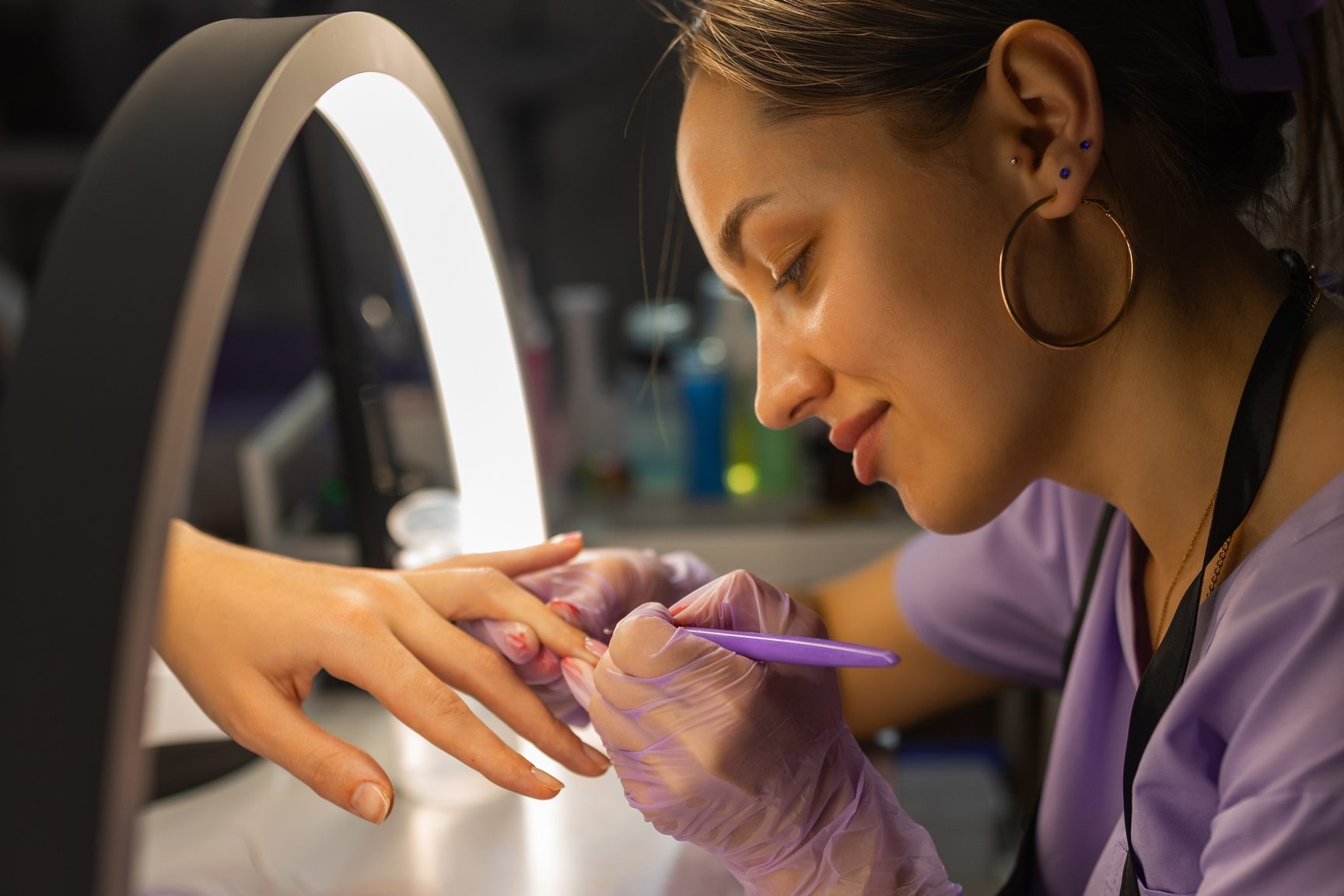
The State Board of Cosmetology and Barbering is the Mississippi agency whose published mission covers nail technology, and that mission names licensed establishments and licensed practitioners alike. On the payroll side, the Workers’ Compensation Commission’s fact sheet says employers with five employees regularly employed are required to provide workers’ compensation insurance.
This page walks through what those two documents say, in the order a salon owner meets them: the board, the salon and technician licensing it describes, inspection, the payroll rule, and then each of the five policies against it. It is deliberately short. Where the documents stop, so does the page.
One board for the exam, the license and the inspection
The board’s mission, as MS.GOV prints it, is to regulate the instruction and practice of nail technology among its trades, to establish rules and procedures relating to the qualifications for licensure, to administer licensure examinations, and to set sanitation requirements for operation within schools and establishments. It also states a standard of practice for the benefit of the consumer and for the protection of the public’s health and safety.
For an owner, the useful reading is that one body writes the qualification rules, gives the examinations and sets the sanitation requirements. A question about any of the three goes to the same place.
The salon as a licensed establishment
The board’s statement of philosophy describes its work as examining, licensing, registering, inspecting and regulating practice to ensure competency and sanitation among licensed practitioners, establishments and schools. Your salon is an establishment in that sentence, so we treat it as something the board licenses and inspects.
The text we read does not print the name of the establishment license, and we do not supply one. Take the name from the license the board issued you, and give us that document when we ask for it.
Technician licensure and what an underwriter asks
The same mission speaks of licensed practitioners, of rules on qualifications for licensure and of licensure examinations. A technician working in a Mississippi salon is therefore working under the board’s licensing and examination system, and the board’s text names state licensure and an examination as its routes.
That matters at quote time. An underwriter reading a salon submission wants to know who performs the services and whether each person is licensed to do so. A clean list of technicians and their license details answers that at the start instead of after a round of questions.
Inspection and sanitation
Inspection appears in the board’s statement of philosophy in the same list as examining and licensing, and the mission sets sanitation requirements for operation within establishments. The board is therefore the body that looks at salons, and sanitation is the subject of its requirements.
The documents we read do not give an inspection schedule, a notice rule or a list of what an inspector checks. We do not guess at those. If an inspector leaves paperwork at your salon, keep it, because it is the best record of what the board looked at.
Workers’ compensation and the five-employee rule
The Commission’s fact sheet describes workers’ compensation as a no-fault insurance plan mandated by state law, supervised by the Workers’ Compensation Commission and paid for entirely by employers. It says employers with five employees regularly employed are required to provide workers’ compensation insurance coverage. That makes Mississippi a compulsory state once an employer reaches that count.
The same sheet says that below five employees coverage is not mandatory but may be provided voluntarily by the employer. A salon with a smaller team can therefore still buy a policy; under the sheet’s wording the choice is the employer’s.
The threshold is written in terms of employees regularly employed, and the sheet gives no further definition of that phrase. We read it as written and ask for your payroll so we can work from the real list of people instead of a rule of thumb. The wording on this page is the fact sheet’s; we did not retrieve the statute text itself.
Where the documents stop
The board’s mission and the Commission’s fact sheet are all that support this page. The board’s rules were not available to us, and the documents we read do not settle the rest of what a Mississippi salon owner may want to know. We would rather say so than fill the gap with a general rule from somewhere else. If your question goes past what is written here, ask, and we will tell you what we can confirm and what you should ask the board or the Commission directly.
The five policies against Mississippi’s rules
General liability responds to a customer’s injury or property claim. The board’s sanitation requirements and its standard of practice for the protection of the public’s health and safety describe how a salon is meant to run; the policy is separate from them, and a clean license record is the background an underwriter reads it against. The full explanation of the policy is on its own page.
Property insurance covers your equipment, stock and build-out. Mississippi’s sanitation requirements apply to operation within establishments, so they bear on how you run the space and do not change what the property policy covers. Tell us what you own and what the landlord owns.
Workers’ compensation is where the state’s rule bites. At five employees regularly employed the Commission’s sheet says coverage is required; below that it is voluntary. Your count decides which side of that line the salon is on, and we start from the payroll you send.
Commercial auto matters if a vehicle is used for the business. The board and Commission documents we read say nothing about vehicles, so Mississippi’s rules do not change how that policy is built.
Umbrella sits above the liability and auto policies and extends their limits. Nothing in the documents we read changes it either. The overview of how the five policies fit together is on the nail salon insurance hub.
What we ask you to send
Send the establishment license as the board issued it, so the name on it is the name we use. Send each technician’s license details, since the board is the body that licenses and examines practitioners. Send your employee list with the people who are regularly employed marked, because the Commission’s threshold turns on that phrase. If the board has left inspection paperwork, send that too.
Those four items let us describe the salon the way the state describes it, and they are the documents that decide whether the compulsory rule applies to you.
A license lets the salon open its doors; the insurance program is what answers a claim.
- A license is a condition of operating, not insurance, so no line is drawn from the license itself.
A panel for Mississippi in rows. Each row sets a requirement of the state beside the exposure that requirement leaves open and the coverage line that answers it. Salon license: The state licenses the salon itself. It leaves open a customer hurt in the salon, or a customer’s property damaged there, which General Liability answers. Technician license: The state licenses the person doing the nails. It leaves open a client hurt during a manicure or pedicure, which General Liability answers. Workers’ compensation: State law requires the employers it covers to provide it. It leaves open an employee hurt on the job, which Workers’ Compensation answers. Notes: A license is a condition of operating, not insurance, so no line is drawn from the license itself. The conclusion reads: A license lets the salon open its doors; the insurance program is what answers a claim. No figures are shown.
Nail salon insurance in nearby states
Mississippi borders the states below. A name is a link once its page is published.
Why Protect My Nail Salon in Mississippi
We are an independent agency that writes for one kind of business, the nail salon, and each state page starts from the state’s own licensing and workers’ compensation documents. When we quote a salon in Mississippi we read the policies against those rules and against your lease, and we tell you plainly where something does not line up.
We place coverage in 48 states, and every coverage on one page sets out the five policies a salon program is built from. Our guides for salon owners take single questions further; for an owner in Mississippi, a good next read is our guide to insurance for small nail salons on a budget, because a small salon can fall below the employee count the state sets.
Mississippi coverage pages
Coverage for your salon
Mississippi nail salon insurance questions
Is nail work something the Mississippi board regulates?
Yes. The State Board of Cosmetology and Barbering’s published mission names nail technology among the practices it regulates, and its statement of philosophy speaks of licensing and inspecting practitioners, establishments and schools. That is the state’s own description of the board’s job, not a rule text.
Who writes the rules my technicians have to qualify under?
The board does. Its mission includes establishing rules and procedures relating to the qualifications for licensure, and administering licensure examinations. We did not have the rules themselves, so we do not list the qualifications.
Does the board set sanitation rules for my salon?
Its mission says it sets sanitation requirements for operation within schools and establishments. We read that sentence, not the requirements, so ask the board for the detail that applies to your floor.
Where does the five-employee workers’ compensation rule come from?
We read it in the Mississippi Workers’ Compensation Commission’s fact sheet, which says employers with five employees regularly employed are required to provide workers’ compensation insurance. We did not retrieve the statute text, so the wording here is the fact sheet’s.
Who supervises workers’ compensation claims in Mississippi?
The fact sheet says the Workers’ Compensation Commission was established to supervise and monitor claims under the law. It describes workers’ compensation as a no-fault insurance plan mandated by state law and paid for entirely by employers.
Can I rely on this page for the board’s exact rules?
No. The page rests on the board’s published mission and the Commission’s fact sheet. The board’s rules were not available to us, so for a question about a specific requirement, confirm it with the board before you act on it.
This page describes insurance for nail salons operating in this state. It is general information, not legal advice and not a statement of coverage. Licensing, registration and sanitation requirements change; verify current requirements with the agency named before relying on them.
Get a quote for your Mississippi nail salon
Send us your establishment license details, your technicians’ licenses and your count of employees regularly employed, and we will match them to the five policies.