
Nail Salon Insurance by State
Nail Salon Insurance in Louisiana
Louisiana licenses the shop and the technician separately, and it makes every employer secure compensation. Here is what each rule does to your policies.
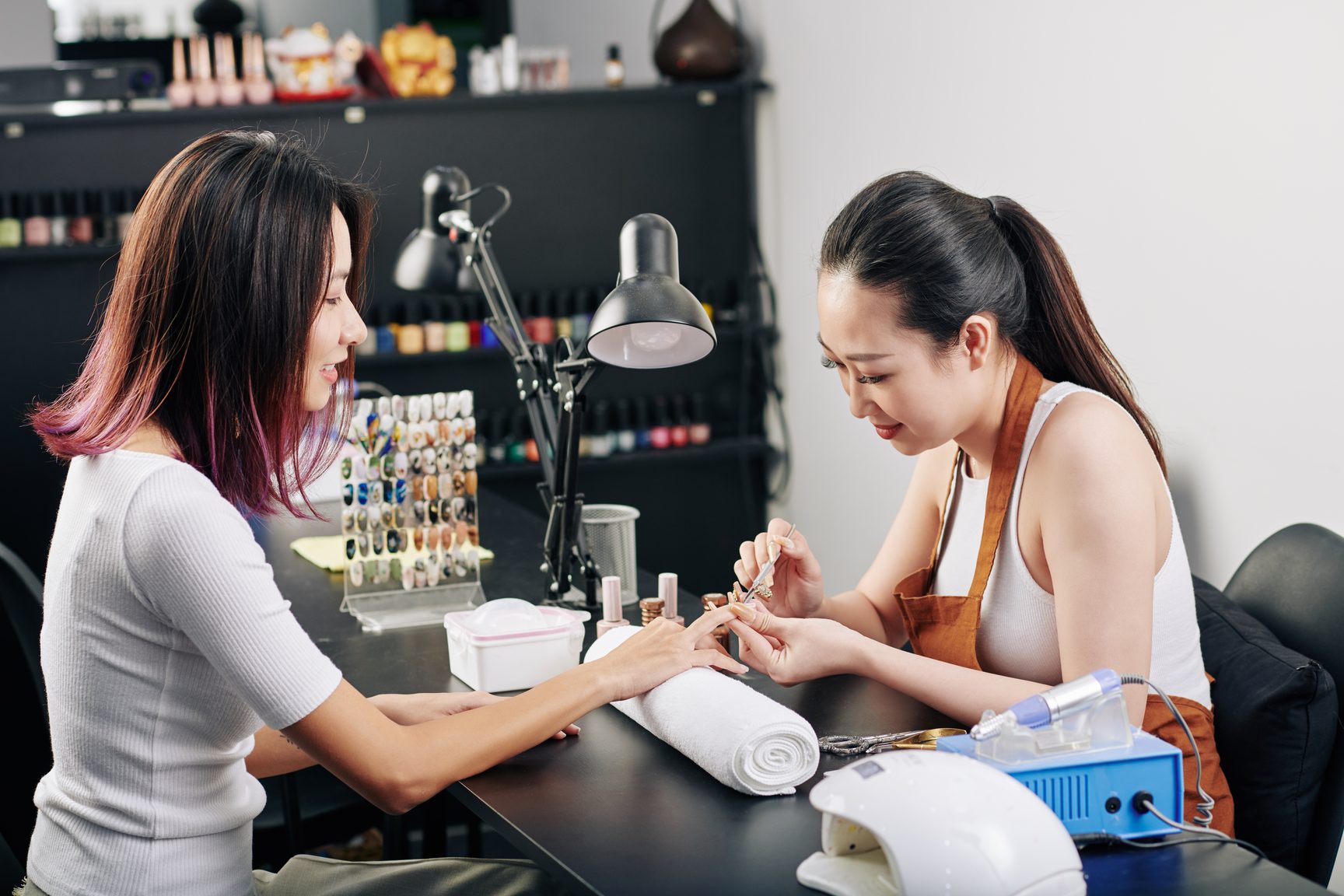
Louisiana puts two layers of paper between you and an open nail salon. The Louisiana State Board of Cosmetology issues a certificate of registration to the shop and a separate one to each technician, and the workers’ compensation law makes every employer secure compensation for employees. A rented suite and a payroll put you under both.
This page reads those rules as the statutes print them and says what each one changes about the policies a salon buys. Each coverage has its own page, linked below, and the nail salon insurance hub shows how they fit together.
The shop’s certificate of registration
The statute leaves no room: no person or entity shall operate a beauty shop or salon in Louisiana without a certificate of registration issued by the board (the certification section of the cosmetology chapter). The definitions section calls the board the Louisiana State Board of Cosmetology and defines a salon as premises where cosmetology is practiced for a fee. Cosmetology there includes manicuring, which is how a nail-only shop lands inside the law.
To obtain the certificate, the owner certifies that all persons employed at the facility are appropriately licensed, demonstrates that the required physical, sanitary and administrative facilities have been established, and submits an initial application for a new shop location with the fee. The application is framed around the location, so a move is a conversation with the board before it is a conversation with your insurer.
The same section also reaches your staff. No person shall accept or continue employment in a salon unless the facility holds its certificate. For you, that means the shop’s paper has to be current before anyone is on payroll.
The registered manicurist certificate and the routes to it
Cosmetology cannot be practiced without a current certificate of registration for the appropriate area of practice (the unlawful-practice section). For nail work the certificate is the one the statute calls a "certificate as a registered manicurist."
The routes are written into the qualifications section for registered manicurists. The applicant must be at least sixteen years of age, must have completed and passed a manicuring course at a registered or licensed school of cosmetology approved by the board, must pass an examination conducted by the board and must pay the fee. A person already licensed in another state or a foreign country may receive the Louisiana certificate if the person completed the course of study at a school licensed where the license was issued, passes the board’s examination and pays the fee. Reciprocity here still includes the board’s own exam.
A carrier quoting your salon wants to know who works the floor and under what credentials. Louisiana puts that answer on paper with the shop’s certificate and every technician’s certificate, so those are the documents we ask for first.
Who inspects, and what the rules say about sanitary facilities
The record shows statewide inspection by the board. The fee schedule in the board’s fee section lists an initial inspection fee for a salon, mobile salon or booth rental, and the executive director of the board supervises all inspectors and performs inspections when necessary. We read nothing in the saved documents on a visit schedule, so we do not describe one.
On hygiene, the only language we rely on is the licensing condition: the owner demonstrates that the required physical, sanitary and administrative facilities have been established. A failed inspection is a licensing problem first, but it can become an insurance problem when the shop cannot show it is in good standing.
Compulsory compensation, with no headcount floor in the sections we read
Louisiana’s regime is compulsory. The statute says an employer shall secure compensation to their employees in one of the listed ways (the section on ways of securing compensation), and the sections we read print no minimum employee count. The chapter applies to every person performing services in the course of the employer’s trade, business or occupation (the section on employees covered). The exemptions listed there cover private residential householders, small private unincorporated farms and musicians under performance contracts, and a nail salon is none of those.
The ways of securing compensation are an authorized insurer, a group self-insurance fund, an interlocal risk management agency, or satisfactory proof of financial ability given to the assistant secretary. The last carries a deposit of securities or a surety bond and proof of excess coverage, so a single-location salon will be buying a policy or joining a group fund.
There is also an insurer the legislature created by statute. It is a private, nonprofit corporation operating as a domestic mutual insurer that provides workers’ compensation insurance and a residual market, and the statute says it is not a state agency (the section that creates it). Because the statute itself lists more than one route, buying from it is one choice among those the law allows and not a requirement.
The owner’s choice to stay on or step off the policy
Owners are covered by default. A corporate president, vice president, secretary or treasurer who owns not less than ten percent of the stock, a partner, a member of a limited liability company who owns not less than ten percent, or a sole proprietor may elect not to be covered, and the election is made by written agreement with the insurer or group self-insurance fund.
Three consequences follow from the text. The election applies to all trades, businesses or occupations the entity conducts. It binds the entity and the family or heirs of the owner who elected. And no salary of an electing owner is used in computing the premium rate. Your employees remain under the chapter either way, so an owner’s opt-out does not shrink the duty to cover staff.
Insurance or a bond as a condition of the license
The record for Louisiana does not settle whether the board asks a salon to show liability insurance or post a bond as a condition of the certificate. The shop-certificate conditions we read name staff licensing, facilities and an application with a fee, and say nothing about a policy. We do not draw a conclusion from that silence, and a landlord or lender can still ask you for proof of coverage on their own terms.
What these rules change about the five coverages
General liability responds to a client’s injury or a reaction in the chair. Louisiana does not write a liability policy into the shop certificate, as far as the documents we read show, but it does make the shop answer for licensing staff, so a technician working without a certificate is a fact an underwriter will weigh. Confirm every certificate is current before you apply.
Property protects the build-out, the pedicure chairs and the stock. The certificate is tied to a shop location and to facilities the owner has demonstrated, so a move or a remodel affects both the board and your policy. Tell your agent when the address or layout changes.
Workers’ compensation is where Louisiana’s rule is plainest. Employer duty is mandatory, owners may elect out in writing, and the choice of insurer, group fund or approved self-insurance is yours. The coverage page explains the policy itself, and this state’s rules decide whether you must have one.
Commercial auto is not touched by any licensing or compensation rule we read. The board does define a mobile salon as a self-contained facility moved from one location to another, and a mobile operation should read the auto page with that definition in mind.
Umbrella sits above the other policies and is not addressed in the Louisiana documents we read. It follows whatever limits you carry underneath, so the state’s rules reach it only through the policies it sits above.
What we ask you to send, and why
Send the shop’s certificate of registration, each technician’s certificate, and the current compensation policy or the written election if an owner has opted out. The first two show that the facility and the people on the floor meet the licensing statute. The third shows that the compensation duty is met and that the entity names on the policy match the entities operating in the state.
If an owner has elected out, we want the written agreement, since the statute makes it the instrument that does the work. Gather these before you ask for quotes and the application moves faster.
A license lets the salon open its doors; the insurance program is what answers a claim.
- A license is a condition of operating, not insurance, so no line is drawn from the license itself.
A panel for Louisiana in rows. Each row sets a requirement of the state beside the exposure that requirement leaves open and the coverage line that answers it. Salon license: The state licenses the salon itself. It leaves open a customer hurt in the salon, or a customer’s property damaged there, which General Liability answers. Technician license: The state licenses the person doing the nails. It leaves open a client hurt during a manicure or pedicure, which General Liability answers. Workers’ compensation: State law requires the employers it covers to provide it. It leaves open an employee hurt on the job, which Workers’ Compensation answers. Notes: A license is a condition of operating, not insurance, so no line is drawn from the license itself. The conclusion reads: A license lets the salon open its doors; the insurance program is what answers a claim. No figures are shown.
Nail salon insurance in nearby states
Louisiana borders the states below. A name is a link once its page is published.
Why Protect My Nail Salon in Louisiana
We are an independent agency that writes for one kind of business, the nail salon, and each state page starts from the state’s own licensing and workers’ compensation documents. When we quote a salon in Louisiana we read the policies against those rules and against your lease, and we tell you plainly where something does not line up.
We place coverage in 48 states, and every coverage on one page sets out the five policies a salon program is built from. Our guides for salon owners take single questions further; for an owner in Louisiana, a good next read is our guide to hiring employees or renting booths, because the line between an employee and a renter decides who carries workers’ compensation.
Louisiana coverage pages
Coverage for your salon
Louisiana nail salon insurance questions
Can a new hire start on the floor before the shop has its certificate?
No. The statute says no person shall accept employment, or continue employment, in a beauty shop, salon or other facility unless the facility holds a certificate of registration from the appropriate licensing board. The shop’s certificate has to be in place first, and the technician’s own certificate is a separate requirement.
Can I do a client’s nails at their home if I hold a certificate?
Only in the narrow cases the statute lists. A licensee may not provide a service that needs a board certificate outside a licensed facility, except in the residence of a client who is chronically ill or disabled and has presented a physician’s certificate or proof of certain disability benefits. The statute also lists a hospital or infirmary, a funeral establishment and a temporary production site. A mobile salon is a different category with its own definition.
Besides a regular policy, how else can a Louisiana employer meet the compensation duty?
The statute lists four ways. An employer can insure with an authorized insurer, enter an agreement with a group self-insurance fund, enter an agreement with an interlocal risk management agency, or furnish satisfactory proof of financial ability to the assistant secretary. The last route carries a deposit of securities or a surety bond and proof of excess coverage, so it is built for larger operations.
If I opt out of coverage as the owner, who is bound by that choice?
The election is made by written agreement with your insurer or group self-insurance fund, and it binds the business and the surviving spouse, relatives, personal representative, heirs or dependents of the owner who elected. It applies to all trades, businesses or occupations the entity conducts. It speaks to the owner only, and your employees stay under the chapter.
How soon does proof of my compensation coverage have to be on file?
The statute says proof of coverage must be filed no later than thirty days after the effective date of coverage and must include the name of each business entity operating in the state for which coverage is provided. If you run the salon through one entity and own the building through another, tell your agent so the right names are on the policy.
Does a registered manicurist certificate cover me to work in any shop?
The certificate is the individual’s authority to practice. It does not stand in for the facility’s certificate, because the statute requires the shop to hold its own certificate of registration and requires the owner to certify that every person employed at the shop is appropriately licensed.
This page describes insurance for nail salons operating in this state. It is general information, not legal advice and not a statement of coverage. Licensing, registration and sanitation requirements change; verify current requirements with the agency named before relying on them.
Sources
- Louisiana statute on certification as a beauty shop or salon
- Louisiana statute on unlawful practice and exemptions
- Louisiana statute on qualifications for a registered manicurist
- Louisiana statute on board fees
- Louisiana statute on ways of securing compensation
- Louisiana statute on employees covered
- Louisiana statute creating the workers’ compensation insurer
Get a quote for your Louisiana nail salon
Send us your shop’s certificate of registration, each technician’s certificate and your current compensation declarations page, and we will quote against what the state already requires.