
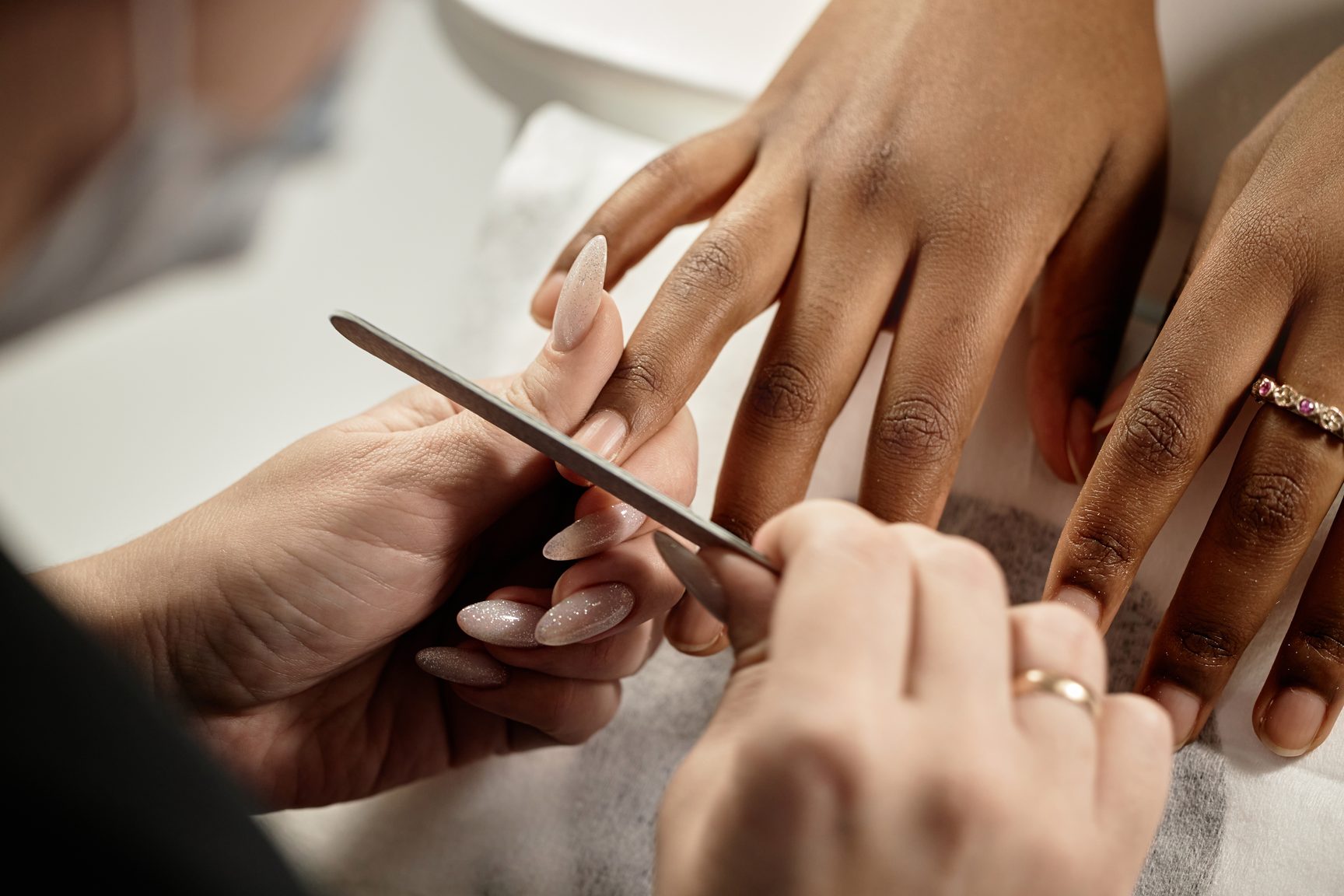
A nail salon is required to carry only what some outside party actually demands: a state statute, a licensing board, a landlord or a lender. Everything else is a choice. Sorting your cover into those two piles is the quickest way to know what you must buy and what you are buying to protect yourself.
Four parties can require insurance
The four sources are state law, the state licensing board, your lease and your lender. Each has its own document, so each requirement can be traced to a page you can read. If you cannot point to the page, you have a worry, not a requirement.
State law is the one that binds regardless of your signature. The licensing board attaches conditions to your salon license. The landlord writes conditions into the lease you sign. A lender writes them into the loan terms. These sources do not share a rulebook, and one can be silent while another is strict.
The rest of this guide takes them in that order, then covers what is left over. For the full picture of what a program looks like, start at the nail salon insurance hub.
State law reaches a salon through workers’ compensation
Where state law reaches a salon directly, it is through workers’ compensation for employees. Statutes differ on whether the employer must carry it, so this is the requirement to check state by state, and your answer depends entirely on where the salon sits.
Here is a sample of states, chosen because their saved records show different things. It is a sample, not a pattern.
Washington defines an employer to include anyone who contracts with one or more workers, and its statute directs employers to insure with the state fund or qualify as a self-insurer (Washington workers’ compensation statute). Washington has no private-carrier option named in that section. See the Washington page.
Texas is the opposite. Its Labor Code says an employer may elect to obtain workers’ compensation coverage, so for a private salon it is a decision rather than a command (Texas Labor Code, chapter on coverage). See the Texas page.
New York and Vermont both treat it as compulsory, and Vermont states the duty without an employee-count threshold. Compulsory in a statute means you buy it on the schedule the state sets. Elective means you weigh the exposure yourself. Read more at workers’ compensation for nail salons.
A licensing board may name insurance, or may not
A salon license is where some states attach an insurance condition. Whether yours does is a fact about your state’s rules, and the saved records for the sample states show three different answers.
Washington conditions its salon location license on certifying that the salon is covered by a public liability policy, with a stated minimum. The board will not issue the license without that certification. This is the clearest case in the sample of insurance being a licensing condition.
New York conditions an appearance enhancement business license on filing and keeping evidence of a bond or liability insurance, per the state’s Department of State (New York appearance enhancement law). It lets the licensee choose between the two. See the New York page.
Texas goes the other way. The saved record reads the establishment-license conditions in full and finds none that is insurance (Texas cosmetology statute). That does not make cover unwise. It means the license is not where the demand comes from.
Vermont sits in between. Its rules ask for appropriate commercial liability insurance from a mobile shop, while the fixed-shop application lists none (Vermont licensing rules). See the Vermont page. If you work from a van or visit clients, read mobile nail salon insurance.
Your lease is a private requirement with its own wording
The lease can require nearly anything the landlord and you agree to, because it is a contract rather than a law. A lease that asks for liability cover, for the landlord to be named on your policy, or for proof of cover at renewal is enforceable as written.
This is the requirement salon owners meet first, and it sits outside what a state record can show. Read the insurance clause for three things: which coverages it names, whether it asks the landlord to be listed on your policy, and when proof is due.
Where the lease names the building, ask who insures it. A tenant insures their own contents and improvements, which is where property coverage for a salon comes in. A tenant who damages the unit may also be answerable to the landlord, which is what general liability is built to address.
Real-World Scenario: A new owner signs a lease for a storefront and skips the insurance page. Two weeks before opening, the landlord asks for proof of cover naming the landlord on the policy. The owner calls an agent, learns the program as built does not include that wording, and has to rework it while the opening date slips. Reading the clause at signing would have caught it.
A lender can require more than the lease does
A lender attaches cover to the loan, not the license. If you finance equipment, a build-out or the purchase of a salon, the loan terms can require property cover on the collateral and proof of it.
This requirement is easy to miss because it lives in a loan agreement, not in anything you filed with the state. Ask for the insurance section of the loan documents before you close, and give it to your agent. The lender may also ask to be listed on the policy as a party with an interest in the equipment.
When the loan is paid off, the requirement ends. The cover may still be worth keeping, but the reason is now yours.
Vehicles bring their own rules
If the salon owns a vehicle, the vehicle is its own requirement and has nothing to do with the licensing board. A van that carries equipment to a customer’s home is a business vehicle, and the state’s motor vehicle rules apply to it as they do to any other.
A personal policy can exclude business use, so do not assume it carries over. Cover for an owned work vehicle is commercial auto, and it applies only if the salon actually owns or uses a vehicle for the business. A salon that owns none can skip this section entirely.
What no one requires but a sound owner buys anyway
Liability for a customer’s injury, damage to your chairs and stock, and cover for you as an owner are the common gaps, and none of them is required by every source above. They are still the cover that protects the salon when something goes wrong.
Take the customer in the chair. A slip, a reaction to a product, or an infection claim is the event a general liability program is built for. In Texas, nothing in the saved licensing record asks for it, yet the claim would still land on the owner.
Take the owner. In Washington, Minnesota and New York, the saved records show sole proprietors and partners start outside mandatory workers’ compensation unless they elect in. Whether to elect in is a choice, and a real one.
The line between a requirement and a choice is not a line between needed and unneeded. It only tells you who will ask, and when. Price comes after; see the cost guide for how premiums are built.
How to find out what applies to you
Start with your own state’s licensing board and read the salon application rules for the words insurance, bond and liability. Then read your lease and loan. Then check your state’s workers’ compensation rules for when an employer must carry it.
Write each answer down with its source and date. A requirement you can trace to a page is one you can show later. If a source is silent, record that too.
Then decide what you are buying beyond the minimum. The monthly budget view in nail salon monthly expenses shows where insurance sits next to rent and supplies. When the list is ready, ask for a quote and bring the lease page, the loan page and the licensing rule.
What to do next
Do the four checks before you sign anything, not after. A licensing office or landlord who finds a gap at the last minute sets the timetable for you.
Keep the sample in perspective. Washington, Texas, New York and Vermont are here because their records prove different things. They say nothing about any other state, and your state may differ from all four. The only safe source is your own state’s page on a board or statute you have read yourself.