
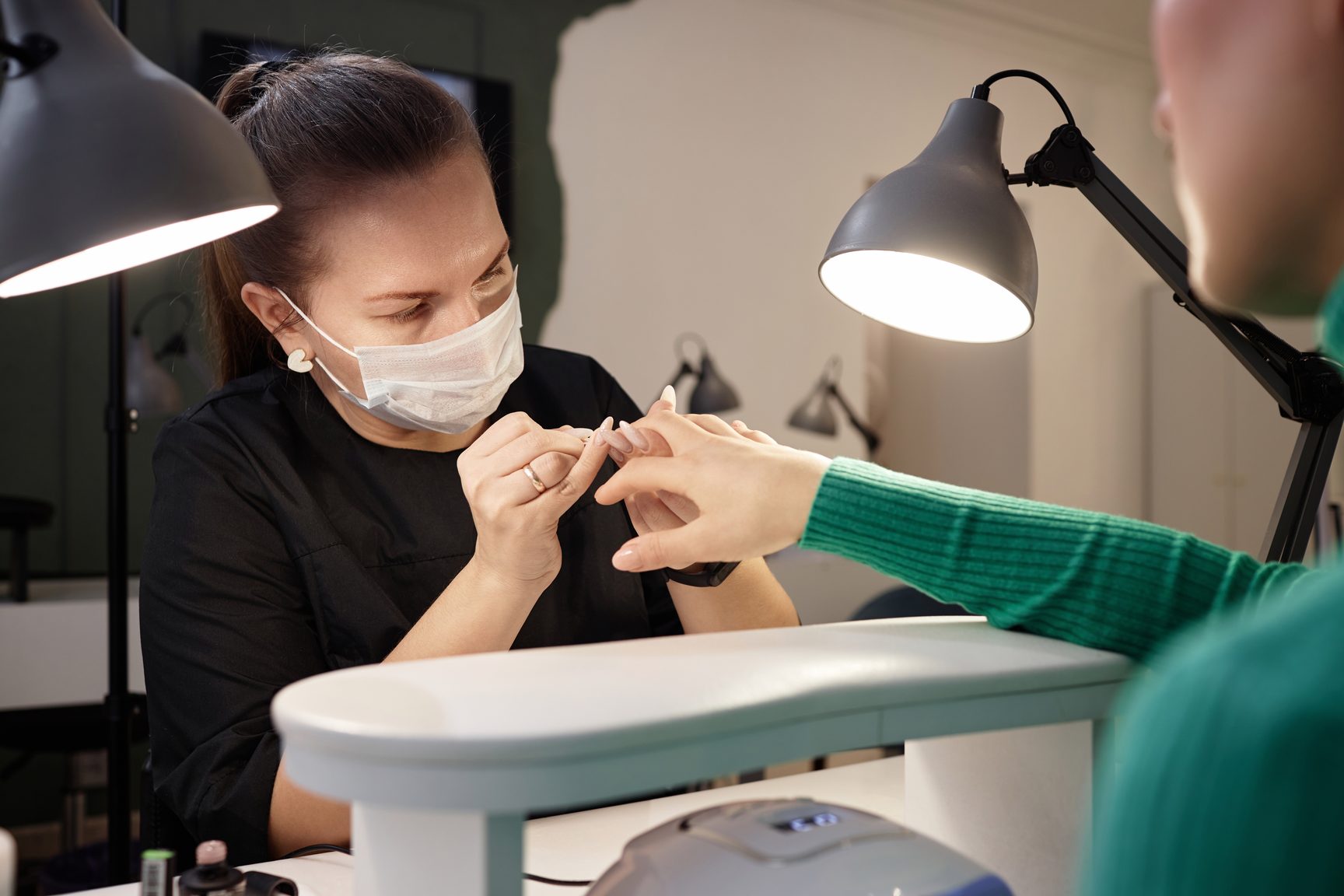
A mobile nail business needs three protections that a storefront gets in one place: liability that follows you to the client, an auto policy that fits how the vehicle is owned, and cover for the equipment you carry. The state you work in may also write insurance into the licensing rule for a mobile unit.
What changes when the salon travels
The risks of a nail service do not change when the chair moves to the client’s home. A client can still be burned, cut or react to a product, and a claim from that client is still paid by a policy or by you. What changes is where the work happens, what you drive to reach it and what you carry in the car.
That gives a mobile business three questions a storefront does not ask. Who is liable for damage to a stranger’s home? What covers the car, and does the answer change with who owns it? What happens to the equipment in the trunk if the car is broken into? The sections below take them in that order, then the licensing rules. For the full picture of how a salon is insured, start with the nail salon insurance overview.
General liability for work at the client’s location
General liability is the policy that answers a client’s injury claim, and a mobile business needs it written for work away from a fixed address. Tell the agent where you work: in clients’ homes, in assisted-living and similar facilities, at weddings and events, or in an office. The setting changes what a claim looks like.
Two exposures stand out. The first is the client’s body: a burn from a warm tool, a cut, an infection traced to an implement or a reaction to a product. The second is the client’s surroundings. You are working in someone else’s space, with polish, remover and water, and a spill can ruin a carpet or a table. Ask how the policy treats damage to the property of the person you are working for.
Real-World Scenario: A technician sets up on a client’s dining table for a gel manicure. A bottle of remover tips over and takes the finish off the table. The client asks the technician to pay for the repair. The liability policy is the first place the claim goes, and the technician’s answer depends on whether the policy was written for work at the client’s home.
Venues add their own requirement. A facility, a wedding venue or an office building may ask for a certificate of insurance before you work there, and some ask to be named as an additional insured. Ask your agent to have the certificate ready before the booking, not on the morning of the job.
Auto: owned, hired and non-owned
The auto question turns on who owns the vehicle. If the business owns it, a commercial auto policy is the usual fit, because the vehicle is a business asset used to reach clients. If you drive your own car for the business, the exposure is on the non-owned side, and whether your personal policy responds depends on how it is written. A personal auto policy is written for personal use, and business use can be limited or excluded.
Hired use is a third case. If you rent a vehicle for an event, the rental is hired use, and the policy has to include it for the cover to follow you into the rental.
Do not settle this by assumption. The cost of a wrong answer arrives after a crash, when the carrier reads the policy against how the car was being used. Describe the actual use to your agent, including whether any helper rides along, and ask for the answer in writing. The commercial auto page explains owned, hired and non-owned use in more detail.
Equipment in transit
Your tools are the business. The chair or table you set up, the lamp, the sterilizing equipment, the drill, the product and the display all travel. A property policy written for a salon suite insures contents at a described location, so equipment that moves needs cover written for movable property.
That cover goes by different names, and we describe it by function: it insures tools and equipment while they are in transit and while they are at a job. Availability and terms depend on the carrier and the state, so we do not promise it for every business. What to ask is specific. Is the equipment covered in the vehicle, and is theft from a parked vehicle covered or excluded? Is it covered at the client’s location? What is the limit, and does it include product that is used up in the work?
An owner who keeps a small stock at home should also ask whether home storage is covered by the business policy or by the homeowner’s or renter’s policy, which treats business property differently from personal property.
What the licensing rules say
Some states license a mobile nail business as its own kind of location, and some of the rules touch insurance. We say what the records for these four states show, and we do not extend it to any other state.
Massachusetts. The statute on manicuring licenses refers to the shop and to the mobile business unit in the same sentence and bars an employer from allowing an unlicensed person to do the work in either. Read the section on the Massachusetts general laws site, and our Massachusetts page explains what it means for an owner.
Nevada. The cosmetology chapter defines a cosmetological establishment as any premises, mobile unit, building or part of a building where cosmetology is practiced. A mobile unit is named in the definition, so the establishment license applies. See the Nevada revised statutes and our Nevada page.
Vermont. The Office of Professional Regulation issues a distinct shop license for each location or mobile facility. The rule for a mobile shop asks the applicant to show appropriate commercial liability insurance, and asks for a policy prohibiting the transport of clients in the mobile shop. The fixed-shop application lists no insurance. The rules are on the Office of Professional Regulation site, and our Vermont page reads them in full.
Washington. The licensing chapter treats a mobile unit as its own location license and requires a public liability policy of a stated minimum amount for a salon, shop or mobile unit. The Washington revised code chapter holds the text, and our Washington page explains how it ties to the vehicle.
Those are four states. We do not know from them what a fifth requires, and no one should read a pattern into four. Your state board decides, and the agent should read its rule against your plan before you buy.
Keep a record of where you work
A mobile business has no lease to show an insurer where it operates, so keep your own record. A simple log of the places you work, the dates and the services you performed answers a carrier’s question about your operations and gives you a defense if a client disputes what happened. Keep any intake form you use, and keep the certificates you gave to venues, so you can show later that the coverage was in place on the day of the job.
Employees and helpers
A mobile owner who works alone is a smaller insurance question than an owner who sends technicians to clients. Once someone else does the work, workers’ compensation enters the picture under your state’s rules, and the helper who rides with you or drives a second vehicle changes the auto answer too. A technician who rents a chair from a salon and takes a mobile client on the side is a separate case that the booth-renter rules cover.
Professional liability
Some owners ask about professional liability, the cover for a claim that the service itself was done wrongly. We treat it as a hedged question: some general liability programs carry a professional liability endorsement, availability varies by carrier and state, and the terms differ. Ask whether the endorsement is offered, what it covers and what it excludes, instead of assuming a general liability policy includes it.
How to ask for a quote
A mobile quote starts with a description of how you work. Tell the agent where you work, what services you offer, whether anyone works with you, who owns the vehicle, what equipment you carry and where it is stored overnight. Ask for general liability, the auto answer and the equipment cover to be quoted as one program, and ask what each excludes.
We do not publish a price on this page. The cost guide gives the owner’s figures for a program and the facts that move them, and the quote page starts the conversation about yours. The licensing rule for your state can change what you buy, so name the state first.