
Nail Salon Insurance by State
Nail Salon Insurance in Minnesota
The Board of Cosmetologist Examiners licenses the salon and each technician, and the state’s compensation chapter reaches every employer. Here is what each rule changes about the policies you buy.
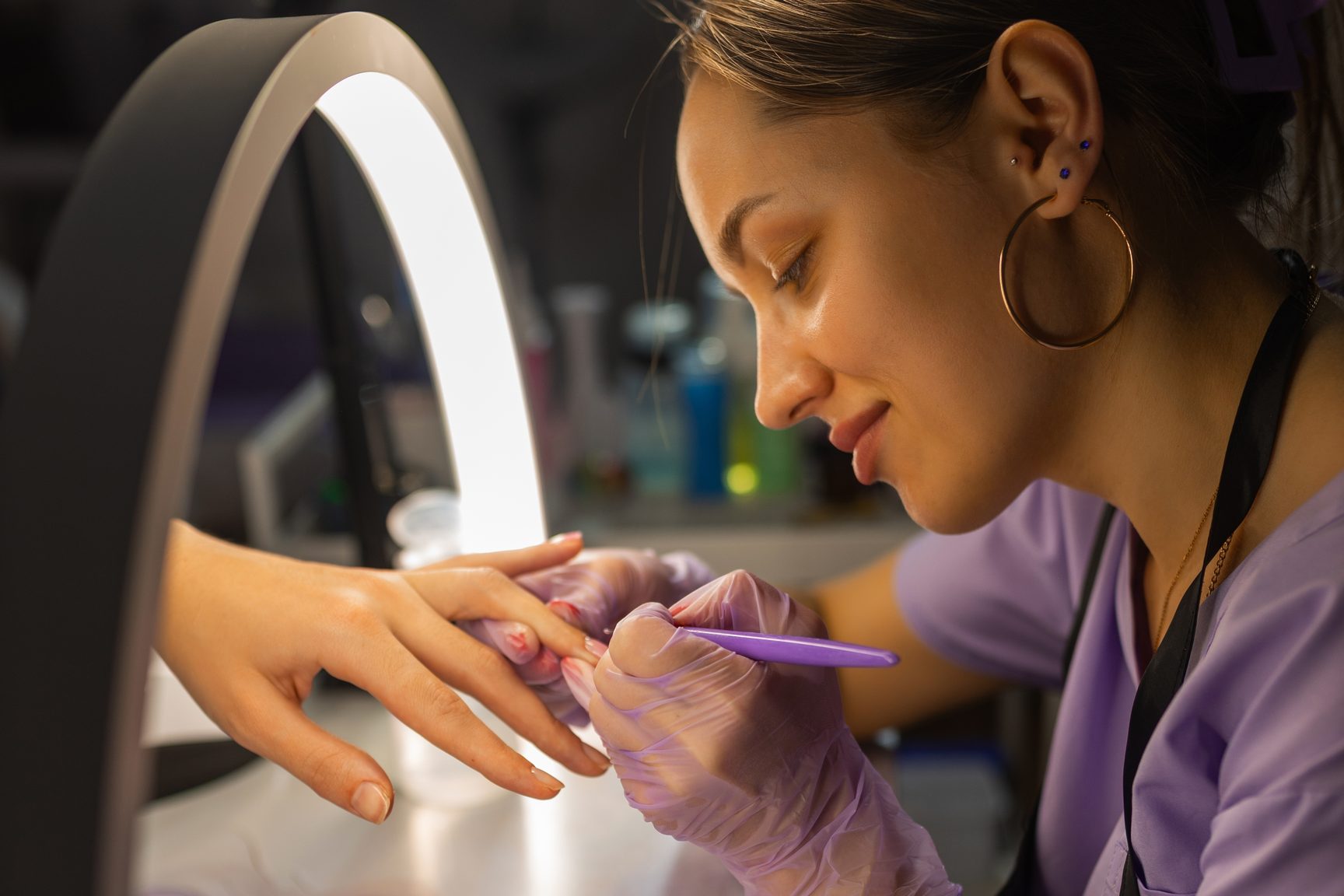
A Minnesota nail salon needs its own salon license from the Minnesota Board of Cosmetologist Examiners, and every technician who works a chair needs an individual license as a nail technician. On the insurance side, the state’s compulsory-insurance statute reaches every employer liable under the compensation chapter, and the Department of Labor and Industry publishes that no minimum number of employees must be reached first. There is no exclusive state fund to buy the policy from.
The salon license also carries an insurance condition of its own: the board’s application asks for a current certificate of professional liability insurance. This page walks through the license, the technician routes, the board’s inspection power, the compensation rules, and then the five coverages we place, each tied to what Minnesota’s own documents change about it. It is a reading of the statutes and rules we saved, not legal advice.
The salon license and the space it covers
The Board of Cosmetologist Examiners issues the license, and the board’s rules print it as a “salon license.” The licensing statute puts the duty on the person offering the work: Minn. Stat. § 155A.29 says a person must not offer cosmetology services for compensation unless a licensee provides them in a licensed salon or as otherwise provided in that section. The statutory definition of cosmetology includes the cosmetic care of nails, so nail work falls inside it, and the rules’ chapter heading names nail salons alongside the other salon types the board licenses.
The license is tied to a place. The board’s rule says a salon license is required for each physical location, and the rules define a physical location as the contiguous space representing each salon that customers can reach without exiting the salon. For an owner who rents, that definition is the practical test: the space your lease describes and the space the license describes need to be the same space. A second suite, even in the same building, is a question for the board before it is a question for us.
The statute also sets conditions the board must find satisfied before it issues a license. Among them are compliance with local and state laws on infection control, health, and safety, and the employment of a manager. A salon shall not be located in a room used for residential purposes, according to the same section, so the license is written for commercial space. We do not read the documents as settling who may own the salon, and this page does not say.
Nail technician licenses and the routes to one
Under Minn. Stat. § 155A.27, a person must hold an individual license to practice in the state, and the classifications the statute lists include nail technician by name. The board’s rule for individual licenses speaks to nail technician applicants by name, and the record we saved ties the license to three hundred fifty hours of training.
The routes in the saved documents are these. An applicant who has not been licensed in another state passes three board-approved tests, each result no more than one year old: a general theory test, a written practical test, and a test on Minnesota laws and rules. A technician licensed in another state or country applies under the board’s rule on transfer of licenses. The statute separately says licensing without a test may be allowed as determined by rule, and it directs the board to establish temporary military licenses for nail technicians. A license in each classification runs for a period of three years.
Why this matters when a carrier quotes the salon: an insurer reading your application is asking who works your chairs and under what authority. In Minnesota the answer is a short list of individual licenses, one per person, and a floor that includes someone outside that list is a floor the board’s statute says should not exist. We ask for the roster so the quote starts from the same list the state would read.
What the board’s inspection power reaches
The board’s rule says each salon and each permit holder under the rule on permits is subject to inspection at any time the board deems it necessary to affirm compliance. The statute says the salon may be inspected at a frequency the board decides. Neither text promises a schedule, a notice, or a first warning, so a salon should expect that the board can arrive when it chooses.
The saved rules do say what a work area should look like on that day. Each work area where regulated services are provided must have a sink or be continuously equipped with an alcohol-based hand sanitizer, and a sanitizer dispenser must be wall-mounted or visible at all times in the work area. Each salon must also have a restroom available in the salon or in an adjacent common area. Licensees working in the salon need continuous access to designated sinks and disinfecting areas within the licensed salon.
For insurance, inspection is the place where the licensing rules and the policies meet. A compliance problem is a licensing matter first, and a licensing matter can interrupt the business that your property and liability coverage are written to protect. We keep that in mind when we read your policy for conditions tied to licensing.
Compulsory compensation, and no state fund
Minn. Stat. § 176.181 makes the insurance compulsory. Every employer, except the state and its municipal subdivisions, liable under the chapter to pay compensation shall insure payment of compensation with an insurance carrier authorized to insure that liability in the state. The same section lets an employer obtain a written order from the commissioner of commerce exempting it from insuring and permitting self-insurance, on terms the commissioner sets.
For a salon, the threshold question is whether you have an employee. The compensation chapter defines an employee as any person who performs services for another for hire, and the Department of Labor and Industry’s page on who needs coverage says there is no minimum number of employees an employer must have before insurance is required. That page is the agency’s own plain-language statement, so we read it as what the agency publishes, with the statute as the legal source. A technician on your payroll is exactly the situation that page addresses.
Minnesota has no exclusive state fund. The agency’s page says compensation insurance may be purchased through an insurance agent or directly from an insurance company. A residual-market plan does exist under Minn. Stat. § 79.252, and the statute states its purpose: to provide compensation coverage to employers rejected by a licensed insurance company. It is a plan for rejected risks and not a fund you buy from by default, so we describe it by what it does and treat it as the place an employer lands after the voluntary market has declined.
Owners, partners, and officers: excluded unless they elect
The owner who works the floor is the hardest case, and Minn. Stat. § 176.041 is where it is answered. The statute excludes a sole proprietor, along with the spouse, parent, and child of a sole proprietor, from the definition of covered employees. It excludes partners engaged in a business, and it excludes an executive officer of a closely held corporation who owns the required share of stock and falls under the statute’s payroll-hours limit. A corporate officer outside that clause is not within the exclusion.
The exclusion is not a one-way door. The statute says the persons it describes may elect to provide the insurance coverage the chapter requires, and it says an owner or owners of a business may elect coverage for themselves. A limited liability company that stays under the statute’s payroll-hours limit may elect coverage for a manager. In practice, an owner is outside the policy until someone chooses to put the owner in, and the choice belongs on the application, not in a later conversation after an injury.
This is the part of the compensation rules where a salon’s organization changes the answer. Whether the business is a sole proprietorship, a partnership, a limited liability company, or a corporation decides which of these clauses applies to you, so we ask for the entity type before we say how the owner is treated.
Professional liability as a condition of the salon license
Minnesota does condition the salon license on insurance, and the insurance is professional liability. Minn. Stat. § 155A.29 says no license shall be issued unless the board first determines that, among its conditions, there is evidence of continued professional liability insurance coverage, stated per claim and per policy year for each operator. The board’s rule on salon licensure applications lists a current certificate of insurance of professional liability insurance as required by that statute. The coverage minimums sit in the statute itself, and we do not restate them here; read them in the saved section before you buy a policy.
The same section asks for evidence of compliance with the compensation statute, if applicable. So a salon with employees meets the compensation rule twice: once because the law makes it compulsory, and again because the license application wants evidence of it. This condition attaches to the salon license. We read no insurance condition on the individual technician license in the documents we saved, and we found no bond or surety in the statute or rule requirements we read.
The five coverages against Minnesota’s rules
General liability is the policy for a client who is hurt or whose property is damaged in the salon, and it is separate from the professional liability the license demands. The state’s condition is written around the operator and the per-claim and per-policy-year structure of professional liability, so the first thing we check is whether the professional coverage you carry satisfies what the board will read, and whether the general policy fills the premises side beside it.
Property insurance covers the build-out, the chairs, the equipment, and the stock. Minnesota changes it through the license: a salon that cannot operate because the board has found it out of compliance is not a salon earning income, and the lease still runs. The residential-space rule also matters here, because it keeps the salon in space the statute treats as commercial.
Workers’ compensation is where Minnesota’s documents are exact. The duty is compulsory under the compensation chapter, the agency publishes no minimum headcount, the policy must come from an authorized carrier unless the commissioner of commerce has approved self-insurance, and the owner stays outside the policy unless an election is made. The salon license application also wants evidence of the coverage where it applies.
Commercial auto is not something the documents we saved speak to for a nail salon, so Minnesota’s licensing and compensation rules do not change it that we can read. If staff drive for the business, for supplies or errands, the policy follows the vehicle and the use, and we will ask about both. We say no more than the documents support.
Umbrella sits above the liability policies and responds when a claim runs past them. Because the state names a professional liability requirement for the license and leaves the rest to the owner, the umbrella is where an owner who wants limits beyond the minimum builds them. We start from what the board requires and build upward from there. The nail salon insurance overview explains how the pieces fit together.
What we ask you to send, and why
Send the salon license as the board printed it, so we can match the address and the name on the license to the lease and to the policy. Send the list of technicians with the license each holds, because the state’s individual-license rule is the baseline for who may work your chairs. If you have a certificate of professional liability insurance on file with the board, send that too, since it is the document the application names.
Send your current compensation policy or the dates of the one you are replacing, along with the entity type of the salon and who the owners and officers are. Those two items decide how the election rules above apply to you. If an insurer has declined you in the past, tell us, because that history decides whether the residual-market plan is part of the conversation. Everything on this list comes from a document the state itself prints, and none of it requires a guess on your part.
A license lets the salon open its doors; the insurance program is what answers a claim.
- A license is a condition of operating, not insurance, so no line is drawn from the license itself.
A panel for Minnesota in rows. Each row sets a requirement of the state beside the exposure that requirement leaves open and the coverage line that answers it. Salon license: The state licenses the salon itself. It leaves open a customer hurt in the salon, or a customer’s property damaged there, which General Liability answers. Technician license: The state licenses the person doing the nails. It leaves open a client hurt during a manicure or pedicure, which General Liability answers. Workers’ compensation: State law requires the employers it covers to provide it. It leaves open an employee hurt on the job, which Workers’ Compensation answers. Notes: A license is a condition of operating, not insurance, so no line is drawn from the license itself. The conclusion reads: A license lets the salon open its doors; the insurance program is what answers a claim. No figures are shown.
Nail salon insurance in nearby states
Minnesota borders the states below. A name is a link once its page is published.
Why Protect My Nail Salon in Minnesota
We are an independent agency that writes for one kind of business, the nail salon, and each state page starts from the state’s own licensing and workers’ compensation documents. When we quote a salon in Minnesota we read the policies against those rules and against your lease, and we tell you plainly where something does not line up.
We place coverage in 48 states, and every coverage on one page sets out the five policies a salon program is built from. Our guides for salon owners take single questions further; for an owner in Minnesota, a good next read is our guide to what it costs to buy a nail salon, because a buyer needs a program of their own in force on the day the salon changes hands.
Minnesota coverage pages
Coverage for your salon
Minnesota nail salon insurance questions
Which papers does the board want before it issues a salon license?
The statute has the board find, before issuing the license, that the salon complies with local and state laws on infection control, health, and safety, that it employs a manager, that it shows compliance with the compensation statute where that applies, and that it has evidence of continued professional liability insurance. The rule’s application list also names a current certificate of that insurance.
What space does one salon license cover?
The board’s rule says a salon license is required for each physical location. It defines a physical location as the contiguous space representing each salon that customers can reach without exiting the salon.
What hand-cleaning setup does the board expect at a work area?
The rule says the area where services are provided must have a sink or be continuously equipped with an alcohol-based hand sanitizer. If you use a sanitizer dispenser, it must be wall-mounted or visible at all times in the work area.
How long does a nail technician license last before it needs renewing?
The licensing statute sets licensing in each classification for a period of three years, and a renewal runs for a period of three years as well. The board’s rules cover how renewal is done.
What is the state plan for employers that insurers reject?
The statute creates a residual-market plan whose purpose is to provide compensation coverage to employers rejected by a licensed insurance company. It is a plan for rejected risks, not a state fund, and the Department of Labor and Industry says coverage may be bought through an insurance agent or directly from an insurance company.
This page describes insurance for nail salons operating in this state. It is general information, not legal advice and not a statement of coverage. Licensing, registration and sanitation requirements change; verify current requirements with the agency named before relying on them.
Sources
- Minnesota Statutes, section on salon licensing and inspection
- Minnesota Statutes, section on individual licenses
- Minnesota Rules, chapter on cosmetology and nail salons
- Minnesota Statutes, section on compulsory workers’ compensation insurance
- Minnesota Statutes, section on persons excluded from coverage and election
- Minnesota Statutes, section creating the residual-market plan
- Department of Labor and Industry, who needs workers’ compensation coverage
Get a quote for your Minnesota nail salon
Send us the salon license, the roster of licensed technicians, and your current compensation policy, and we will line them up against the state’s rules.