
Nail Salon Insurance by State
Nail Salon Insurance in Wisconsin
The establishment license, the manicurist license, the board’s inspections and the employer threshold for workers’ compensation, each tied to the policy it touches.
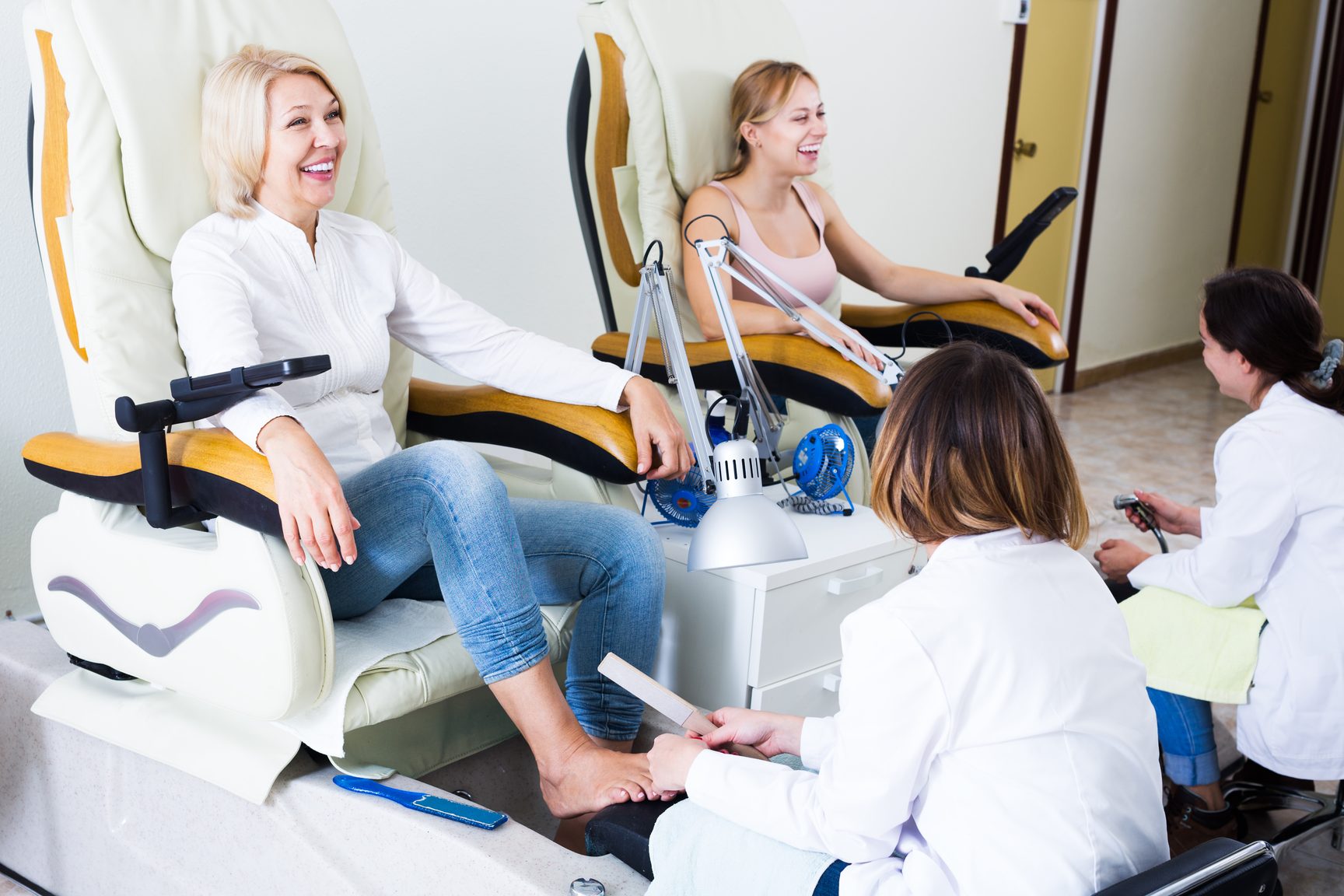
Wisconsin licenses the place and the person. A salon that offers manicuring needs an establishment license from the Cosmetology Examining Board, and each technician needs a license issued by the same board. The workers’ compensation chapter is compulsory, with a threshold that starts at three employees and reaches smaller payrolls once wages cross a quarterly line.
This page walks through those rules in the order a salon owner meets them: the establishment license, the technician license and its permits, inspection, the employer threshold, and the question of licensing and insurance. Then it ties each of the five coverages to what Wisconsin changes about it, and ends with what we ask you to send.
The cosmetology and manicuring establishment licenses
The licensing chapter is titled for the Cosmetology Examining Board, and the board is the issuer. Under Wis. Stat. § 454.08, no person may practice manicuring in an establishment unless the establishment is licensed to provide that practice. The board issues two items that cover a nail business: a cosmetology establishment license, and a manicuring establishment license. The wording on the page of the board’s own department calls the first one a Cosmetology Establishment License.
The license follows the practice and the premises. A manicuring establishment license authorizes the practice of manicuring in the licensed establishment, and the board’s rule says the practice shall not be carried on outside the confines of a licensed establishment, with exceptions the rule itself lists. The statute directs the board to issue an establishment license to any person who pays the initial credential fee. The text we read does not add an ownership test beyond that, and we do not read one into it.
For the policy side, the license is the first document a carrier will ask about, because it shows which practice the premises is licensed to provide. If your menu of services runs wider than the license in the file, the mismatch is better found by you than by a claims adjuster.
The manicurist license, the permits and the routes in
No person may engage in manicuring unless the person has received training in the areas of service provided and holds a current manicurist license or cosmetologist license issued by the examining board. Apprentices and students in a manicuring or cosmetology course are the statute’s stated exceptions. Under Wis. Stat. § 454.06, the manicurist license is the one built for a nail technician, and it ends in a board examination to determine fitness to practice as a manicurist.
Three other routes sit beside the license. A training permit comes from the board before training begins. A temporary permit to practice as a manicurist may be issued without examination to an applicant who meets the licensing requirements except passing the examination and who is scheduled to take it; it is valid for not more than six months and may not be renewed. The chapter also provides for apprenticeship, which the chapter contents list as its own section. The documents we read describe no certification route and no reciprocal registry for the manicurist license, so we say nothing about either.
Why this matters to the quote: an underwriter reading a salon application is reading a roster. Licensed technicians, permit holders and apprentices are three different footings, and the statute treats each differently. A carrier that sees a technician on a temporary permit will want to know that the six-month window is not renewable and that an examination date exists. Giving that detail at submission is cheaper than explaining it after a loss.
Board inspections under the examining board’s rules
The board’s rule on establishments and inspections says that inspections by field representatives or agents of the board may be conducted to assure compliance with the licensing chapter and the board’s rules. The text names no schedule, no advance notice and no warning step, and we do not supply one. The rule applies statewide.
What the owner can take from the rule is simple: a visit can happen, it checks licensing compliance, and the licenses on the wall and in the file should match the people on the floor.
The workers’ compensation chapter: three employees, or a quarterly wage line
Wisconsin’s regime is compulsory. The statute defining employers subject to the chapter, Wis. Stat. § 102.04, brings in every person who at any time employs three or more employees for services performed in this state, whether in one or more trades, businesses, professions, or occupations, and whether in one or more locations. A person who employs three or more employees becomes subject to the chapter on the day the third is employed.
A smaller payroll does not escape by size alone. The same section also reaches every person who employs fewer than three employees, provided the person has paid wages of five hundred dollars or more in any calendar quarter for services performed in this state. Such a person becomes subject to the chapter on the tenth day of the month next succeeding that quarter. A salon owner with two technicians and a front-desk hire on payroll is therefore inside the chapter by the count, and a smaller team is inside it by wages.
The duty to insure follows. Under Wis. Stat. § 102.28, every employer described in the threshold section shall insure payment for compensation under the chapter in an insurer authorized to do business in this state, unless the employer is exempted by the statute’s own exceptions or by order for self-insurance.
Owners, partners and officers: who elects in and who elects out
The owner’s own cover is a choice, and the choice runs in a different direction depending on how the salon is organized. Under Wis. Stat. § 102.075, a sole proprietor, partner or limited liability company member engaged in a vocation, profession or business on a substantially full-time basis may elect to be an employee under the chapter by procuring insurance against injury sustained in the pursuit of that business. The coverage may be obtained by endorsement on an existing policy of workers’ compensation insurance or by issuance of a separate policy to the owner.
For a corporation the direction reverses. Under Wis. Stat. § 102.076, not more than two officers of a corporation having not more than ten stockholders may elect not to be subject to the chapter. If the corporation holds a policy, the election is made by endorsement on that policy. That is a statutory choice for the officer and not a requirement.
Where the insurance comes from: a private insurer, not a state insurer
The chapter we read tells the employer to insure with an insurer authorized to do business in the state, or to qualify for the exemptions it lists. We found no state-created entity that writes workers’ compensation policies. The chapter does contain an uninsured employers fund, which holds amounts collected from uninsured employers, and a death-benefit fund that pays benefits; neither is described as an insurer. Our finding rests on that chapter alone, and we did not read the state’s insurance code, so we state only what the workers’ compensation chapter contains.
The practical result is a private market. Your policy comes from a licensed carrier, a licensed agent places it, and the shape of the program is yours to arrange within the statute.
Licensing and insurance: what the documents ask for
We searched the licensing chapter, the board’s establishment rules and the department page for any condition that ties a license to liability insurance, a bond, surety or financial responsibility. We found none in that set. The rules on application contents do not list an insurance certificate. The one place the word insurance appears in the board’s establishment rules is a note on chair and booth leases advising the parties to consult business and government advisors to avoid unintended insurance and tax consequences; that note is advice and not a condition of the license. The other board rules were not part of what we read, so this is a finding about the documents named and not about every rule the board has made.
For you, the conclusion is a narrow one. The state does not hand you a coverage requirement through the salon license, based on what we read. The reasons to carry general liability, property and the rest come from your lease, your lender and your exposure, not from the license file.
The five coverages against Wisconsin’s rules
The coverage pages explain the policies; our nail salon insurance hub shows how they fit together. Here is what the Wisconsin rules above change about each.
General liability responds to a client’s injury or a damage claim in your space. Wisconsin ties your right to offer manicuring to a licensed establishment and licensed technicians, so the application will ask who is licensed and under which license. A technician working without the license the statute requires is a fact the underwriter will want to see, and it is better disclosed than discovered.
Property covers the chairs, equipment and improvements in the premises. The establishment license is issued for the practice in a licensed establishment, so the license and the premises are tied together. Tell us the address on the license so the insured location matches it.
Workers’ compensation is where Wisconsin spells out the detail. The chapter is compulsory, it applies at three employees or at a quarterly wage line for smaller payrolls, and it is written by authorized insurers. Owners may elect in as sole proprietors, partners or members, and corporate officers within the stated limits may elect out. Tell us how your salon is organized so the policy matches the election you actually make.
Commercial auto is outside the licensing and compensation rules on this page. The documents we read say nothing about vehicles, so we do not claim a Wisconsin change here; the page for that policy covers it.
Umbrella sits above the underlying policies and needs them in place. Nothing in the Wisconsin licensing or compensation rules we read requires one, so the decision rests on your lease terms and how much you would be exposed above the underlying limits.
What we ask you to send, and why
Send the establishment license as the board issued it, so we can see which practice it authorizes. Send each technician’s manicurist or cosmetologist license, plus any temporary or training permit and its end date, because the permit footing changes the roster the carrier reads. Send the payroll summary, because the three-employee count and the quarterly wage line are the two tests the chapter applies.
If you are a sole proprietor, partner or member, tell us whether you want to elect cover for yourself. If you run a corporation, tell us whether an officer has made the election described above and where the endorsement sits. With those documents in hand we can match the policy to what the state’s own papers say about your salon.
A license lets the salon open its doors; the insurance program is what answers a claim.
- A license is a condition of operating, not insurance, so no line is drawn from the license itself.
A panel for Wisconsin in rows. Each row sets a requirement of the state beside the exposure that requirement leaves open and the coverage line that answers it. Salon license: The state licenses the salon itself. It leaves open a customer hurt in the salon, or a customer’s property damaged there, which General Liability answers. Technician license: The state licenses the person doing the nails. It leaves open a client hurt during a manicure or pedicure, which General Liability answers. Workers’ compensation: State law requires the employers it covers to provide it. It leaves open an employee hurt on the job, which Workers’ Compensation answers. Notes: A license is a condition of operating, not insurance, so no line is drawn from the license itself. The conclusion reads: A license lets the salon open its doors; the insurance program is what answers a claim. No figures are shown.
Nail salon insurance in nearby states
Wisconsin borders the states below. A name is a link once its page is published.
Why Protect My Nail Salon in Wisconsin
We are an independent agency that writes for one kind of business, the nail salon, and each state page starts from the state’s own licensing and workers’ compensation documents. When we quote a salon in Wisconsin we read the policies against those rules and against your lease, and we tell you plainly where something does not line up.
We place coverage in 48 states, and every coverage on one page sets out the five policies a salon program is built from. Our guides for salon owners take single questions further; for an owner in Wisconsin, a good next read is our guide to nail salon insurance requirements, because the state, the lease and your own payroll each add something you must carry.
Wisconsin coverage pages
Coverage for your salon
Wisconsin nail salon insurance questions
Does my salon need its own license apart from my technicians’ licenses?
Yes. Wisconsin’s licensing chapter says no person may practice manicuring in an establishment unless the establishment is licensed to provide that practice, and the board issues a manicuring establishment license and a cosmetology establishment license as separate items. Each technician also needs a license of their own.
Is a nail technician on a temporary permit allowed to work on my floor?
The statute lets the examining board issue a temporary permit to practice as a manicurist without examination to an applicant who meets the licensing requirements except passing the examination and who is scheduled to take it. That permit is valid for not more than six months and may not be renewed. Ask to see the permit before the first shift.
What happens if I have two employees and a payroll that is small?
The workers’ compensation chapter reaches an employer of fewer than three employees once that employer has paid wages of five hundred dollars or more in any calendar quarter for services performed in the state. Below that wage level the documents we read do not put you inside the chapter on that prong.
As the owner, can I be covered by my own workers’ compensation policy?
A sole proprietor, partner or limited liability company member engaged in the business on a substantially full-time basis may elect to be an employee under the chapter by procuring insurance. The statute allows the coverage by endorsement on an existing policy or by a separate policy.
Where does a Wisconsin salon get its workers’ compensation policy?
The chapter requires an employer to insure payment for compensation in an insurer authorized to do business in the state, unless the employer is exempted or self-insures. In the chapter we read, the only funds are an uninsured employers fund and a death-benefit fund, and neither is described as writing policies.
Does the board have to be invited before it inspects my salon?
The board’s rule says inspections by field representatives or agents of the board may be conducted to assure compliance with the licensing chapter and the board’s rules. The word is permissive, and the text we read sets no notice step.
This page describes insurance for nail salons operating in this state. It is general information, not legal advice and not a statement of coverage. Licensing, registration and sanitation requirements change; verify current requirements with the agency named before relying on them.
Get a quote for your Wisconsin nail salon
Send us your establishment license, your technicians’ licenses and your payroll summary, and we will match your cover to them.