
Nail Salon Insurance by State
Nail Salon Insurance in North Carolina
The Board of Cosmetic Art Examiners licenses the shop and the technician, and the workers’ compensation statute decides when your payroll needs a policy.
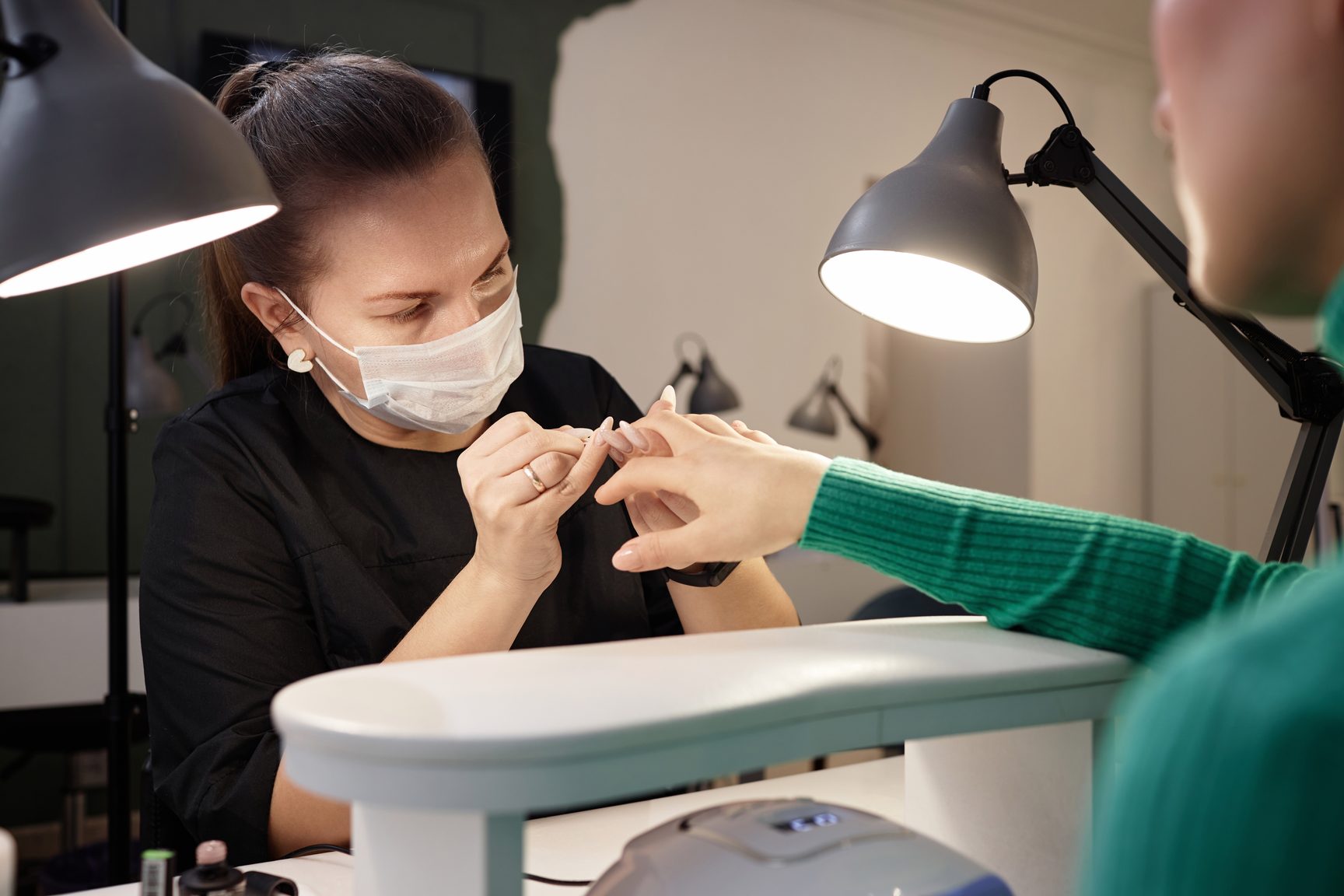
A nail salon here answers to two sets of rules that do not overlap. The Board of Cosmetic Art Examiners licenses the shop and every person who practices manicuring in it, and the workers’ compensation statute makes insurance compulsory for an employer once three or more employees are regularly employed in the same business or establishment. The shop license statute we read names no liability insurance or bond as a condition of the license.
This page walks through the shop license, the technician license, the inspection rule, the workers’ compensation threshold and the owner election, then ties each of the five policies we place to what those rules change. It reads the statutes and the Board’s published rules; it is not a licensing guide, and the Board answers questions about its own process.
The cosmetic art shop license
The Board issues a license to operate a cosmetic art shop, and the statute is flat about it: no person may open or operate a cosmetic art shop in the state unless a license has been issued by the Board for that shop. The definitions sweep nail work in. Cosmetic art includes manicuring, and a cosmetic art shop is any building or part of a building where cosmetic art is practiced for pay or reward, directly or indirectly. A nail salon is a shop for this purpose, whether it fills a storefront or one suite.
The license follows a short path. The Board issues it to an applicant who submits a properly completed application on its approved form, pays the fee and is determined, after inspection, to be in compliance with the chapter and the Board’s rules. The applicant must also list all licensees who practice in the shop and identify each one as an employee or a booth renter. That list is a document a carrier will want to see, because it draws the line between payroll and rented chairs.
The license is tied to a place and a person. It is not transferable from one location to another or from one owner to another, so a move or a sale means a new application. The Board’s rule adds that a shop which has changed ownership must file an application before opening, and that mobile cosmetic art shops are prohibited. An apprentice, one of the license classes in the statute, shall not operate a cosmetic art shop.
The manicurist license and why a carrier asks about it
Practicing without the right license is its own offense. The statute bars any person from practicing cosmetic art for pay or reward without holding one of the license classes it lists, manicurist among them, and it separately bars practicing outside a licensed shop. A manicurist is defined as an individual licensed by the Board to practice only the part of cosmetic art that is manicuring, and a licensee in that class may practice only that part. A violation of the chapter is a misdemeanor.
On the route, the documents we read evidence one: the state license. The statute lists the license classes, and manicurist is the class that fits nail work. We did not find an exam path, a reciprocity path or a training-hours rule in the saved documents, so this page does not describe how a technician earns the license; the Board’s own materials are the place for that.
The reason it matters to an insurance quote is plain. A carrier writing the salon wants to know that every person doing services holds the license the statute requires, because an unlicensed technician is a violation of the chapter on the owner’s floor. Keep a current list of your technicians with license numbers and the employee or booth-renter label that already sits in your shop application.
Annual inspection and the posted sanitary rating
The Board’s rules are direct: each cosmetic art shop must pass inspection by an agent of the Board, inspections are conducted annually, and they may be conducted without notice. The rule also says a newly established shop, a shop that has changed ownership and a shop operating without a license are inspected before a license is issued. The sanitation rules reference manicuring tables and nail files by name, so the standard is written with this work in view.
What the inspector finds is graded. The rules award a letter grade, and a shop below the passing mark receives a failed inspection notice. The owner must post the rating or the notice in plain sight near the front entryway at all times. A shop that gets a failed report must close until the inspector has reinspected and the sanitation conditions have improved to a passing grade, and the failure is sufficient cause for immediate suspension of the license.
There is a refusal rule too. If an inspector is twice unable to inspect a salon after making an appointment, the Board may start proceedings to revoke or suspend the license or refuse to renew it. The rules also carry hygiene detail that bears on claims: hands are washed before and after each client, implements are cleaned and disinfected after each use, and a record is made of each cleaning and disinfecting of a footspa or whirlpool. A salon that keeps those records has a file that answers questions when a client alleges an infection.
Workers’ compensation starts at three regular employees
The regime is compulsory. Under N.C. Gen. Stat. § 97-93, every employer subject to the Article must insure and keep insured its liability in an authorized corporation, association or organization, or in a mutual insurance association formed by a group of employers so authorized, or obtain a license from the Commissioner of Insurance. The statute does not make a nail salon a special case.
The reach of the Article is set by the definition of employment in N.C. Gen. Stat. § 97-2: private employments in which three or more employees are regularly employed in the same business or establishment. Read the sentence as written. It counts employees who are regularly employed in the same business, so a salon with two on payroll has not met the count, and a salon with three regularly employed has.
Once you are an employer subject to the Article, the statute also asks for a notice. Under N.C. Gen. Stat. § 97-93, an employer in compliance must post in a conspicuous place a notice that employment is subject to the North Carolina Workers’ Compensation Act and say whether the employer has a policy or is self-insured. If the insurance lapses, the employer removes any notice saying otherwise.
Owners, partners, members and corporate officers
The owner’s own coverage depends on how the salon is organized, and the statute treats the forms differently. A sole proprietor, a partner or a member of a limited liability company is not covered by default. That person may elect to be included as an employee under the business’s coverage if they are actively engaged in the operation of the business and the insurer is notified of the election. After the election the person is entitled to employee benefits and subject to employee responsibilities.
A corporation runs the other way. Every executive officer elected or appointed and empowered under the charter and bylaws is considered an employee of the corporation under the Article, unless the corporation’s insurance contract specifically excludes the officer, and the exclusion lasts for the period that contract is in effect. If you incorporated the salon and work the floor, ask your carrier in writing which treatment your policy applies to you.
Booth renters are a separate question that the licensing statute raises but does not answer. It makes you label each licensee as an employee or a booth renter on the application; whether a given person is an employee for compensation purposes is decided under the workers’ compensation statute, not by the label.
No state fund in the statutes we read
The documents name no state-run insurer or fund that writes the coverage. Employers insure with authorized private insurers, mutual associations of employers, or by license as self-insurers. The residual market in N.C. Gen. Stat. § 58-36-1 works through a bureau: when a risk is certified as difficult to place by a licensed producer, the bureau binds coverage and designates a member insurer that must issue a standard policy. The bureau assigns the risk; a private member insurer writes it.
That finding rests on the structure of those two statutes and not on a sentence that says no state fund exists, so we state it only as far as the text carries it. For a salon, the practical result is that the policy comes from an insurer through a licensed producer, and a salon that cannot find a market has a defined route to ask for one.
Insurance and bonds in the licensing statutes
We searched the shop license statute, the definitions, the Board’s powers, the school and licensing sections and the sanitation rules for insurance, liability, bond, surety and financial responsibility. The conditions printed for the shop license are an application, a fee and inspection. A guaranty bond appears in the chapter, but it is required of private cosmetic art schools, which does not reach a salon or a technician.
That finding covers the documents we read, which are not every Board form. It does not mean general liability is pointless; it means the licensing statute is not where a requirement to carry it comes from.
The five policies against these rules
General liability. The Board’s graded inspection and its written disinfection and hand-washing rules set a documented standard for your shop, and the rating is posted near the entryway. General liability responds to a client’s injury or infection claim; the licensing statutes do not require it, so the policy is your choice.
Property. A shop license is not transferable between locations, and a move or a change of ownership means a new application and a new inspection before the license issues. Property insurance should be bought with that in mind: a loss that forces a relocation also restarts the licensing path.
Workers’ compensation. The duty begins when three or more employees are regularly employed, and a booth renter’s label on your application does not settle whether that person counts. Workers’ compensation also depends on how you are organized, since a sole proprietor, partner or member must elect in and a corporation’s executive officers are in unless the contract excludes them.
Commercial auto. The Board’s rule prohibits mobile cosmetic art shops, so a vehicle is not a place to run the business. What remains is the vehicle that carries supplies, deliveries and staff errands, and commercial auto covers that.
Umbrella. Nothing in the documents we read sets a required limit for a salon, so an umbrella policy is a choice about how much you want above your liability and auto policies, not a licensing step. The nail salon insurance hub explains how the pieces fit together.
What to send us, and why
Send the shop license, so we can match the legal name and location on the policy to what the Board issued, and the application list that marks each licensee as an employee or a booth renter. Send each technician’s license class and number. Send your latest inspection grade, since it is posted in your shop and a carrier reads it as a view of how you run the place.
On the compensation side, send your payroll roster, your current declarations page and a note on how the salon is organized, so we can see whether owners have elected in or officers have been excluded. With those documents in hand, we can check the policy against the three-employee rule and the election rules above before it renews.
A license lets the salon open its doors; the insurance program is what answers a claim.
- A license is a condition of operating, not insurance, so no line is drawn from the license itself.
A panel for North Carolina in rows. Each row sets a requirement of the state beside the exposure that requirement leaves open and the coverage line that answers it. Salon license: The state licenses the salon itself. It leaves open a customer hurt in the salon, or a customer’s property damaged there, which General Liability answers. Technician license: The state licenses the person doing the nails. It leaves open a client hurt during a manicure or pedicure, which General Liability answers. Workers’ compensation: State law requires the employers it covers to provide it. It leaves open an employee hurt on the job, which Workers’ Compensation answers. Notes: A license is a condition of operating, not insurance, so no line is drawn from the license itself. The conclusion reads: A license lets the salon open its doors; the insurance program is what answers a claim. No figures are shown.
Nail salon insurance in nearby states
North Carolina borders the states below. A name is a link once its page is published.
Why Protect My Nail Salon in North Carolina
We are an independent agency that writes for one kind of business, the nail salon, and each state page starts from the state’s own licensing and workers’ compensation documents. When we quote a salon in North Carolina we read the policies against those rules and against your lease, and we tell you plainly where something does not line up.
We place coverage in 48 states, and every coverage on one page sets out the five policies a salon program is built from. Our guides for salon owners take single questions further; for an owner in North Carolina, a good next read is our guide to nail salon insurance requirements, because the state, the lease and your own payroll each add something you must carry.
North Carolina coverage pages
Coverage for your salon
North Carolina nail salon insurance questions
If I rent my space, do I still need my own shop license?
The statute says no person may open or operate a cosmetic art shop unless the Board has issued a license for that shop, and it defines a shop as any building or part of a building where cosmetic art is practiced for pay. Manicuring is part of cosmetic art. Renting the space does not remove the requirement. The license is not transferable from one location or one owner to another.
My technician rents a chair. Do I list that technician on the application?
Yes. The applicant must list all licensees who practice cosmetic art in the shop and identify each as an employee or a booth renter. A booth is a workstation inside a licensed shop that one individual operates, and a booth renter is a person who rents one. The employee or renter label matters later, when workers’ compensation is decided.
Can my salon open while the Board is still inspecting it?
The shop license statute lets a cosmetic art shop operate for a set period while the Board inspects and decides compliance, and if the Board cannot finish in that period the shop is authorized to operate until it can. The Board’s inspection rule is separate and says a newly established shop must file its application before opening. Read both before you set an opening date.
What happens if a failed inspection notice is posted in my shop?
The Board’s rule says a failed inspection report is sufficient cause for immediate suspension of the license. A shop with a failed report must close until the inspector has reinspected and the sanitation conditions have improved to a passing grade. The owner must post the rating or failed notice in plain sight near the front entryway.
Does a sole proprietor or LLC member get workers’ compensation automatically?
No. A sole proprietor, partner or LLC member may elect to be included as an employee under the business’s coverage if they are actively engaged in the operation of the business and the insurer is notified of the election. After the election the person is entitled to employee benefits and bound by employee responsibilities. A corporation’s executive officers are treated differently, as the body of this page explains.
Can an apprentice run my shop while I am away?
No. The licensing statute says an apprentice licensed under the chapter works under the direct supervision of a cosmetologist and shall not operate a cosmetic art shop. Ask the Board about any other arrangement before you rely on it.
This page describes insurance for nail salons operating in this state. It is general information, not legal advice and not a statement of coverage. Licensing, registration and sanitation requirements change; verify current requirements with the agency named before relying on them.
Sources
- N.C. Gen. Stat. § 88B-22, licenses required and criminal penalty
- N.C. Gen. Stat. § 88B-14, licensing of cosmetic art shops
- Board of Cosmetic Art Examiners rules, inspection of cosmetic art shops
- N.C. Gen. Stat. § 97-2, definitions under the Workers’ Compensation Act
- N.C. Gen. Stat. § 97-93, employers required to carry insurance
- N.C. Gen. Stat. § 58-36-1, rate bureau and the residual market
Get a quote for your North Carolina nail salon
Send us your shop license, your technician list marked employee or booth renter, and your current workers’ compensation declarations page.