
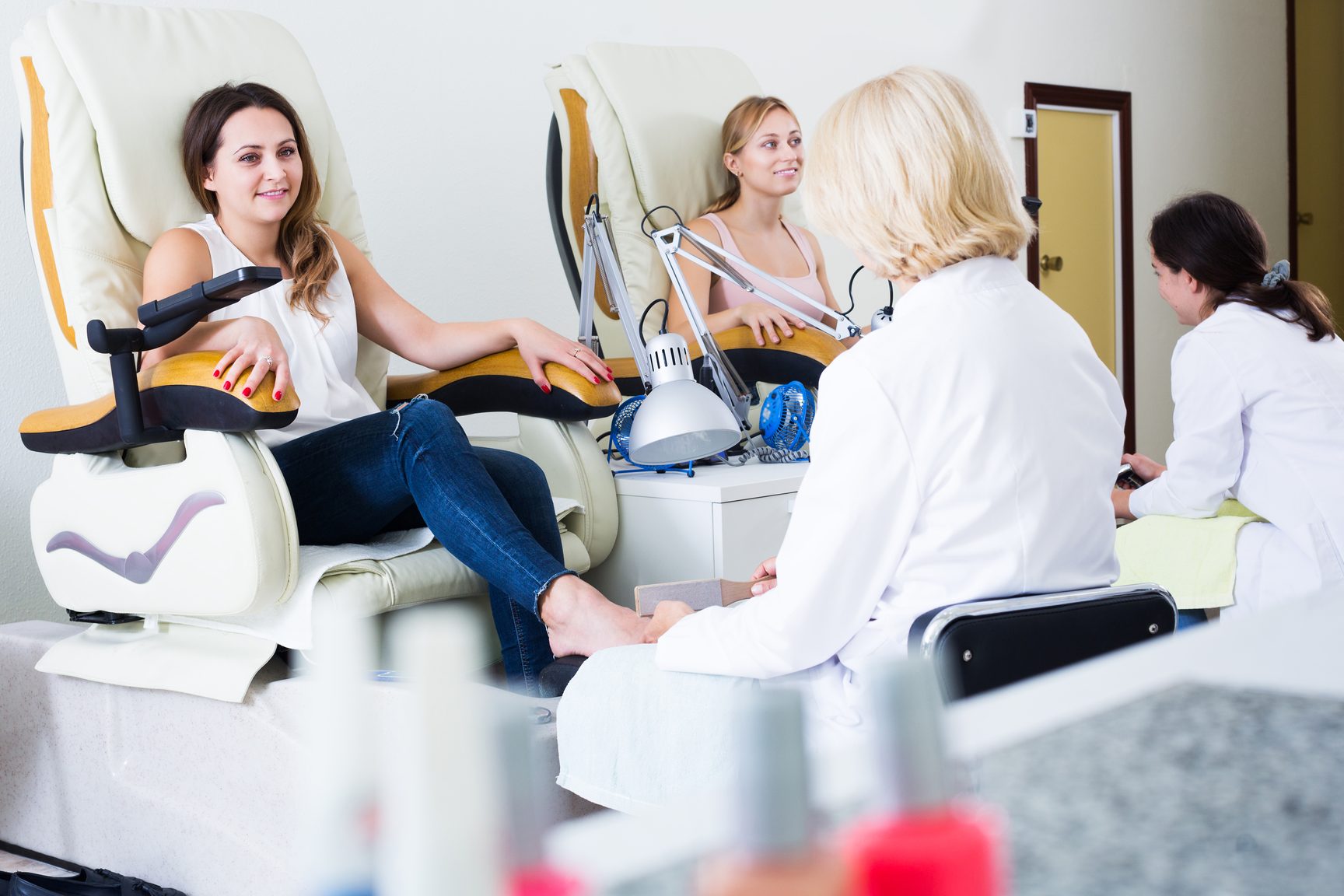
A nail kiosk in a mall or a large retail center works where no storefront salon does: in the middle of the shopping floor, in foot traffic, under an agreement with the mall rather than a conventional store lease. Those facts shape its insurance. This guide explains what the mall asks you to carry, how the open setting changes the liability side, and how to treat equipment that stays on the floor after closing.
Mall agreements differ, and we have not read yours. What follows is what to look for and what to ask.
The mall’s agreement sets the terms
A mall may lease you a space or license you to use one in a common area. Either way, the agreement comes with an insurance section, and it is written to protect the mall. Expect it to ask for:
- General liability at a stated limit.
- The mall, and sometimes its management company, named as additional insureds.
- Proof before you set up, and again at renewal or at each new term.
- Sometimes property coverage for your fixtures and equipment.
A licensed space can come with a shorter term than a store lease and stricter rules on proof. Read the section with your agent before you sign, and have the certificate ready before move-in day.
Liability in the middle of the shopping floor
General liability answers a client’s injury, and at a kiosk the list includes the people walking by. A client can be burned by a curing lamp or react to a product; a passing shopper can trip over a power cord, a client’s bag or the edge of your platform. Both kinds of claim land on the same policy.
Describe the kiosk honestly: its layout, the number of seats, where the cords run and the traffic around it. A policy priced for a quieter setting than the one you work in is priced for the wrong business.
Real-World Scenario: A nail kiosk runs a cord from the mall’s power outlet across the walkway to its curing lamps. On a busy weekend, a shopper who is not a client trips on it and breaks a wrist, then sues the kiosk owner and the mall. The mall tenders the claim to the kiosk’s carrier under the additional insured endorsement its agreement required. Whether the claim is answered depends on that endorsement being on the policy.
Equipment left on the floor overnight
A storefront salon locks its door at night. A kiosk leaves its equipment in a common area, behind whatever security the mall provides. That changes the property question. Business personal property insures your chairs, lamps, sterilizers, stock and fixtures, but ask three things before relying on it:
- How theft and vandalism are treated for property left in a common area.
- Whether the policy sets security conditions, such as a locked cover or a locked cabinet for stock.
- Whether the limit matches replacement value, including custom fixtures.
Keep an inventory with photos and receipts. A kiosk’s contents are compact and valuable, and a claim is faster when the inventory is ready.
Workers’ compensation for kiosk staff
A kiosk staffs for mall hours, which can mean more than one person across long days and weekends. Your state’s workers’ compensation rules decide when you must insure them. In some states the duty begins with the first employee, and in others at a stated number. Our state guides read the rules for Florida and Georgia, among others. The workers’ compensation page explains the policy.
Licensing a kiosk
Your state board decides whether a kiosk is licensed as a salon and what it must have to qualify, such as water access and sanitation. An insurer will ask how the business is licensed. Check with the board before you sign the mall agreement, and our state pages read each board’s rules.
Kiosk, storefront or strip mall?
A kiosk is one of three retail settings a nail business works in. A storefront inside an enclosed mall leases a store and carries a lease much like any retail tenant. A storefront in an open-air center carries a shopping-center lease, which our guide to insurance for a nail salon in a strip mall reads in detail. A salon that adds spa services in any of these settings should read our guide to what nail spa insurance costs.
Water, sanitation and a kiosk’s setup
A nail kiosk works without the plumbing a storefront has. Pedicure services may be impossible or limited, and manicure stations have to meet the board’s sanitation rules with whatever water and disinfection setup the kiosk can carry. That setup is a licensing question first and an insurance question second.
An underwriter will ask what services the kiosk performs, how implements are cleaned and stored between clients and how the station is disinfected. A kiosk that keeps a written sanitation routine and follows the board’s rules presents a clearer picture than one that does not. If the kiosk adds a service, such as a pedicure chair with a portable basin, tell the agent before it reaches a client, because the liability exposure changes with it.
Seasonal traffic and temporary kiosks
Malls draw seasonal traffic, and some nail businesses set up a kiosk for the holiday season only. A temporary kiosk has the same exposures as a permanent one for the weeks it runs: a client’s injury, a shopper’s fall, equipment left overnight. The mall’s agreement will still ask for liability coverage and its name on the policy.
Ask your agent whether a short-term policy or an addition to an existing program fits the season. Bind it before setup, not on opening day, because the equipment is exposed from the day it arrives.
A kiosk inside a larger nail business
Some owners run a kiosk as a second location beside a storefront salon. The kiosk belongs on the same program, with its own address, its own equipment values and the mall named as the agreement requires. Our guide to insuring two or more nail salon locations explains how one program follows an owner across several addresses, and how per-location limits keep one location’s claims from using up another’s protection.
Questions to ask the mall before you sign
- What liability limit does the agreement require?
- Must the mall and its management company be named on your policy?
- Who is responsible for the floor around the kiosk?
- What security does the mall provide after hours?
- When is proof due, and how is a renewal handled?
- Are there rules about cords, signs or seating that bear on safety?
What a kiosk claim costs the business beyond the payout
A claim at a kiosk costs more than the amount a policy pays. The mall may ask questions about the incident, the agreement may let it require changes to your setup, and a pattern of incidents can affect whether the mall renews you. The insurance answers the claim; the business has to answer the mall.
Keep a short incident log at the kiosk: the date, what happened, who was involved, what you did and whether the mall’s security was called. Report the incident to your agent the same day. A prompt, documented report helps the carrier and shows the mall that the kiosk runs carefully.
Train everyone who works the kiosk on the same routine: keep cords taped down or covered, keep the walkway clear, store bags and coats out of the traffic path and clean spills at once. The routine costs little and protects the agreement as well as the policy.
Renewing the mall agreement
Mall agreements renew on their own schedule and can change their insurance terms when they do. Read each renewal before you sign, send it to your agent and confirm that the limit and the named parties still match.
How to get a kiosk quote
Send us the mall’s agreement with its insurance section, the kiosk’s layout and seating, the services on your menu, the people who work the kiosk and how each is paid, a list of equipment and fixtures with replacement values, and your claim history. We will set the policies to the agreement and price them together. The nail salon insurance hub lays out the five coverages, the Small Business Administration’s guide to business insurance covers the basics, and the quote page is where to start.