
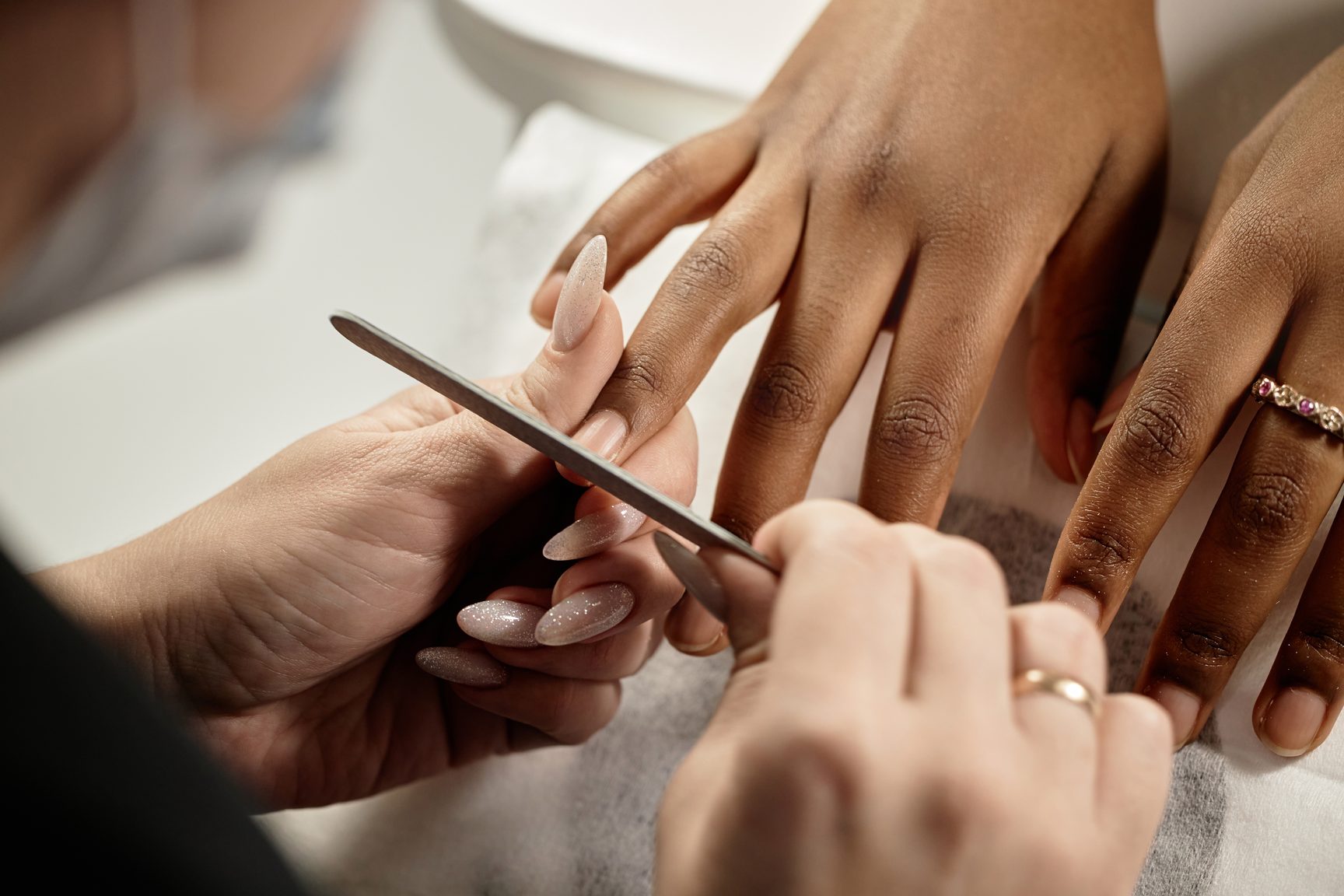
Opening a second nail salon changes the insurance question from one address to several. Each location brings its own lease, its own build-out, its own payroll and sometimes its own state. This guide explains how one program can follow an owner across several addresses, and what to set separately for each.
Every multi-location business is organized differently, and the right structure depends on how yours is owned. What follows is what to decide and what to ask.
One program or a policy for each salon?
An owner with two or more salons can insure each separately or bring them together in one program that lists every location. One program has practical advantages: one agent sees the whole business and checks that the pieces fit, the renewal dates line up and a new location is added to something that already exists rather than started from scratch.
The decision turns on ownership. If every salon belongs to the same company, one program is simple. If each salon is its own legal entity, each entity has to be named on the policies that protect it. Tell your agent exactly how the businesses are owned before anything is written.
Liability: the limits each lease needs
General liability answers a client’s injury at any location in the program. Two questions matter for a multi-location owner:
- Per-location aggregate. A policy can share one aggregate limit across all locations, or carry a separate aggregate for each. With more than one salon, a per-location aggregate keeps a bad year at one address from using up the protection at the others. Ask whether it is available.
- Every landlord named. Each lease may ask for its landlord to be named as an additional insured and set its own limit. The program has to meet the highest limit any lease asks for, and an umbrella can sit above the whole program.
Real-World Scenario: An owner runs three salons on one liability policy with a single shared aggregate limit. A serious client injury at one location and two smaller claims at another use up most of the aggregate in one policy year. When a fourth claim arrives at the third salon, the remaining limit is thin. A per-location aggregate would have kept each salon’s protection separate.
Property: each address on its own terms
Business personal property has to be set for each location: its contents, its build-out and the improvements its lease makes yours. A salon that opened years ago and a salon just built have very different values, and a single blanket number can leave one under-insured. List each address with its own values, and ask how the policy treats equipment you move between locations.
Ask also about business income for each salon. If one location closes after a fire, business income can help pay its rent and payroll while the others keep running.
Workers’ compensation: each payroll, each state
Workers’ compensation is priced from payroll and the work each person does, and each location’s payroll belongs on the policy. If you open in a second state, that state’s rules apply to the people who work there, and the policy has to be written for it. The rules differ widely: our guides read them for Michigan, Georgia and Indiana, among others. The U.S. Department of Labor’s workers’ compensation overview explains that the programs are run by each state.
Keep payroll records by location and by role. A manager who works across salons, a technician who covers shifts at two addresses and a receptionist at one each need to be counted correctly.
Commercial auto between salons
An owner or manager who drives between locations on business raises an auto question. If the business owns the vehicle, commercial auto is the policy. If you drive your own car, the exposure sits on the non-owned side, and how your personal policy and the business program respond depends on how they are written. A business that moves stock or equipment between salons in a van should insure that van.
Employment practices across locations
More salons mean more staff, and more staff means more exposure to claims of discrimination, harassment or wrongful termination. Workers’ compensation does not answer those claims. Our guide to employment practices liability for nail salons explains the cover.
Adding a location: the order that works
- Tell your agent before you sign the new lease.
- Read the lease’s insurance section and match the program to it.
- Bind property for the build-out when work begins.
- Add the payroll as the new staff are hired, under the right state.
- Send the certificate to the new landlord before possession.
Growing by buying or franchising
Owners also grow by buying an existing salon or opening franchise units. A buyer needs coverage in force on the day the salon changes hands, which our guide to what it costs to buy a nail salon covers. A franchisee meets the franchisor’s insurance terms at every unit, which our guide to nail salon franchise insurance reads.
Managers, shared staff and the payroll audit
A multi-location business has people who belong to more than one salon: a manager who visits every location, a technician who covers shifts across town, a receptionist who books for all of them. The workers’ compensation policy is audited against payroll at the end of the term, and the auditor will ask where each person worked and in what role.
Keep time and payroll records that show it. If the salons are in different states, each state’s share of a shared employee’s payroll may matter. If the salons belong to different entities, the entity that pays the person should be the one whose policy covers them. An audit that finds payroll in the wrong place can produce a bill, and one that finds a person missing can reveal a gap.
Claims handling across locations
One program means one agent and one claims process, which is simpler when something goes wrong. Make sure each location knows how to report a claim: who to call, what to record and what to keep. A client injury at the newest salon should be reported the same way as one at the first. Write the steps down and keep them at every front desk.
Track claims by location too. A pattern at one salon, such as repeated slips by the pedicure area, is a safety problem to fix at that address, and fixing it protects the whole program’s renewal.
Selling one salon, keeping the others
An owner who sells one location keeps the program running for the rest. Remove the sold location on the day of the sale, update the property and payroll figures, and confirm the buyer has their own program in force. Our guide to selling a nail salon covers the seller’s side of that day.
Questions to settle before the second location opens
- Will the new salon belong to the same company or a new entity?
- Does the program carry a per-location aggregate?
- Does the new lease ask for a higher limit or a new named party?
- Is the new salon in a new state, with its own workers’ compensation rules?
- Who will drive between the locations, and in whose vehicle?
Property values that grow with the business
Each new salon adds contents and improvements, and older locations change too: chairs are replaced, stations are rebuilt and stock grows. Review each location’s values at every renewal. A program whose property figures were set when the business had one salon can leave a newer, larger salon under-insured.
One certificate list, kept current
Every landlord, and a franchisor if you have one, will want proof naming them. Keep a list of who must be named, at which location, with which wording, and update it whenever a lease renews or a building changes hands.
How to get a multi-location quote
Send us each address with its lease’s insurance section, how the businesses are owned, the services at each salon, the people who work at each and how they are paid, each location’s equipment and improvements, any vehicles the business owns and your claim history. We will build one program that names every location and matches every lease. The nail salon insurance hub lays out the five coverages, and the quote page is where to start.