
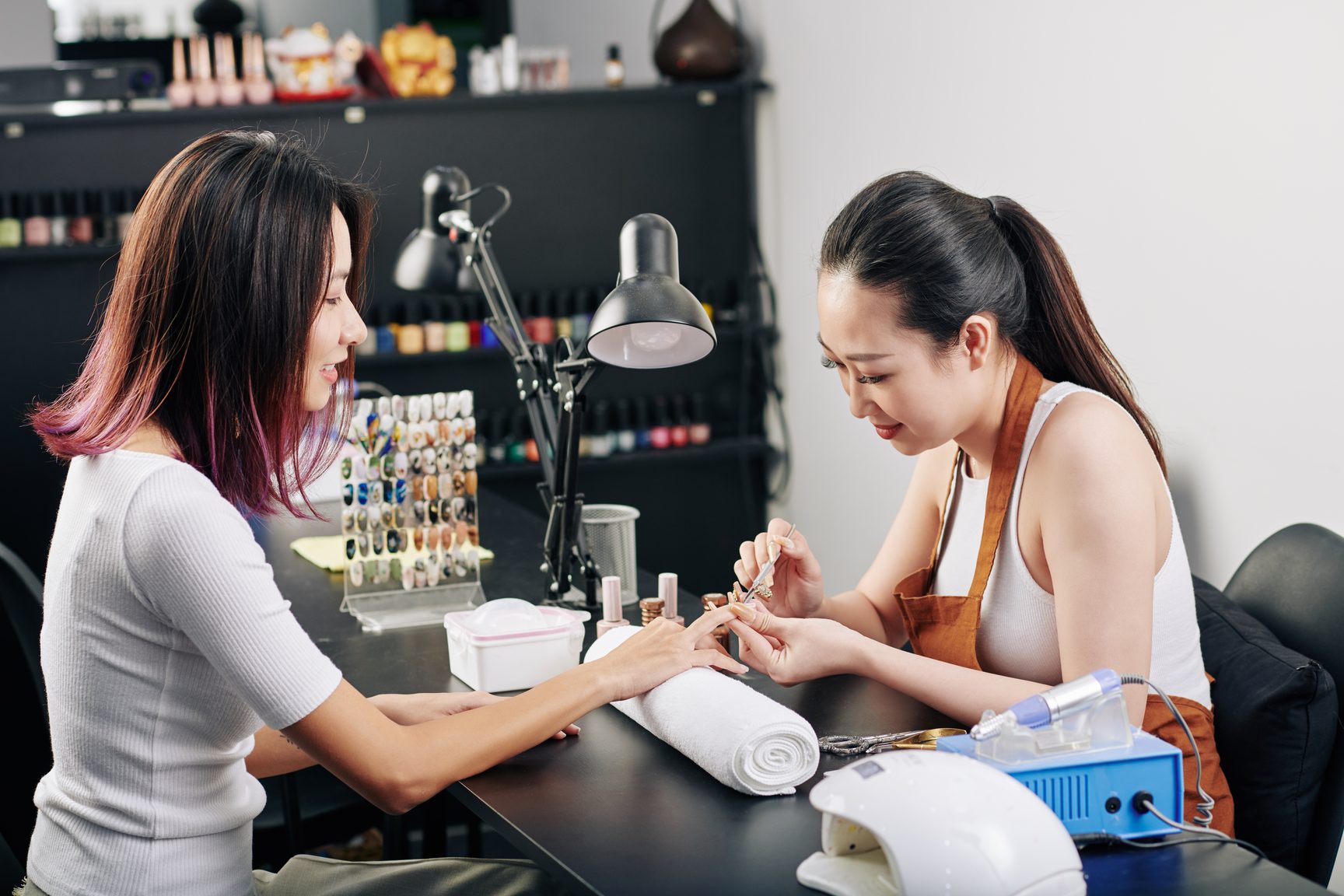
A nail salon run from a room in your home is still a business with paying clients, and a homeowners policy is written for a household. That gap is where home salon owners get caught. This guide explains what a homeowners policy can leave out, the coverage written to fill the gap and the licensing questions to settle before the first client arrives.
We do not know what your own homeowners policy says. The point of this guide is to tell you where to look, and the answer for your salon is in your policy and your state’s rules.
Why a homeowners policy is the wrong tool for a salon
A homeowners policy protects the house, the household’s belongings and the household against claims from guests. A client who pays for a manicure is not a guest in the sense the policy was written for. Homeowners policies can exclude or limit three things a home salon depends on:
- Business activity. A form can carry a business pursuits exclusion, and a claim arising from a service you sell may fall inside it.
- Business property. Equipment and stock used for the business may be excluded or limited to a small amount.
- Injuries to business visitors. A client hurt during a service may not be treated like a friend who trips on the stairs.
Read the definitions and exclusions in your own policy, or ask your agent to read them with you, before you take a client. If the policy excludes business use, a claim from a client is one you may face on your own.
Real-World Scenario: A technician runs a small nail studio from a spare room and assumes the homeowners policy covers anyone who visits. A client is burned by a curing lamp and develops an infection, and her attorney sends a demand letter. The homeowners carrier points to the policy’s business exclusion. Without a business liability policy, the technician answers the claim alone.
General liability written for the business
General liability is the policy built for a client’s injury claim: a burn, a cut, an infection traced to an implement, a reaction to a product, or a slip on the way into the house. For a home salon, the policy has to be written knowing the business runs from a home address, so tell the agent exactly where you work and what services you offer.
The policy may also answer a question your homeowners policy leaves open: what proof of insurance to show a client or a referral source who asks. A certificate from a business liability policy answers it.
A claim that the service itself was done wrongly can sit outside a plain general liability form. Some programs carry a professional liability endorsement; our guide to professional liability for nail salons explains it.
Property coverage for the studio
Your chairs, table, lamps, sterilizers, drill and stock are business property. A homeowners policy may exclude them or cap them at a small amount. Business personal property coverage insures them at a described location, which for a home salon is your home. Report them at what it would cost to replace them.
If you also take equipment to clients’ homes or events, the property policy written for a fixed address will not follow the kit. Our guide to mobile nail salon insurance explains the cover for equipment in transit.
The endorsement or the separate policy
Some carriers offer an endorsement to a homeowners policy that adds limited coverage for a small home business. Others write a separate business policy. The endorsement can be simpler and the separate policy broader. Availability and terms vary by carrier and state, so ask which is offered, what each covers and what each excludes before you choose. For a business that sells services to the public, check that the liability side covers the services you actually perform.
Licensing and zoning come first
A home salon has to be legal before it can be insured properly. Two sets of rules apply:
- The state board. Some states license a salon at a home address under conditions, and others restrict it. The board sets the rules, and an insurer will ask how the business is licensed.
- Local zoning. A city or county may restrict client visits, parking or signs for a home business. Check before you open.
Our state guides read the board rules for owners in Indiana, Michigan and New York, among others. Your own state board has the final word.
Workers’ compensation and helpers
A technician working alone has no employees to cover. The moment someone else works in the studio, even part time, your state’s workers’ compensation rules decide whether coverage is required. Tell your agent before anyone helps you. Our workers’ compensation page explains the policy.
When the home salon grows
Home salons grow into storefronts. When you sign a lease, the landlord will set limits and ask to be named on your policy, the property values rise and the program changes shape. Our guide to salon suite nail studio insurance covers a common next step, a suite inside a salon suite building. The nail salon insurance hub lays out the full program.
Why a home studio’s claim can be harder to defend
A client injury in a home studio raises questions a storefront claim does not. The claimant’s attorney may ask whether the studio was licensed for a home address, whether the room met the board’s sanitation rules, whether the homeowner’s policy was told about the business and whether a business policy was in place at all. Each unanswered question makes the claim harder to defend.
The answer is to settle those questions before the first client. License the business as your state board requires, set up the room to meet its rules, read your homeowners policy’s business terms and buy the business coverage that fills the gap. Keep a short intake form for each client that records the services, the products used and any known allergies.
Telling your homeowners insurer about the business
Some owners worry that telling their homeowners insurer about a home business will raise the price or cost them the policy. The opposite risk is larger: a homeowners insurer that learns about the business after a claim may question the claim, and in some cases the policy itself. Read your policy’s conditions about changes in use, and talk to your agent about how to disclose the business.
Disclosing it does not mean the homeowners policy will cover the business. It means the two policies are written knowing the other exists, so a claim from the household goes to one and a claim from the business goes to the other, without a fight over which applies.
A short checklist before the first client
- Confirm with your state board that a home studio can be licensed at your address, and what it requires.
- Check local zoning for client visits, parking and signs.
- Read your homeowners policy’s business exclusions and change-in-use conditions.
- Buy general liability written for the business and its home address.
- Insure your equipment and stock as business property.
- Keep an intake form, product records and client allergy notes.
The U.S. Small Business Administration’s guide to getting business insurance explains the basic coverages a small business considers, and it is a useful companion to this checklist.
When a client asks for proof
A client, a referral source or a venue may ask whether your home studio is insured. A certificate from your business liability policy answers it.
Moving equipment between home and clients
Some home studio owners also see clients elsewhere. Equipment that leaves the house needs coverage written for movable property, which a policy for a fixed address does not provide.
Keep a copy of the certificate where you can send it the same day.
How to get a home salon quote
Send us the home address, the services you offer, how many clients you see in a week, whether anyone helps you, a list of equipment and stock, and a copy of your homeowners declarations page. We will read the homeowners policy’s business terms, recommend the business coverage that fills the gap and quote it. Our guide to whether nail technicians need insurance answers the related question for a technician working on their own account, and the quote page is where to start.